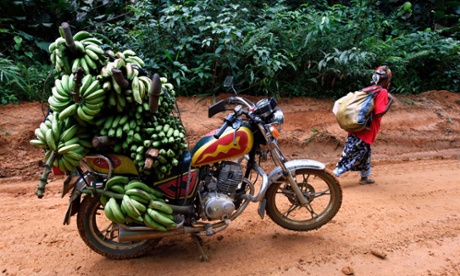
Protect vulnerable producers from trade shocks: The problems we see in highly protected markets like bananas, sugar and rum – where historically some developed countries granted preferences to some developing countries while excluding others – are apparent now these markets are opening up. Adjustment, including in labour markets, to trade opening and trade shocks can be significant. It is important that affected countries have in place mechanisms to assist those adversely affected by trade shocks. These mechanisms should be targeted towards those households that are most vulnerable. Ian Gillson, senior trade economist, World Bank Group, Washington DC, USA
Strengthen the voices of smallholders: There are some good examples of international NGOs working with small coffee growers and helping to organise them in cooperatives to make their voice stronger and improve their negotiating power. The starting point is how to make them more competitive, increase the quality of their products and get them better organised in distribution and marketing. Laura Frigenti, vice president - global development, InterAction, Washington DC, US
Beware of subsidies: It’s a well-known story: subsidies in OECD countries, particularly in agriculture, depress prices for producers in developing countries that can’t match the giveaways. To take a specific example: a study by Mario Jales of Cornell University shows that if the US had abided in the period 1998-2007 with the subsidy disciplines proposed in the Doha Round draft text, global cotton prices would have been on average 6% higher. This would make a substantial difference to African exporters like the so-called C4 countries: Benin, Burkina Faso, Chad and Mali. Aaron Cosbey, senior associate, International Institute for Sustainable Development, Rossland, Canada, @IISD_news
Make regional integration a reality: Stronger integration has been a policy priority in Africa for several decades. Closer trade links with neighbouring countries promise to stabilise food markets, enhance profitable exchanges in light manufactures, reduce consumer prices, and help develop regional production networks. However, the implementation of existing integration initiatives has often been lacklustre, so that the economic development and poverty reduction potential from expanded intra-regional trade has remained untapped. Ian Gillson
Focus on implementation: There is a disconnect between the higher policy level and what is happening on the ground. We work extensively with customs which often bears the brunt of the focus on trade facilitation measures - but the real problems often lie elsewhere with other actors in the trade and transit chain. This is why trade facilitation committees and other multi-actor platforms are important to bring all those moving pieces together. Andrea Hampton, senior project manager - economic growth and trade, Crown Agents, Brussels, Belgium.@crownagents
Improve policy coherence: It is very easy to introduce new barriers to markets for producers in the global south through product standards. For example, the EU is currently reviewing its organic standards, which will become stricter. 50% of the farmers we work with in Fairtrade are dual certified as organic, and often receive a healthy premium for their organic sales. But by moving from equivalence to compliance the new EU requirements would introduce significant new costs for some of the poorer farmers that we most want to help build their markets. Tim Aldred, head of policy and research, Fairtrade Foundation, London, UK.@timaldredpolicy
Encourage bottom-up pressure: On an international level, we see policymakers all making the right noises. The problem is the disconnect between what is agreed by them on an international level and what is understood and applied by their colleagues in the lower levels of government. Also, vary rarely do we see the international or regional priorities being translated into local level or even national election platforms. This illustrates the fact that trade policy is important to those at the top but not to those at the bottom. Working to generate better understanding of trade and it’s place in global economies, will help to create more informed populations that will provide the bottom-up pressure on the politicians which is currently lacking. Andrea Hampton
Streamline border procedures: This is particularly important to small and medium enterprises (SMEs) because they export in smaller volumes, they typically have higher per-unit export costs, relative to big business. This relativity means that SMEs are affected to a greater extent by trade barriers and volatility surrounding export related costs. They also suffer from more unequal access to the information needed to sell products in international markets. Rajesh Aggarwal, chief for trade facilitation and policy for business, International Trade Centre, Geneva, Switzerland. @ITCnews
Make the realities of trade transparent: One very practical approach in a west African country was to take the minister of finance in disguise in a truck carrying produce along a trade corridor so she could see the number of bribes, delays, red tape and obstacles to moving product across the country and across the border. Rules on paper are too often not implemented and policymakers need to really understand what the reality is on the ground. Then they have a better understanding of the real challenges and can convene the key actors in society to address market and regulatory failures in both domestic legislation and institutions, as well as in regional and global trade agreements and institutions. Jim Winkler, senior trade and investment advisor, DAI, Washington DC, USA.@DAIGlobal
Read the full Q&A here.
Is there anything that we’ve left out? Leave your thoughts in the comments below.
Join our community of development professionals and humanitarians. Follow@GuardianGDP on Twitter.