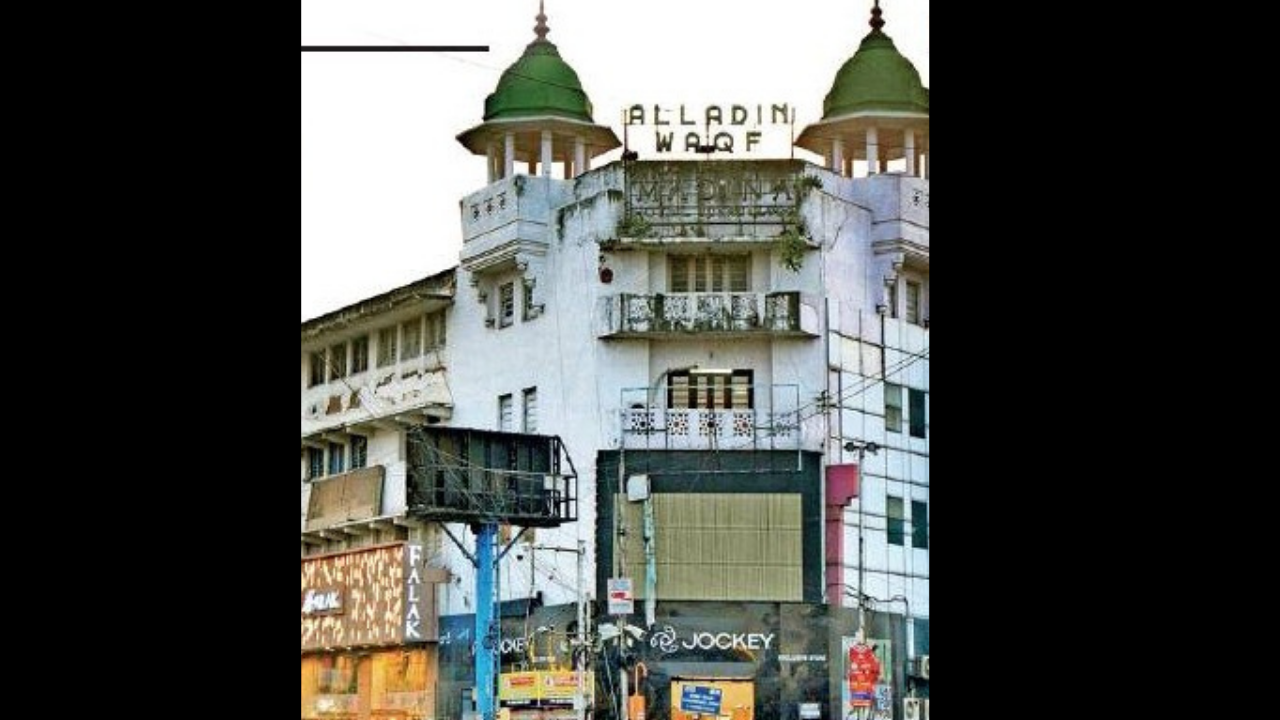
HYDERABAD: The Madina building, located in a prime commercial area, earns a pittance to the state Waqf board. With 500-odd shops, the Madina building would have easily contributed a monthly rental of not less than Rs 6 crore. But, the rental from the building complex is a mere few lakh rupees.
Many tenants do not pay the rent, which over a period has accumulated to about Rs 28 crore. The rental value collected from tenants was fixed long ago and it has not been renewed despite the board promising to increase the rent way back in 2017. Caught in court cases, the Waqf board is not able to either evict the defaulters or enhance the rent to mop up its revenues.
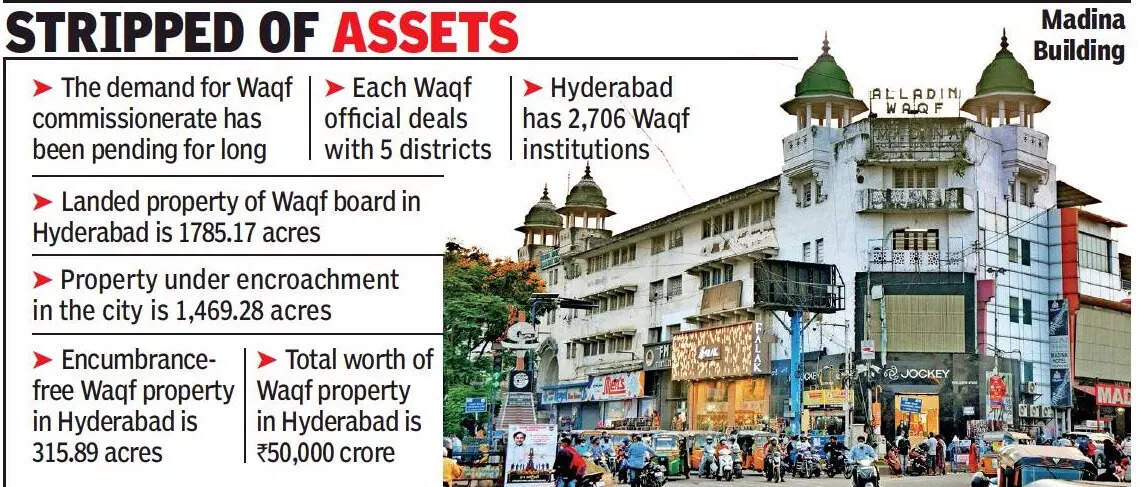
Madina building, which was built to help the poor in Madina in Saudi Arabia before the petrodollar boom took over the Arab world, sums up the state of affairs in the state Waqf board, one of the richest Muslim endowment bodies in India. With 33,929 Waqf institutions with a total landed property spread over 77,538 acres worth at least Rs 5,00,000 crore, the board could have easily taken care of the destitute and met the educational needs of the principle minority community. But, with 57,428 acres under encroachment, the riches of the Waqf board are limited to just official documents. The board hardly earns Rs 5 crore as revenue per year from these Waqf institutions. The board has actual control over 20,110 acres.
The case of Madina building is just the tip of iceberg. Most of the Waqf institutions located in prime commercial localities in the state do not contribute any significant revenue to the board. Mostly, the board depends on the state government for funds to take up welfare or development activities. Waqf properties including Aneesul Gurba and the building next to the Haj House remain half-complete though the construction work was taken up several years ago.
These buildings could have contributed at least Rs 15 crore towards goodwill amount and a monthly rental of about Rs 2 crore.
Sources in the Waqf board reveal that the board has only seven district Waqf officers while there should be 33 officials for 33 districts. Some officials in the board are said be undergraduates. Each officer is forced to look after five districts. Pending court cases, many custodians or mutavallis continue to remain in their posts. Some of them have been accused of swindling crores of rupees of Waqf funds. Recently, shops were built on graves in a famous dargah though it is against the Waqf rules to convert graves into commercial or residential structures.
The state government has ordered a CID probe into the irregularities in the board. This is not the first such probe. Investigations earlier led to nowhere and the corruption continues. Waqf records were seized by the state earlier but the probe did not progress further.
State Waqf board chairman Mohammad Saleem told TOI that the income of the board had increased after he took over. Rubbishing the allegations as “opposition sponsored”, Saleem said the board now has Rs 60 crore in its bank account and deposits. “We will evict the encroachers. Notices were served on them. We will revise the rental value once legal hurdles are cleared,” he said, promising to generate revenue from the half-complete building adjacent to Haj House.