Hi Jen, what can you tell me about FACT and your role there?
FACT is dedicated to bringing people, art and technology together, and though plenty of organisations are interested in one or two of these areas, the combination of all three makes our work quite special.
Most people who work in the arts will say that no two days are ever the same. FACT (the Foundation for Art and Creative Technology) is certainly no exception. An average day includes researching future exhibitions, films or projects, and meeting other members of the team or stakeholders to cook up some interesting promotional angles.
We’re a small team, so we’re all very hands-on: speaking to press, tweeting, checking in with distributors, designing posters, building e-newsletters, uploading blogs and discussing any patterns we find in our analytics. Our programme is experimental and often challenging, which means that we have lots of topics to get our heads around. We’re usually communicating artworks that are still in development, which can also be tricky.
How do digital platforms and social media impact what you do?
One thing I can’t bear is when “digital” activity is treated as being separate to other marketing or thought of as some sort of dark art. As with our personal lives, the new tools available to us have an impact on pretty much everything, but the most significant thing for me is not how easy it is to contact other people, but how easy it is for them to share their thoughts and ideas with us.
Where a few years ago the marketing department would talk “at” people, we are now using technology to create more two-way dialogues. A good example would be the FACT blog, which is a collection of articles and thought pieces from the community, including staff, artists, participants and visitors. There’s no marketing sheen or house-style; it’s an ever-changing collection of differing opinions, approaches and writing styles, which is what makes it great.
Something that constantly surprises me is that while people are desperately trying to find the next big thing, they forget what’s right under their nose. Analytics and insights may not be shiny new playthings, but they are staggeringly useful and can make what you do so much better. So invest time in understanding what Google Analytics can tell you about what’s working well or underperforming; look at your Facebook Insights to see what people are interested in; pay attention to not just how many people are tweeting about you, but what they are actually saying; evaluate your email open rates and experiment with making changes to see what impact that has. Not so long ago, people would have given their right arm for this sort of information, so we should definitely take advantage of it.
Do traditional methods of marketing still hold value in today’s connected world of emails?
100% yes! People are often surprised when I tell them how many brochures we distribute around the city, but we’ve made the effort to understand whether they still have a role to play – and they do. I would hate to be without email, social networks or websites, but physical, printed communications have a renewed feeling of being special and most importantly, make the recipient feel special too.
Which technologies excite you from a marketing point of view?
Marketers are always looking for the next exciting development to help us communicate, but as so many devices and platforms come and go in the blink of an eye, it can be a real red herring. The kinds of technology that interest me are the ones that make things better, not just easier or faster. What’s really exciting is how we can become more tailored, targeted and personal in how we communicate. Technology is absolutely the way forward in this. We’re currently experimenting with how we can understand our audiences better through playing online games that are a bit mischievous and fun.
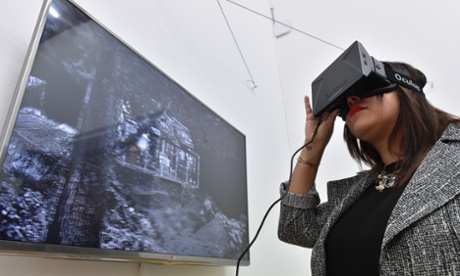
I know every Tom, Dick and Harriet is saying this, but Oculus Rift is amazing and we’re lucky to have artist Lauren Moffat currently in-residence developing a new film project with it. With the popularity of streaming live theatre and exhibition tours, it won’t be long before we can all attend a major exhibition opening anywhere in the world, using our own headset. The real turning point will be when this virtual visit also counts as a “proper” visit.
There are also some clever new tools popping up that will be interesting to keep an eye on, like the I’m @ app that was recently trailed in Liverpool. The app was created in response to a very real problem faced by many free visual arts venues: how do you collect audience data when you have no box office system? Purple Seven developed an app that captures insightful information and also rewards the user with interesting, exclusive content to enhance their visit.
What are your thoughts on the potential of wearable tech?
As arts lovers, we know that cultural experiences are capable of making us feel something. But putting that feeling into words is often a challenge. Wearable technology could shed a light on this, indicating which artworks make our heart beat faster, for example. On a purely personal level, I’d be fascinated to see how my body responds to art. From an organisational perspective, I wonder how it will make us curate differently, or how we’ll start marketing an exhibition on the basis of the physical experience.
What top tip would you give to a wannabe arts marketing professional?
Never underestimate the importance of your enthusiasm. In this industry, you’ll be expected to work hard, learn fast and always maintain a passion for the project or product you’re promoting. Genuinely believing in the power of the arts is a quality that can’t be substituted by any qualification.
This interview was co-commissioned with Arts Industry magazine
Jen Chapman is head of marketing and communications at FACT, which you can follow on Twitter @FACT_Liverpool
More Tech talks
• Bertie Watkins, director, CoLab Theatre
• Edwin Coomasaru, director, International New Media Gallery
• Ari Levy, technical touring manager
Join our community of arts, culture and creative professionals by signing up free to the Guardian Culture Pros Network.