A TEAM of aid workers has been killed by Israel, according to UK-registered charity.
The Al Khair Foundation said eight people, including its volunteers and independent journalists, were killed when their vehicles were targetted by Israeli strikes in northern Gaza.
The Israeli military claimed that "two terrorists who were identified operating a drone that posed a threat to Israeli troops" were struck, adding that it then targeted "additional terrorists" who then arrived after.
But the charity rejected that its team members were terrorists.
Qasim Rashid Ahmad, founder and chairman of the Al Khair Foundation, told the BBC that they were there to set up tents and document it for the charity's promotion efforts.
Video editor Bilal Abu Matar and cameramen Mahmoud Al-Sarraj, Bilal Aqila and Mahmoud Asleem were all named as having been killed, according to the Palestinian Journalists Syndicate – who accused Israel of carrying out "systematic targeting of Palestinian journalists, who risk their lives to report the truth and expose Israeli crimes to the world".
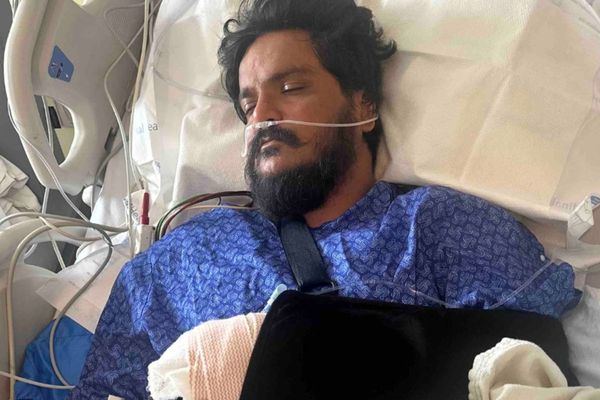
Several others were injured in the strike, and rushed to a hospital in the northern Gaza Strip, the Hamas-run health ministry said.
A spokesman, Hazem Qassem, accused Israel of having "committed a horrific massacre in the northern Gaza Strip".
Israeli strikes have killed dozens of Palestinians since the ceasefire took hold on January 19 who the military said had entered unauthorised areas, engaged in militant activities or otherwise violated the truce.
The United States said it presented on Wednesday a proposal to extend the ceasefire for a few more weeks as the sides negotiate a permanent truce.
It said Hamas was claiming flexibility in public while privately making “entirely impractical” demands.
Negotiations continued in Egypt after senior Hamas leader Khalil al-Hayya arrived in Cairo on Friday.
Egypt and Qatar served as key mediators with Hamas in reaching the ceasefire and have continued to host talks aimed at getting it back on track.
There was no immediate comment from the mediators.
Under the ceasefire agreement reached in January, Israel and Hamas were to begin negotiations over a second phase — in which Hamas would release all of the remaining hostages in exchange for a lasting truce — in early February, but so far, only preparatory talks have been held.
After the first phase ended at the beginning of this month, Israel said it had agreed to a new US proposal in which Hamas would release half of the remaining hostages in return for a vague commitment to negotiate a lasting ceasefire.
Hamas rejected that offer, accusing Israel of backtracking on the signed agreement and trying to sabotage the truce.
Israel has barred the delivery of food, fuel and other supplies to Gaza’s roughly 2 million Palestinians and cut electricity to the territory.
The city of Rafah, on the Gaza-Egypt border, said it could no longer provide fuel needed to pump water from dozens of wells across the city.
Ahmed al-Sufi, head of the Rafah municipality, said fuel shortages caused by the Israeli siege have forced the municipality to “suspend essential services, threatening the lives of thousands and exacerbating the health and environmental crisis”.
The first phase of the truce, which took hold on January 19, saw the release of 25 Israeli hostages and the bodies of eight more in exchange for nearly 2,000 Palestinian prisoners.
Israel’s military offensive has killed more than 48,000 Palestinians, mostly women and children, according to the Hamas-run Gaza health ministry, which does not say how many of the dead were combatants.
Israel says it has killed around 20,000 militants, without providing evidence.
The war has destroyed vast areas of Gaza, displaced most of the population and left nearly everyone dependent on international aid to survive.