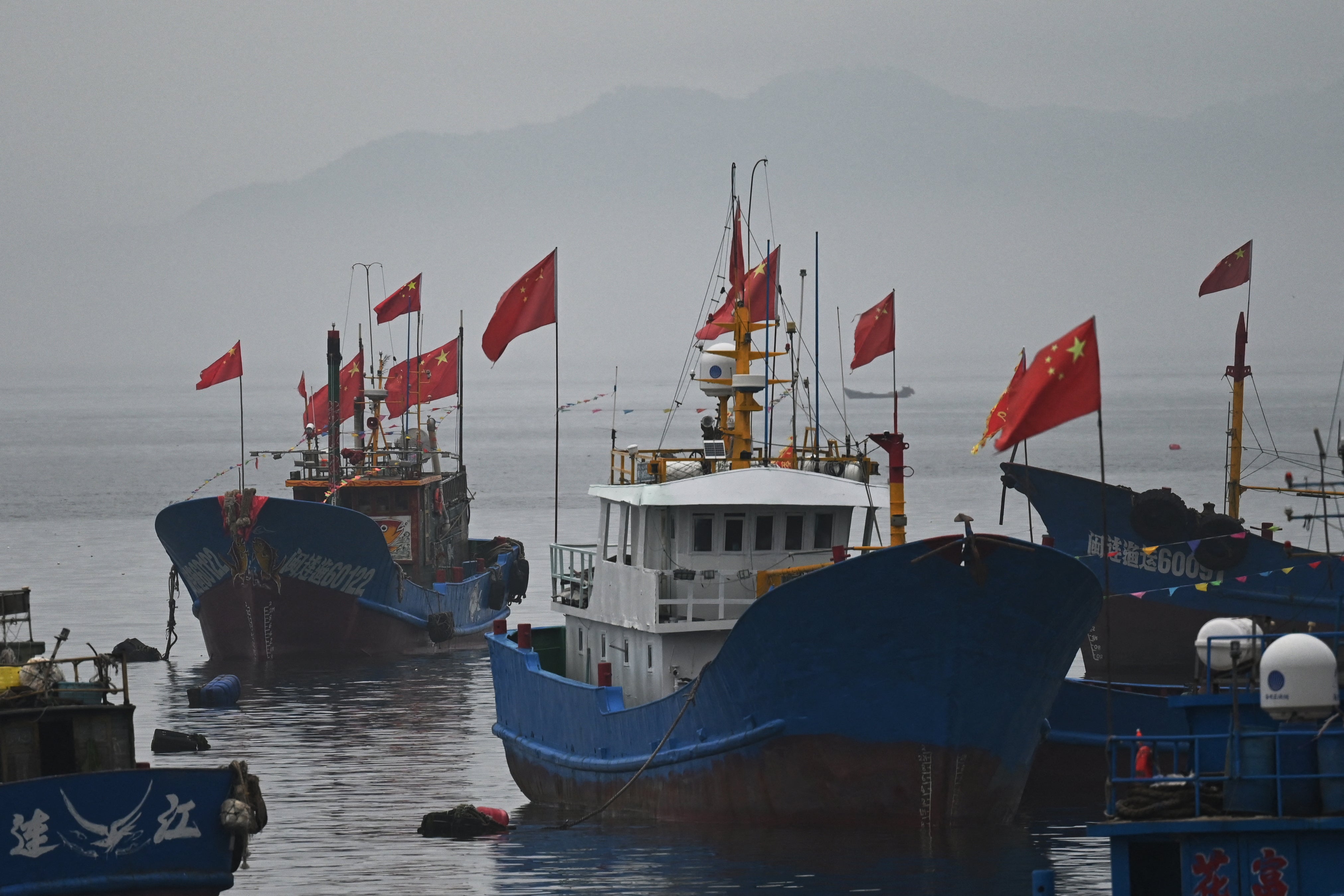
In December last year, some 2,000 Chinese fishing boats lined up in two near-perfect parallel rows stretching hundreds of nautical miles in the East China Sea. The formation, so vast and orderly that analysts suspected the boats were doing anything but fishing, would appear twice more in the new year.
The latest display coincided with Taiwan reporting the resumption of widespread Chinese air force activity around the island after an unexplained week-long lull, raising fresh questions over Beijing’s intentions as global attention shifted to the conflict in the Middle East.
The unusual formations have also alarmed security experts, with some suggesting that they could be linked to China’s maritime militia or represent a test of Beijing’s ability to mobilise civilian fleets for strategic use.

The incidents occurred roughly 300km northeast of Taiwan. The largest of the three was recorded on Christmas Day when around 2,000 boats formed two parallel lines stretching 470km, according to ingeniSPACE, a satellite imagery and ship signals data firm which first reported the activity.
The second incident took place shortly after in early January when 1,000 fishing vessels again formed an uneven rectangle.
The formation was 400km-long and maintained its position for more than a day in the same area in the East China Sea before dispersing. The fishing vessels were so densely packed, cargo ships had to go around or zigzag through to pass, according to tracking data.
The repeated formations pointed to a high degree of coordination and suggested the vessels were likely directed not to fish, according to analysts.
“The scale is extraordinary,” said Ray Powell, a former US Air Force officer and director of SeaLight, a maritime “grey zone” activity tracker.
“Chinese fishing fleets routinely operate in large groups, but over a thousand vessels holding parallel lines for hundreds of miles over 30 hours has no clear precedent in publicly available data.”

The most recent formation occurred earlier this month, when around 1,200 boats assembled in parallel rows further east of the previous sites and maintained their positions for over 30 hours.
Some analysts say the boats appear to be linked to fishing fleets from Zhejiang province, which hosts the largest number of documented maritime militia units in China. These units consist of commercial fishing boats whose crews may be registered as militia members and can be mobilised to support any maritime operation.
Jason Wang, chief operating officer of ingeniSPACE, told AFP that something looked amiss “because in nature very rarely do you see straight lines”. He said he tracked fishing boats amassing in the busy waterway through a GSP-based shipboard broadcast system used by commercial ships.
The Chinese navy is widely considered to be the world’s largest by size and second only to America’s in dominance of the seas. The Asian giant also boasts a huge civilian fleet of fishing boats, ferries and cargo ships that it’s reportedly preparing for use in the event of a regional conflict.
.jpeg)
According to a US congressional report from January, China sees its fishing fleet as a strategic tool to expand its influence, intimidate rivals and tighten control over maritime resources and supply chains across the Indo-Pacific.
These vessels operate under the command of the military, the report claims, and feature reinforced hulls and water cannons for coercive tasks while specialised reconnaissance elements track foreign naval activity and report to Chinese military leaders.
Powell says the Zhejiang fleet includes large numbers of fishermen who may be enrolled in Chinese militias. “These aren’t purpose-built grey zone vessels like those we track in the South China Sea,” he says. “They’re commercial fishing boats whose crews can be called up when needed.”
Beijing has offered no explanation for the unusual maritime activity so far. It has previously defended its drills and other military activity around Taiwan as part of its "deterrence posture".
“China has said nothing to explain these formations and that silence is itself strategically useful. Whether directed or weather-driven, the ambiguity forces Japan, Taiwan and the US to assume worst-case scenarios and plan accordingly,” says Powell.
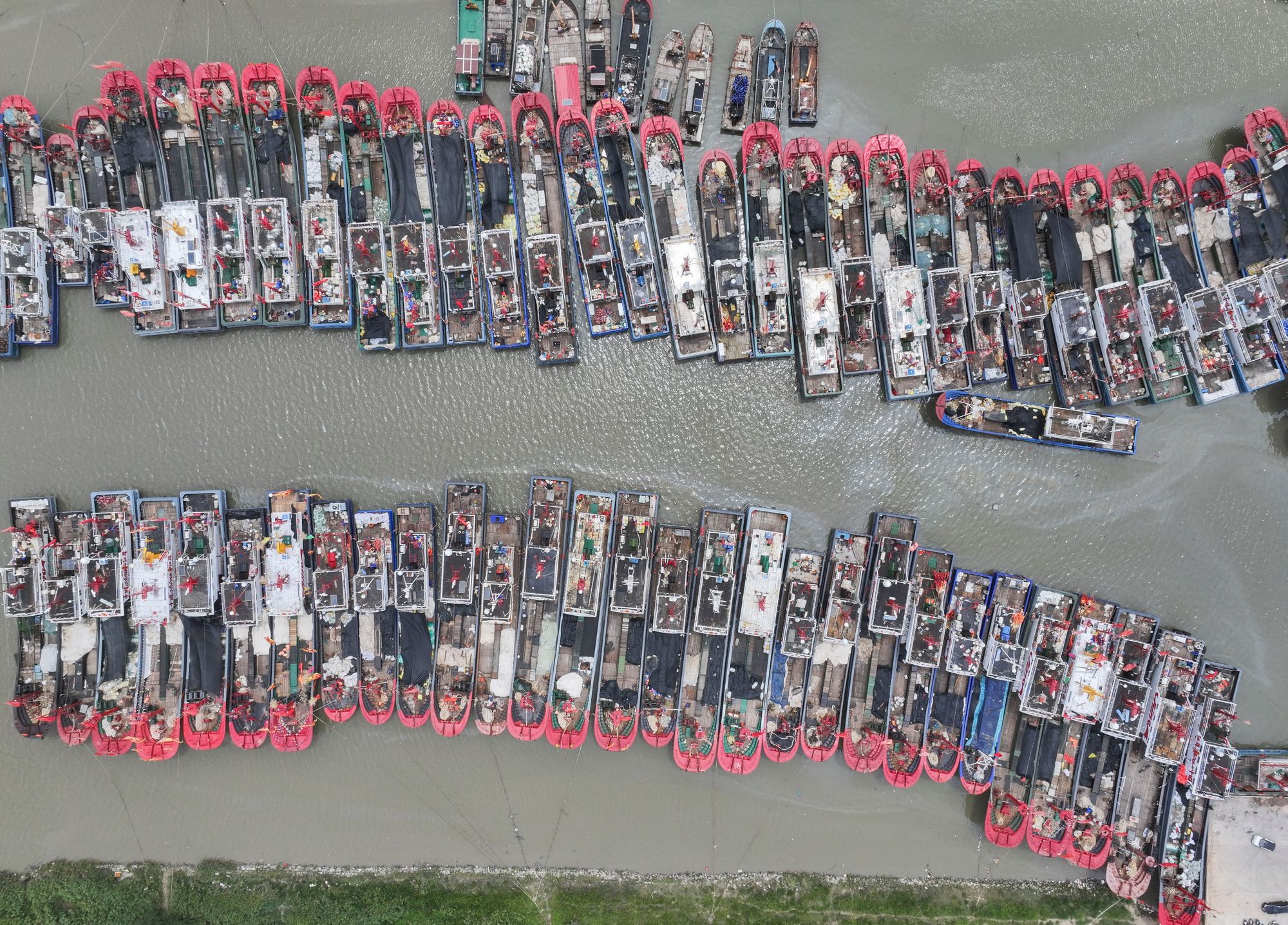
Other experts suggest the activity may amount to “mobilisation testing”, demonstrating how quickly China can deploy fleets of civilian vessels to either surveil big swathes of the ocean or complicate an adversary’s response in a crisis.
Alternative explanations are less threatening. Some analysts point to severe weather conditions at the time, suggesting the vessels likely clustered to ride out strong winds.
South Korean fishing boats had returned to port in view of a forecast for strong winds but Chinese vessels remained at sea, grouping close together.
Takafumi Sasaki, a professor of marine bioresource science at Hokkaido University, argued that even if the activity was driven by bad weather, it was unusual for the boats to stay in formation for so long.
In any case, Beijing’s regional rivals are paying close attention.
Japan seems to be treating the activity as a potential security concern rather than a routine fisheries issue. Tokyo reportedly deployed aircraft to monitor the formations and repositioned patrol vessels in the area.
The activity comes against a backdrop of rising tensions in the region. Tokyo and Beijing remain at odds over the control of the disputed Senkaku Islands in the East China Sea as well as over Japan’s increasingly assertive stance on Taiwan.
Relations between Tokyo and Beijing have cratered since Japanese prime minister Sanae Takaichi said last year a crisis in the Taiwan Strait could constitute a “survival-threatening situation” for her country and prompt the deployment of its military.
On 12 February, around the time of the third formation, Japanese authorities seized a Chinese fishing boat and arrested its captain about 170km from the southwestern port city of Nagasaki. Tokyo claimed the captain had refused an order to stop for an onboard inspection, according to media reports. The incident served to further complicate bilateral relations.
Taiwan, meanwhile, reported renewed Chinese military activity this month after a brief lull.
“Taiwan would view any large-scale fleet mobilisation in the East China Sea through the lens of potential blockade scenarios. That's unavoidable given the geography,” Powell says.
China has vowed to reunite Taiwan with the mainland, by force if necessary, and has stepped up military pressure in recent years, regularly deploying warplanes and naval assets near the island.
Analysts say the recent combination of ambiguous civilian fleet activity and fluctuating military pressure underlines the challenges regional powers face in responding to China’s evolving “grey zone” tactics at sea.
“There’s no clean military response to a thousand civilian fishing boats,” Powell says. “And that’s precisely what makes this approach so effective.”
China demands investigation after Nepal college burns copies of Xi Jinping’s book
University tells students to put down books and ‘fall in love’ as birth rate falls
Trump requests to delay planned China visit due to Iran war
Breakthrough could extend viability of stored transplant organs from hours to days
Spy thriller is first Chinese movie to get backing of country’s intelligence agency
Trump hints at delaying China trip and asks for Hormuz intervention