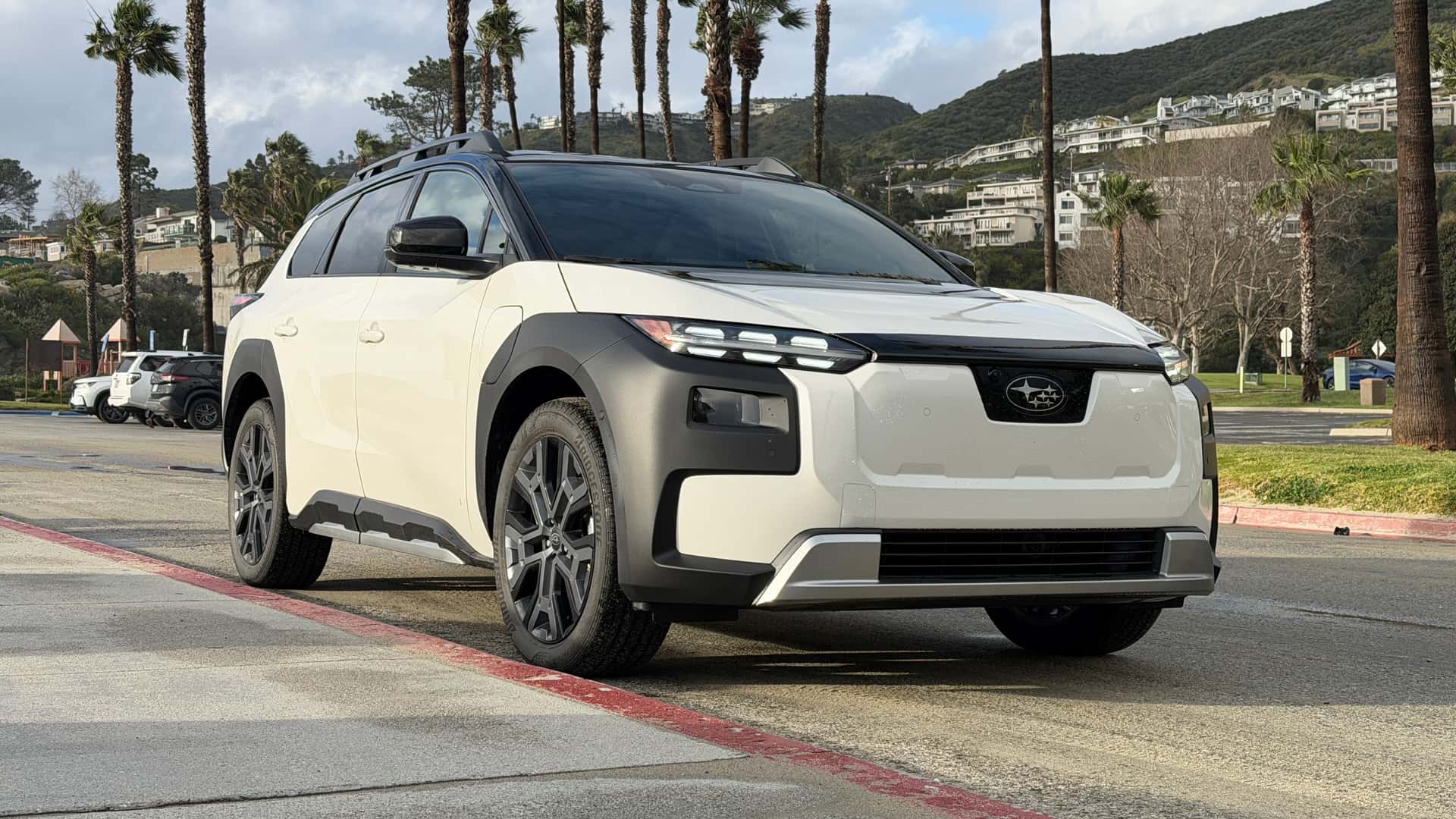
- Subaru is spending big money to incentivize its new EVs, but it’s not really converting into more sales.
- The company boosted marketing expenses in the U.S. by 40% last quarter, with the lion’s share going to the Solterra, Uncharted, and Trailseeker.
- For each Solterra sold, Subaru reportedly spent $9,650 on incentives.
Subaru now has three EVs in its U.S. lineup, triple compared to last year, which is great news for brand fans who were waiting for more Subaru-branded electric cars.
But as it turns out, it takes a lot of money to market and sell new cars. During the April-June quarter, Subaru spent three times the money to promote the Solterra, Uncharted, and Trailseeker compared to its gas car portfolio, but sales have so far failed to live up to expectations.
Specifically, the automaker spent $9,650 on incentives for each Solterra it sold from April through June, according to Motor Intelligence data quoted by Automotive News. Additionally, $9,155 was spent for each Uncharted sale and $8,982 for each Trailseeker. Motor Intelligence says that the marketing promotions are manufacturer incentives like rebates and discounted financing.
By comparison, incentive spend for the Outback, the brand’s third-best-selling model in the U.S., averaged at $3,036 for each unit sold. Motor Intelligence told InsideEVs that the marketing spend it tracks includes
The result is pretty grim. The expenses have contributed to a 44% drop in the company’s operating profit in the first fiscal quarter that ended on June 30, going from $472 million last year to $263.2 million this year. Meanwhile, U.S. sales of the Solterra dropped by 21% in the first half of the year, while the Uncharted and Trailseeker, which went on sale recently, amassed roughly 2,500 sales each by the end of June.
Overall, Subaru sold 10,064 EVs stateside from January through June, a drop in the bucket compared to the brand’s total sales of 307,340 units. The best-selling Forester crossover reached over 100,000 new customers, followed by the Crosstrek with 87,623 units sold. Overall, Subaru’s U.S. sales dropped 4.5% in the first half of the year compared to the same period in 2025.
Spending so much money on anything is not how Subaru typically does things. The Japanese automaker has traditionally been very disciplined, but the extra spending was likely necessary to keep sales at a relatively stable level after the $7,500 federal tax credit was canceled last year.
Back in May, the company said it was taking a $362 million impairment charge related to the slowing EV demand. Additionally, the car manufacturer has delayed the production of its independently developed EV in Japan, which was scheduled to go into production at the firm’s new Oizumi plant.
Updated Friday August 7 5 pm ET to clarify that marketing spend includes manufacturer incentives.