
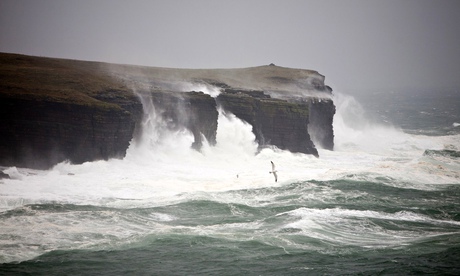
With sea levels rising at an ever faster rate, the threat of coastal flooding obviously increases too. The storm surges during the winter of 2013-14 led to the highest sea levels and worst coastal flooding for many decades and prompted scientists from Southampton University to compile a “Surgewatch” for the UK.
This is a database of coastal flooding over the past 100 years, showing how many storm surges have occurred at each location and how high the water came at each event. A free service (www.surgewatch.org) enables people to assess the risk near them or their favourite holiday resort.
It shows that the number of events has increased as the decades have passed. Also, in a series of confusing mathematical statistics that scientists love, there is a calculation on how frequently each surge is likely to re-occur – say once in 45 or 500 years, depending on the severity of the original event. This might be useful for insurance companies to set flood risk premiums but not much help for the average citizen and might be quite misleading. The reason is that the latest measurements of sea level rise, increased by melting ice caps, appear to show that scientists have underestimated the dangers. As both high tides and storm surges magnify the effects of sea level rise, the odds of severe coastal flooding rise every year.
The scientists believe the database will help planners and engineers design better coastal defences, always assuming the money can be found to build them.



