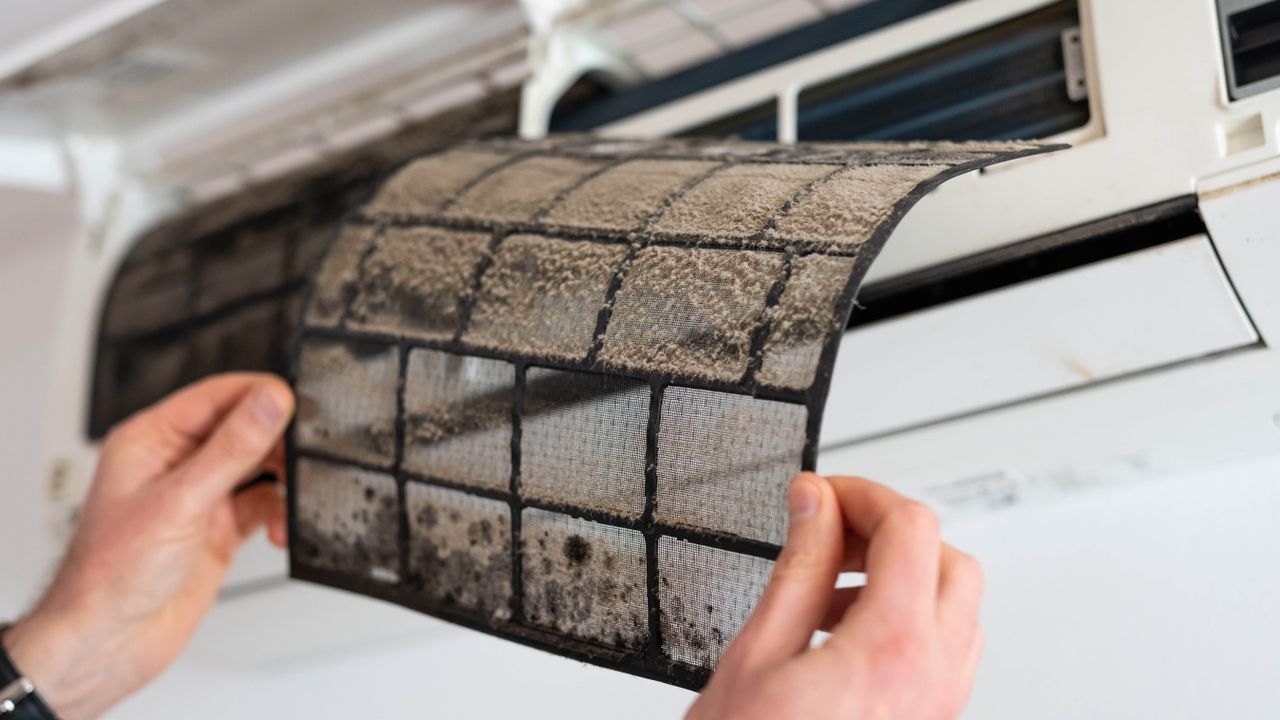
Most people assume mold is a winter problem. Cold, damp basements and steamy bathrooms, right? Wrong. Summer heatwaves actually create the perfect conditions for AC mold growth.
While outdoor temperatures soar, your air conditioning unit constantly cycles cool air over warm, humid air, creating condensation inside your ductwork. Add dust, pollen, and organic debris to that moisture, and you've built a breeding ground for mold that circulates through every room in your home.
Here's how to stop AC mold before it becomes a health hazard.
1. Replace filters during peak summer

Your AC filter is your first line of defense against mold, but only if it's clean. A clogged filter traps moisture and organic debris, creating ideal conditions for mold to flourish. During peak summer when your AC runs constantly, replace or clean your filters every 30-60 days instead of the standard 90-day interval.
A dirty filter doesn't just encourage mold growth, it also forces your AC to work harder, reducing airflow and allowing moisture to linger in your ductwork longer. Fresh filters keep air moving freely and prevent the stagnation that mold needs to thrive.
2. Clear debris from your outdoor AC unit

Your outdoor AC unit pulls in air constantly, and during summer, leaves, grass clippings, pollen, and other garden debris accumulate around it. This organic matter clogs your unit and traps moisture inside. Inspect the area around your outdoor unit weekly during heatwaves.
Trim back vegetation that's blocking airflow. Remove any leaves or debris settled around the unit, and make sure nothing is obstructing the condenser coils. Better airflow prevents moisture from accumulating inside your system, which directly reduces mold risk.
3. Inspect and unclog your AC drain pan

Your air conditioner's condensate drain pan collects water that forms when humid air meets cool coils. During summer, this drain works overtime. If it gets clogged, standing water accumulates inside your system, essentially creating a swimming pool for mold.
Check your drain pan monthly during peak summer. Look for standing water, debris, or blockages. If water is sitting there instead of draining, clear the clog immediately. A clogged drain pan is one of the fastest ways for mold to colonize your entire AC system and spread through your home.
4. Visually inspect for existing mold growth
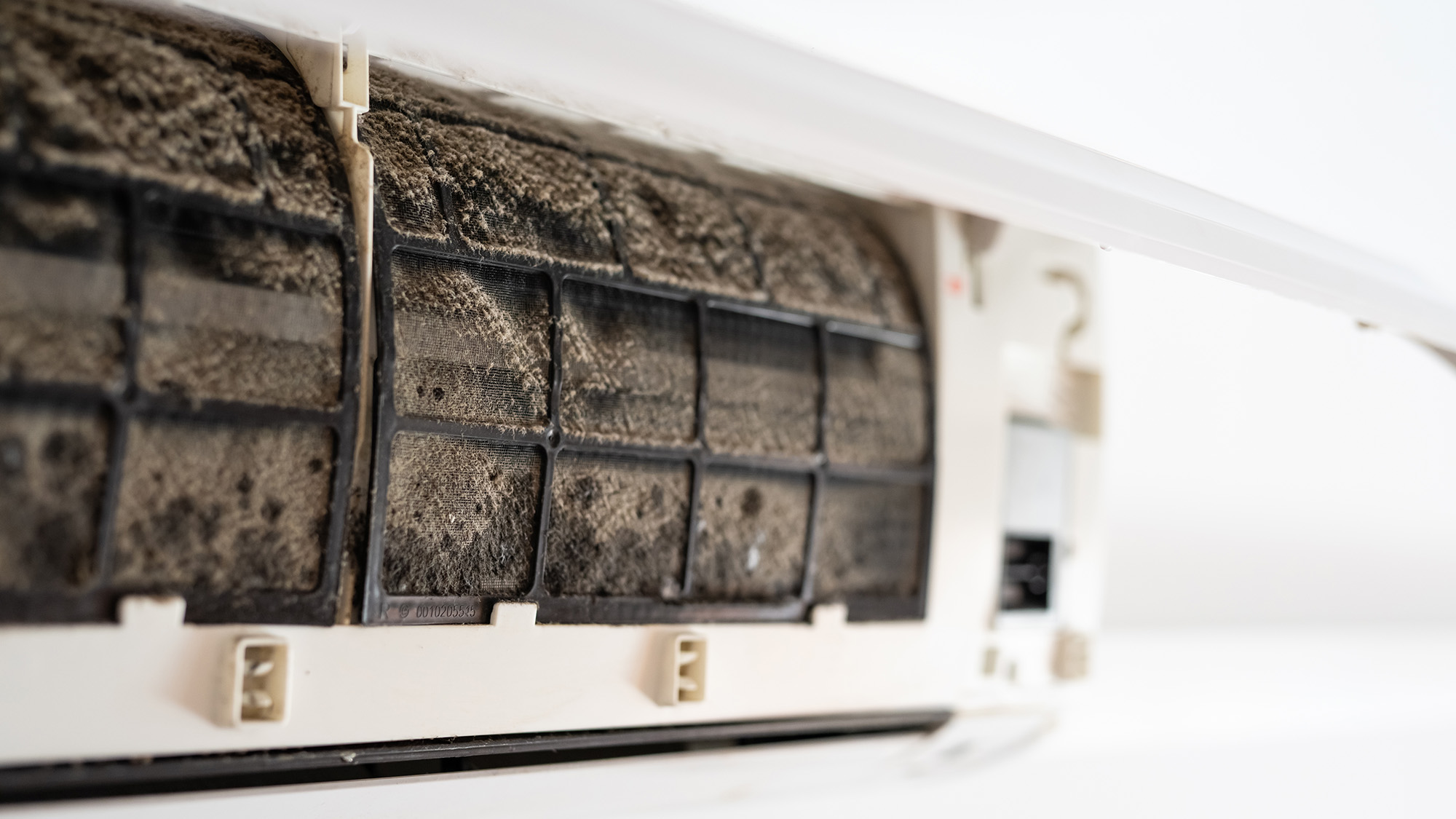
Before mold spreads, catch it early by looking for warning signs. Check your indoor AC vents for dark spots, discoloration, or fuzzy growth around the edges. Look around the base of your outdoor unit for green or black growth, and check ductwork access points in your basement, attic, or utility closet with a flashlight.
If you spot dark discoloration, visible growth, or water damage around any of these areas, you've caught an AC mold problem early. Address it immediately before spores circulate throughout your home.
5. Schedule professional cleaning every 3-5 years

Some areas of your AC system aren't safe for DIY inspection. Inside your ductwork, deep within your system, mold can grow undetected for months. Professional duct cleaning every 3-5 years removes accumulated debris, mold spores, and organic matter that DIY maintenance can't reach.
If you suspect a mold problem that extends beyond your filters or drain pan, call a professional immediately instead of waiting for the next scheduled cleaning. Summer heatwaves accelerate mold growth, so problems develop faster than you'd expect.