During the Bhumjaithai Party election campaign, party leader Anutin Charnvirakul coined a viral phrase upon becoming premier: "I will make my fellow citizens cry out, 'Enough, enough -- we're too rich. We can't handle it anymore!'"
The remark reflected the party's confidence in economic stimulus through several mechanisms, notably the "Thai Chuay Thai Plus" (Thais Help Thais) co-payment scheme, which is being relaunched today. The initiative is financed through a portion of the disputed 400-billion-baht emergency loan decree.
While the scheme may provide short-term relief over four months, cost-of-living pressures are expected to persist, including rising electricity tariffs and volatile energy prices.
When will Thais be able to truly claim they are too wealthy? Or will this phrase remain nothing more than a long-running joke among Thais?
LIMITED IMPACT
Nonarit Bisonyabut, a research fellow at Thailand Development Research Institute, said the structural problems facing the Thai economy reduce the effectiveness of stimulus measures.
The measures do not generate much new production or investment, he noted. Instead, a significant portion of the spending is to clear inventories rather than creating fresh investment, reducing the efficacy of the measures.
Research indicates economic stimulus through cash handouts or money transfers generates a multiplier effect of only 0.5-0.9 times the amount injected, said Mr Nonarit.
In contrast, if the same funds were invested in various projects, the multiplier effect could reach 1.2-1.5 times.
In other words, every baht spent on investment generates greater economic circulation than direct cash handouts, he said.
The efficiency of the stimulus programmes remains relatively low because they are designed as money transfers.
However, Mr Nonarit noted co-payment schemes are more effective stimulus measures than direct cash handouts.
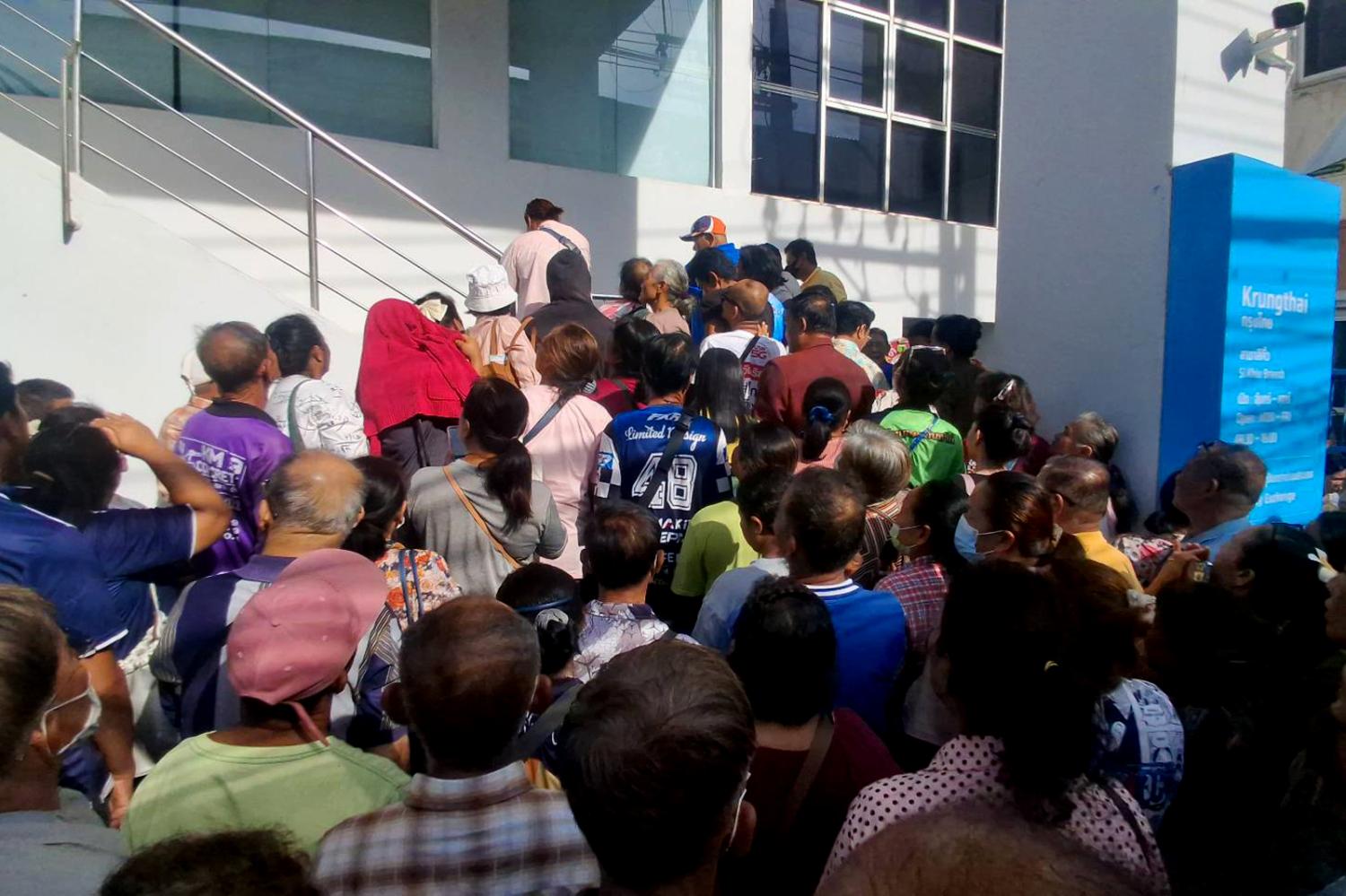
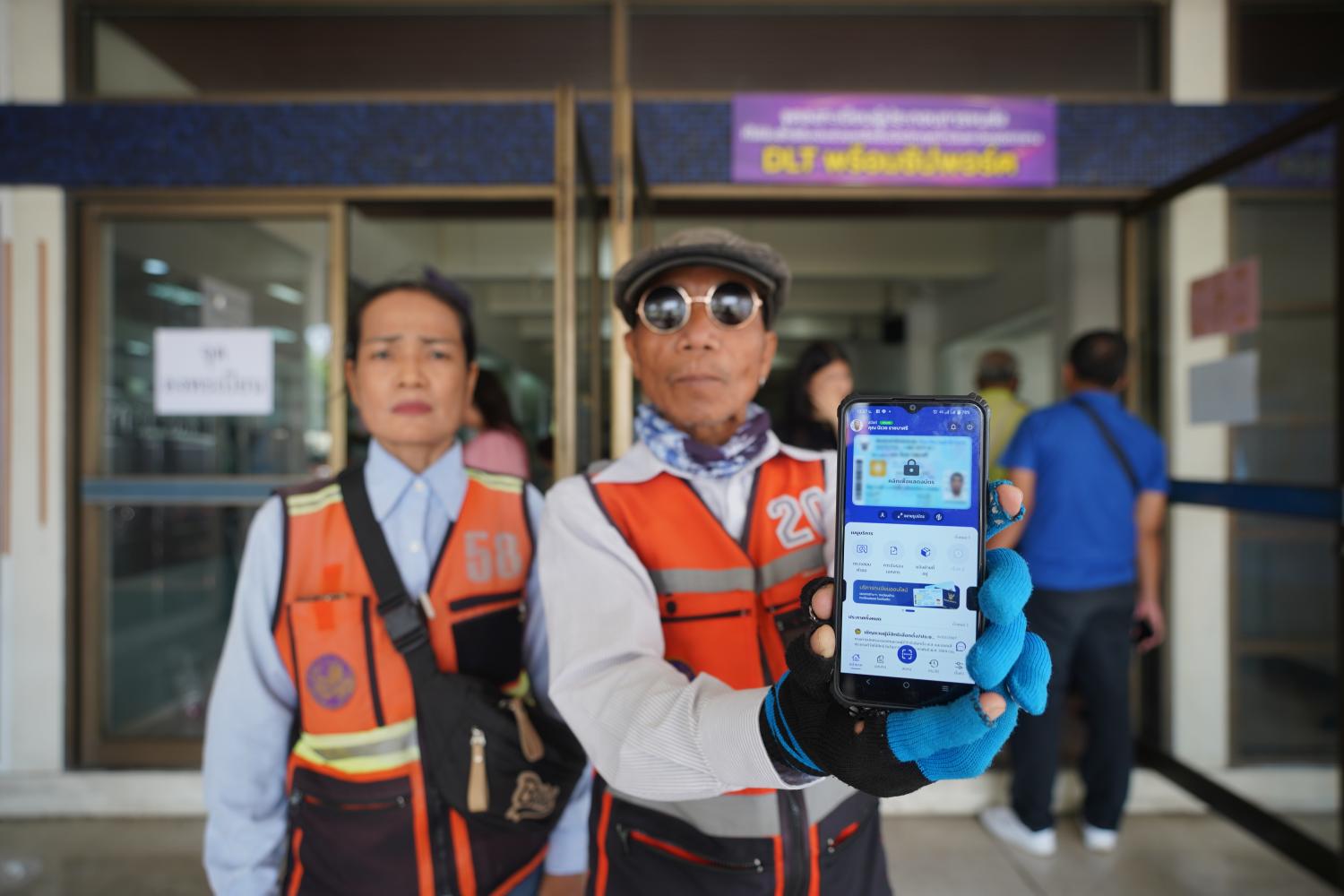
The registration system for the programme was relatively well-designed, but he advised the government to improve targeting for those receiving assistance, particularly low-income earners holding state welfare cards, who number 13.2 million.
SHORT-TERM RELIEF
Kobsak Pootrakool, senior executive vice-president and chief economist at Bangkok Bank (BBL), said the co-payment scheme would ease people's cost-of-living burdens amid rising energy prices.
The scheme provides short-term support for domestic consumption, rather than significantly raising Thai GDP growth this year, he noted.
BBL maintained its 2026 economic growth projection at 1.5-2%, with a marginal contribution expected from stimulus measures.
Beyond the conflict in the Middle East, there is risk of war breaking out in Cuba and Greenland as well as uncertainties surrounding US tariffs, making it too early to revise the growth forecast, said Mr Kobsak.
"This year, the focus should be on survival for both households and businesses rather than growth," he said.
"We do not expect GDP growth of 3-4% this year."
Mr Kobsak said the government's transition policy towards electric vehicles is viewed as an appropriate shift to alternative energy amid mounting concerns over oil prices and supply disruptions.
Regarding the 400-billion-baht emergency loan decree, he said the second tranche of 200 billion baht should be allocated specifically to energy restructuring efforts, rather than spending hundreds of billions solely on fuel price subsidies.
Don Nakornthab, assistant governor for monetary policy at the Bank of Thailand, said the central bank maintains its assessment for the government's first-phase economic stimulus packages, including the co-payment scheme, contributing 0.6 percentage points to Thai GDP growth, raising it to 2.1% this year.
The central bank recently estimated the first-phase stimulus would require a total budget of more than 200 billion baht, higher than the estimate by the National Economic and Social Development Council, which expects the scheme to contribute 0.4 percentage points to economic growth.
STEADY CONSUMPTION
Tris Rating, a local credit rating agency, anticipates the co-pay scheme will contribute 0.4 percentage points to Thai GDP growth this year.
The agency said the scheme would function primarily as a consumption stabiliser, helping households sustain purchasing power amid persistently elevated living costs.
"Designed to relieve household cost-of-living pressures, the scheme channels spending towards small merchants, grassroots trade and 'Thong Fah' retailers, all of which are direct beneficiaries of the policy," said Tris.
Modern trade operators may see some short-term softness in customer traffic, particularly for food and daily essentials, although the impact is expected to be temporary, noted the agency.
Among modern retailers, hypermarkets are likely to bear the brunt of the impact.
Regarding the wholesale business, Tris expects the segment to remain largely unaffected as bulk sales to small retailers and businesses are less directly tied to subsidy schemes.
For convenience stores, the impact is likely to be neutral to slightly positive, while discretionary retailers, including fashion and speciality stores, are expected to face a neutral to slightly negative impact, according to Tris.
MORE SUPPORT REQUIRED
The co-payment scheme is essential to stimulate spending during this sluggish period, but businesses require additional support measures, said Pimjai Leeissaranukul, chairwoman of the Federation of Thai Industries (FTI).
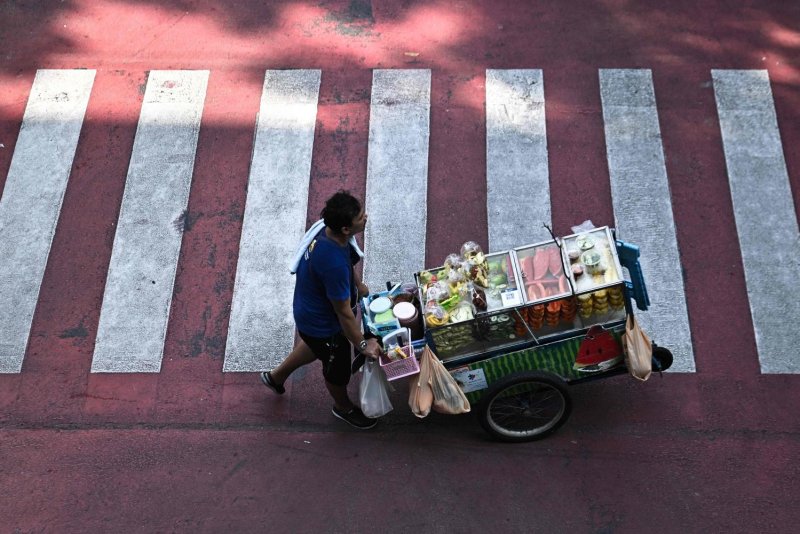
The programme benefits consumers and vendors, especially small and medium-sized enterprises (SMEs), she said, helping to increase their liquidity.
A measure to stimulate spending is needed as the manufacturing sector is struggling to deal with the impact of the energy shock resulting from the Middle East war, said Mrs Pimjai.
SMEs comprise the majority of the FTI's membership and they should benefit from the scheme, which encourages people to buy various products, notably food and beverages, she noted.
However, Mrs Pimjai suggested the government come up with additional measures to better support entrepreneurs.
"We want a new electricity price structure that suits the industrial sector," she said.
The government is preparing to enforce new power pricing based on a progressive rate structure for households from July.
Small electricity consumers pay lower monthly power rates than those using substantial amounts of electricity.
The FTI warned the government previously against adjusting power prices in a way that increases energy costs in the manufacturing sector, as it would reduce competitiveness.
Mrs Pimjai said businesses cannot rely solely on appropriate electricity prices. They also need to generate their own electricity.
"Factories need to seriously consider using solar power," she said, investing in rooftop solar panel installations or solar farm development.
"This can help them save on energy costs in the long term."
PAYBACK RISKS
Economists shared the view that the co-payment scheme could add around 0.4 percentage points to Thai GDP growth this year, but warned of a possible "payback effect" that could dampen economic expansion once the short-term stimulus ends.
Poonyawat Sreesing, senior economist at Siam Commercial Bank Economic Intelligence Center (EIC), said the first batch of 200 billion baht for the co-payment scheme and other stimulus measures could add 0.4-0.5 percentage points to Thai GDP growth in 2026.
The EIC expects 50-70 billion baht from another tranche of 200 billion will be spent this year to fund renewable energy transitions.
"With a total of 270 billion baht set for spending on stimulus, Thai GDP should receive a boost of roughly 0.6%," he said.
"The question is whether those who receive 1,000 baht in subsidy funds monthly would spend another 1,000 baht on other items or debt repayment," Mr Poonyawat told the Bangkok Post.
"I think, under these economic circumstances, they will spend that other 1,000 baht."
Finance Ministry officials have repeatedly said every 100 billion baht could generate an economic multiplier of 0.2%, he noted.
"I think that assumption is feasible, particularly in encouraging middle- to low-income households to spend more to prop up the economy," said Mr Poonyawat.
KKP Research views the stimulus as likely to contribute 0.3 percentage points to economic growth in the third quarter, helping the Thai economy avoid a technical recession that some research houses predicted for the third and fourth quarters.
Krungsri Research said the co-payment scheme is expected to stimulate consumption from the end of the second quarter through the third quarter.
"People are expected to be more cautious with their spending amid rising living costs, low income growth and high debt burdens," Krungsri said in a research note.
As a consequence, the economic multiplier effect of the co-payment scheme may be lower than previous rounds of co-pay stimulus, noted the research house.
In the base-case scenario, the programme is expected to lift Thai GDP by 0.2-0.5 percentage points, noted Krungsri.
However, these measures may bring forward consumption and reduce spending after they end, a phenomenon described as a payback effect, potentially affecting GDP in the longer term, said the think tank.
HELP FOR RETAIL
Milin Veraratanaroj, chairman of Tang Ngee Soon Superstore, one of the largest traditional wholesale chains in Udon Thani province, said the company's sales in April and May dropped about 15% year-on-year due to weaker consumer spending power.
The conflict in the Middle East has had a psychological impact on Thai consumers, prompting many to prioritise savings, reduce spending and express concerns about an uncertain economic future.
He estimated last year's co-payment scheme lifted the sector by double digits during the campaign.
However, Mr Milin said he is sceptical this year's stimulus will deliver the same results.
Consumer purchasing power declined due to rising living costs, meaning subsidies now purchase fewer goods than before.
Furthermore, the conflict in the Middle East continues to weigh on consumer sentiment, he noted.
While co-payment schemes typically encourage consumers to spend more than usual, many now view the government's subsidy as an opportunity to save rather than increase spending, said Mr Milin.
"This time, customers are likely to maintain their current spending levels and instead save the portion subsidised by the government," he said.
Although wholesalers are not eligible to participate, small mom-and-pop stores can join the programme, and these retailers typically source their goods from Tang Ngee Soon Superstore.
Other wholesalers are expected to increase their inventories in preparation for the scheme, said Mr Milin.
Tang Ngee Soon Superstore already raised its inventory levels to around 50% above normal.
The company plans to monitor sales during the campaign before determining whether further inventory adjustments are necessary, he said.
BENEFICIARIES
Mookda Pairatchavet, chief executive of Osotspa Plc, said the Thai energy drink market is likely to receive a boost in the second half, driven by the co-payment scheme as it targets mass-market consumers.
Ratiporn Ratcharoen, group chief financial officer of Osotspa, said demand is expected to rise during the scheme, as traditional trade stores have already increased their orders from the company by around 10%.
Suthasin Amaruek, secretary of the Thai Egg Merchant Trade Association, anticipates a moderate increase in egg sales under the scheme, following a significant slowdown since the Songkran festival.
As a middleman, he said he has observed sluggish sales to small egg vendors and other food providers, including bakeries and restaurants.
"When people dine out less, it affects restaurants and our businesses because those restaurants buy fewer eggs from us," said Mr Suthasin.
Additional reports by Nareerat Wiriyapong, Kuakul Mornkum and Somhatai Mosika