Hawaiian communities still picking up the pieces after last weekend’s hurricane could get pounded again in the coming days.
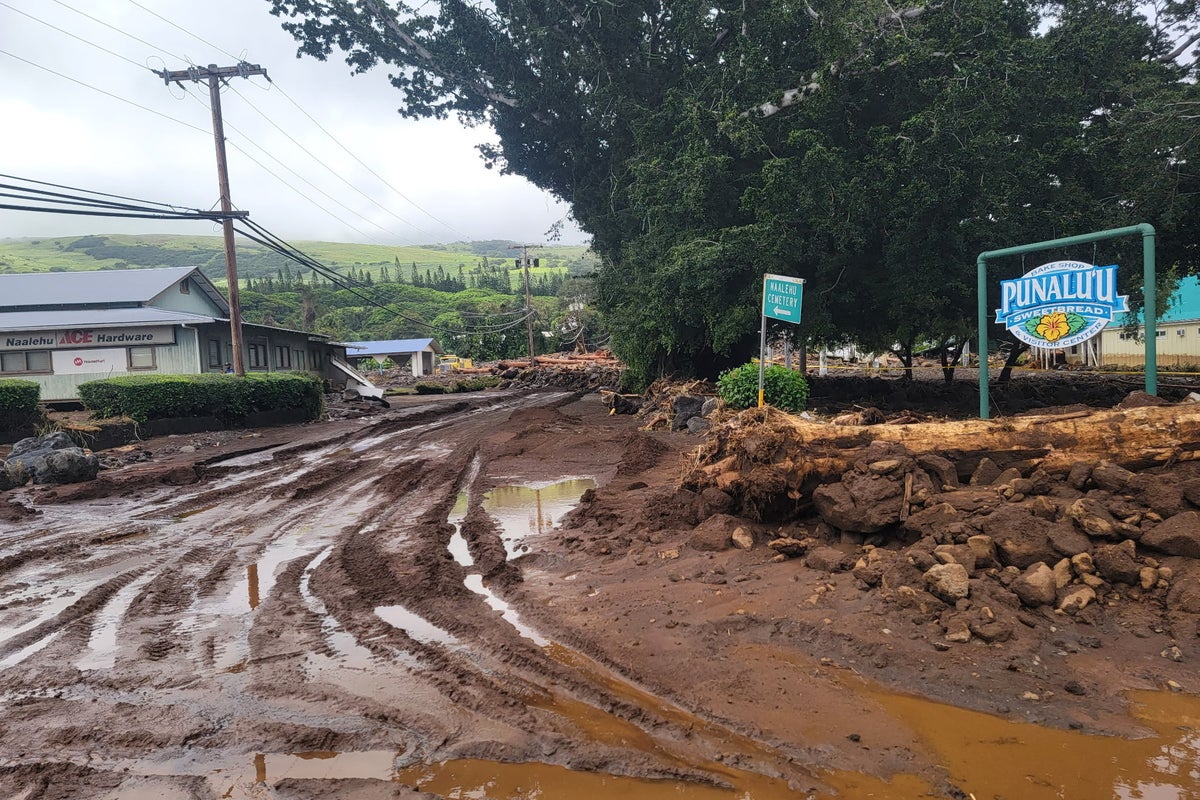
Hurricane Lala tore roofs off houses, uprooted trees, covered roads in mud and rock and left many households without electricity. With nearly 15,000 homes and businesses still dark Thursday, forecasters warned of the likelihood of another tropical cyclone forming southeast of the islands.
A depression moving west and northwest could become a tropical storm Thursday and is expected to pass near or south of Hawaii's Big Island this weekend, according to the National Weather Service’s Central Pacific Hurricane Center. That could mean up to 15 inches of rain across the Big Island and life-threatening flooding, mudslides and rip currents, the hurricane center said.
Hawaii Gov. Josh Green and other state officials planned a news conference Thursday afternoon to discuss the potential cyclone as well as the ongoing recovery efforts related to the hurricane, which has been blamed for two deaths in the state.
The body of a man in his 60s was located by residents in a pasture Tuesday, a day after police were asked to conduct a welfare check, police said. That followed the discovery Monday of May Doi, 93, whom neighbors said was escaping floodwaters in her home and trying to get to a nearby shelter.
Doi was a beloved former kindergarten teacher who taught generations of residents in a small town on Hawaii’s Big Island.
“She taught grandkids of her students,” said ʻĀina Akamu, a former student of Doi’s who is now a vice principal at a local school. “She was a fixture in this community."
Now well west of Hawaii’s main islands, Lala reached major Category 3 strength with top sustained winds of 115 mph (185 kph) on Wednesday in what the National Hurricane Center called the first major hurricane of 2026 in the Central Pacific Ocean.
The heaviest recorded rainfall, 43.54 inches (1.1 meters), occurred in Laupahoehoe on the northeast coast of the Big Island, the National Weather Service said. Dozens of homes were washed from foundations, bridges were damaged and a collapsed section of a two-lane road had cut off access to the community of Pahala.
About 13,200 customers on the Big Island remained without power Thursday, the Hawaiian Electric utility said. Repairs in the heavily damaged areas of the Big Island, including the southern end, could take at least two weeks, the utility said.
Meanwhile, Lala was moving to the northwest at 9 mph (15 kph) Thursday and was expected to turn toward the north later in the day. It was bearing down on a remote area at the northwestern edge of the Hawaiian Archipelago. Hurricane warnings were posted for portions of the Papahanaumokuakea Marine National Monument from Lisianski Island to Maro Reef.
Despite the remote area, there were humans in harm’s way. A charter boat with a crew of 16 people dedicated to removing marine plastics and abandoned fishing nets from the shores of the Northwestern Hawaiian Islands got out of Lala’s projected path earlier this week.
Kevin O’Brien, president of the nonprofit Papahanaumokuakea Marine Debris Project, departed Lisianski Island on Monday and headed 350 miles (563 kilometers) out to sea.
“We were ready for it,” O’Brien said. “We keep on our toes out here during hurricane season.”
___
Ramer reported from Concord, New Hampshire. Associated Press writer John Raby in Charleston, West Virginia, contributed to this report.