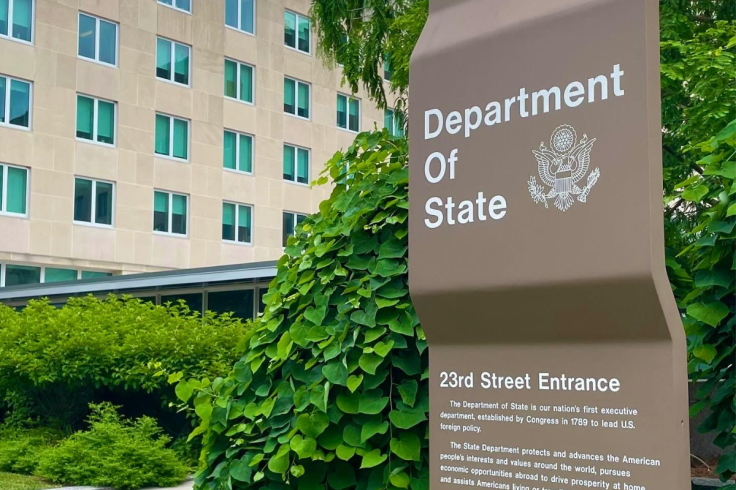
The US State Department has issued a worldwide travel warning for Americans living and travelling abroad, telling them on Saturday to exercise 'increased caution' amid rising threats to US diplomatic facilities after two US troops were killed in Jordan in what officials described as an Iranian attack.
For context, the fresh alert marks a clear escalation of Washington's concern over the security environment in the Middle East and beyond. The Security Alert, published by the State Department, follows weeks of mounting tension and tit-for-tat military activity, but the deaths of the two service members, announced on Friday, have sharpened fears that US interests could now be targeted more widely.
'Due to heightened tensions in the Middle East, the security environment remains complex with the potential for unforeseen escalation,' the State Department said in its worldwide caution notice. The department urged Americans 'in the region' to remain vigilant, monitor local and international news, and be prepared for sudden changes to flight schedules or embassy operations.
Worldwide Travel Warning Tied to Iran–US Confrontation
The latest worldwide travel warning comes directly on the heels of that deadly attack in Jordan, which US officials have blamed on Iran. Two US service members were killed and four more were 'medically evacuated' after the strike, according to the US government. Those numbers have not been independently updated and there is no public detail yet on the condition of the injured personnel.
To recall, the United States has recently resumed strikes on Iranian coastal surveillance and air defence facilities, as well as on missile and drone storage sites and other targets linked to Tehran's military infrastructure. The Pentagon has framed those operations as defensive, aimed at deterring further attacks on US forces and allies in the region.
Iranian leaders, for their part, are not exactly playing it down. Iran's Supreme Leader, Mojtaba Khamenei, was quoted by state media as saying the US was 'seeking to escalate the conflict' and warned that the 'noble nation of Iran and the Resistance Front have unforgettable lessons in store for it.' That sort of language is not new, but paired with a body count, it hits differently.
The State Department is blunt about what it thinks might follow. 'Groups supportive of Iran may target other US interests overseas or locations associated with the United States and/or Americans throughout the world,' Saturday's alert warned.
In other words, the concern is no longer limited to uniformed personnel on bases in the region, but potentially to soft targets and civilian travellers, from hotel lobbies to consular waiting rooms.
State Department Travel Warning Highlights Regional Flashpoints
For starters, US officials are looking nervously at a cluster of Gulf and Middle Eastern states where Iranian-linked forces have already probed for weaknesses. According to US and regional authorities, the Islamic Revolutionary Guard Corps has attempted to launch attacks on Saudi Arabia, Kuwait, Bahrain and Jordan in recent weeks.
Authorities in Jordan were forced to evacuate Aqaba's international airport after what was described as a specific threat. No casualties were detailed in the publicly available statements, but the fact that a major airport had to be cleared out gives a sense of how jittery things have become. In Kuwait, officials say Kuwait International Airport has been struck on multiple occasions by Iranian missiles and drones.
The knock-on effect for travellers is not theoretical. 'Flight cancellations and periodic airspace closures may cause travel disruptions,' the State Department cautioned. That is diplomatic speak for missed connections, suddenly grounded aircraft and, in the worst cases, stranded passengers stuck in transit with little idea what happens next.
The wider warning applies globally, but the department singles out the Middle East as an area where Americans should be particularly careful. The message is not to abandon travel altogether, but to think twice about non-essential trips into known hotspots, register journeys with US authorities, and keep contact details for the nearest embassy or consulate close to hand.
Officials are again pushing the Smart Traveler Enrollment Program, known as STEP, a somewhat clunky but useful platform where US citizens can register their travel plans and contact information.
Those who sign up receive security updates and alerts from the nearest US mission. In a fast-moving crisis, that is the system the State Department will use to blast out instructions or evacuation guidance, if it comes to that.
Behind the formal language of Saturday's statement sits a harsher reality. US embassies and consulates have long been symbolic targets for Iran-aligned militias and other armed groups, and when leaders in Tehran openly talk about teaching Washington 'lessons,' security teams everywhere from Beirut to Manama start revisiting the worst-case scenarios.
There is also a political dimension. A deadly attack on US troops, attributed to Iran, places pressure on Washington to respond, which in turn raises the risk of further retaliation. That feedback loop is the 'unforeseen escalation' the State Department is trying to warn ordinary travellers about, without spelling out every ugly possibility.