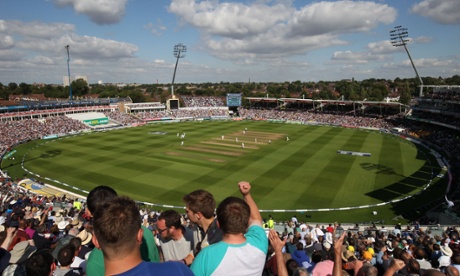
Whether you enjoy pushing through a turnstile to join the watching throng or revel in playing yourself, Birmingham is in the big league when it comes to sport. A short journey of 10 miles or so across the city takes you past the gates of three venues that simply ooze sporting history.
Near the well-heeled suburbs of Sutton Coldfield, for instance, is The Belfry, a magnificent golf course that in the past 30 years has become synonymous with dramatic Ryder Cup matches. Travel southwards to inner-city Aston and there can be no greater contrast than the towering concrete stadium that is Villa Park, a ground that dominates a down-at-heel area but which was built in the grounds of a stately Jacobean home and, with due respect to their Premier League rivals West Bromwich Albion, has a heritage almost unrivalled in the annals of English football. Travel across the city centre to the leafy suburbs of Edgbaston and there stands the cricket ground, home of Warwickshire, who won the seventh of their county championship titles as recently as 2012, and the venue for this summer’s third Ashes Test.
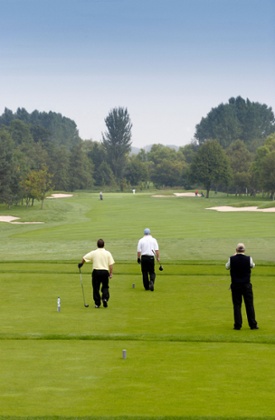
All three venues are known throughout the world. But if the steep cost of actually playing at The Belfry’s Brabazon course, one of three courses at a venue that is also the home to the Players’ Golf Association, is beyond your pocket, if Aston Villa is not your team or cricket not to your taste, there’s plenty of sporting alternatives.
The Edgbaston Archery and Lawn Tennis Society, known as the Archery, claims to be the oldest lawn tennis club in the world. Founded in 1860, the club has six grass, four shale and two artificial courts in a beautiful setting.
“It’s an oasis in the heart of the city. I’ve played all around the world but I’ve never seen a club like this,” says Alex Fortey, a 35-year-old who began playing here at the age of seven. “Navratilova and Sharapova have played here in the build-up to Wimbledon but it’s not an exclusive club. There are programmes for young players and it is a welcoming place.”
Indeed, when I wandered around there on the afternoon Maria Sharapova was being beaten by Serena Williams at this year’s Wimbledon, the courts were packed with eager children. At the nearby Edgbaston Priory club, the centre court is named after Ann Jones, born in nearby Kings Heath and winner of the 1969 Wimbledon title. The club’s origins date back 130 years, and since 1982 it has played host to the Birmingham Classic, an important staging post to Wimbledon’s women’s draw.
Birmingham has produced a wealth of athletics champions as well. Alexander Stadium in Perry Barr is the home to Birchfield Harriers – arguably the leading athletics club in the land – and the offices of UK Athletics.
Rugby union also has a long history in the city. Moseley, its leading club, has produced 43 internationals, including a number of English and Welsh captains. On 27 September, Villa Park will open its doors to the sport when Australia play Uruguay in their game in England’s pool in the Rugby World Cup 2015.
A running start: seeding grassroots sports

Birmingham city council this year founded the European Capital of Running Project, with £1.55m funding over the next three years, after which it is hoped sponsorship will keep it on track. The aim, in the short-term, is to get its citizens off the sofa and out on to the city’s streets and tracks.
The long-term aim is to inspire 100,000 people to keep on running, and hopefully produce another Mo Farah, the Olympic champion who last year broke the 35-year-old British two-mile record at the Diamond League meeting at Alexander Stadium.
The project will supply money to be invested into local clubs and introduce a new spring 10km race, aimed at mass participation but also looking to encourage more serious runners to pit themselves against Europe’s leading runners – in much the same way as the London Marathon includes everyone from elite-level to fun runners.
In the meantime the priority is to see more people taking part in sport at a grassroots level.
According to Birmingham University’s Centre for Obesity Research, around a quarter of the city’s million people are obese. Mike Chamberlain is the chief executive of Sport Birmingham, an organisation that has made tackling the city’s obesity problem a priority.
“There are the obvious professional clubs in the city, but we are working on the ground to help challenge sports to connect with the community. Athletics, cycling, tennis and netball in particular have responded really positively. The city has become the European capital of running and sports such as tennis are also breaking down barriers.
“Tennis may have been perceived as a sport of the leafy suburbs, but Birmingham has more parks than any city in Europe and we are looking to use them to take sports into the community – encouraging people to play tennis or netball or badminton, for instance, even when the regulation courts aren’t there. It’s about investing in people and sowing the seeds in the community.”