
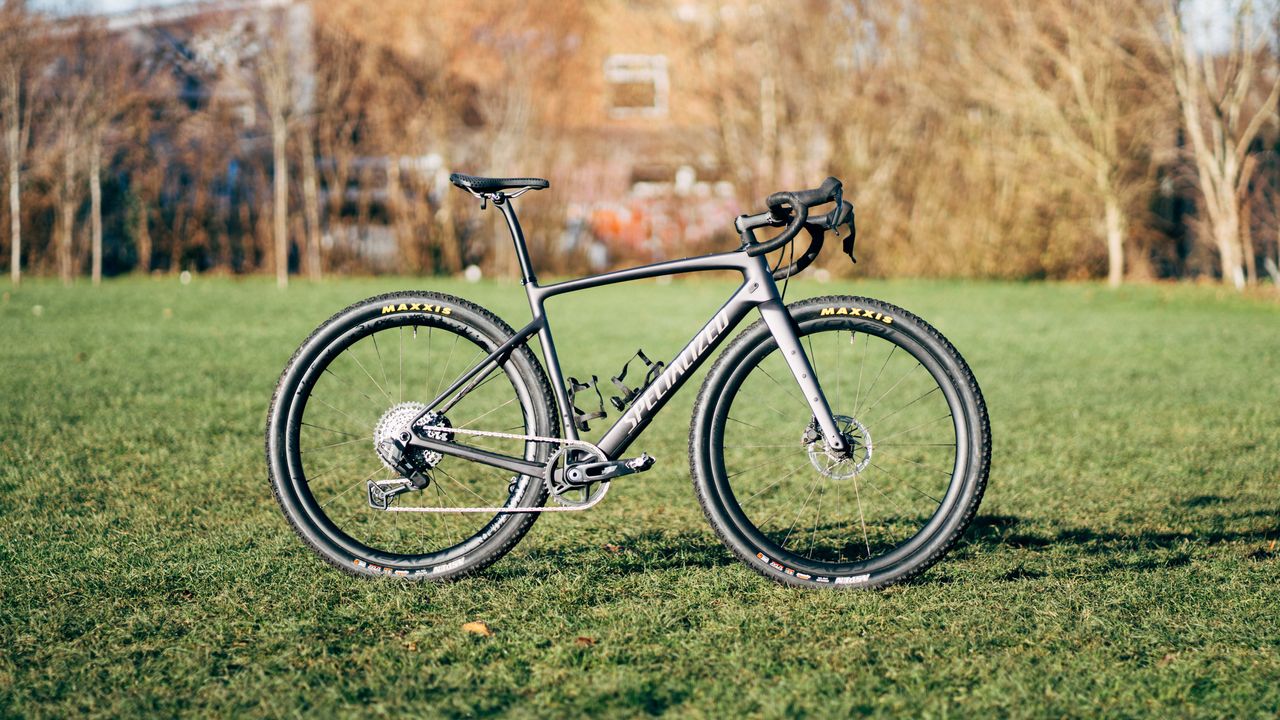
- Price: $5,999 / £5,249 / €6,299
- Weight: 8.9kg / 19.6lbs
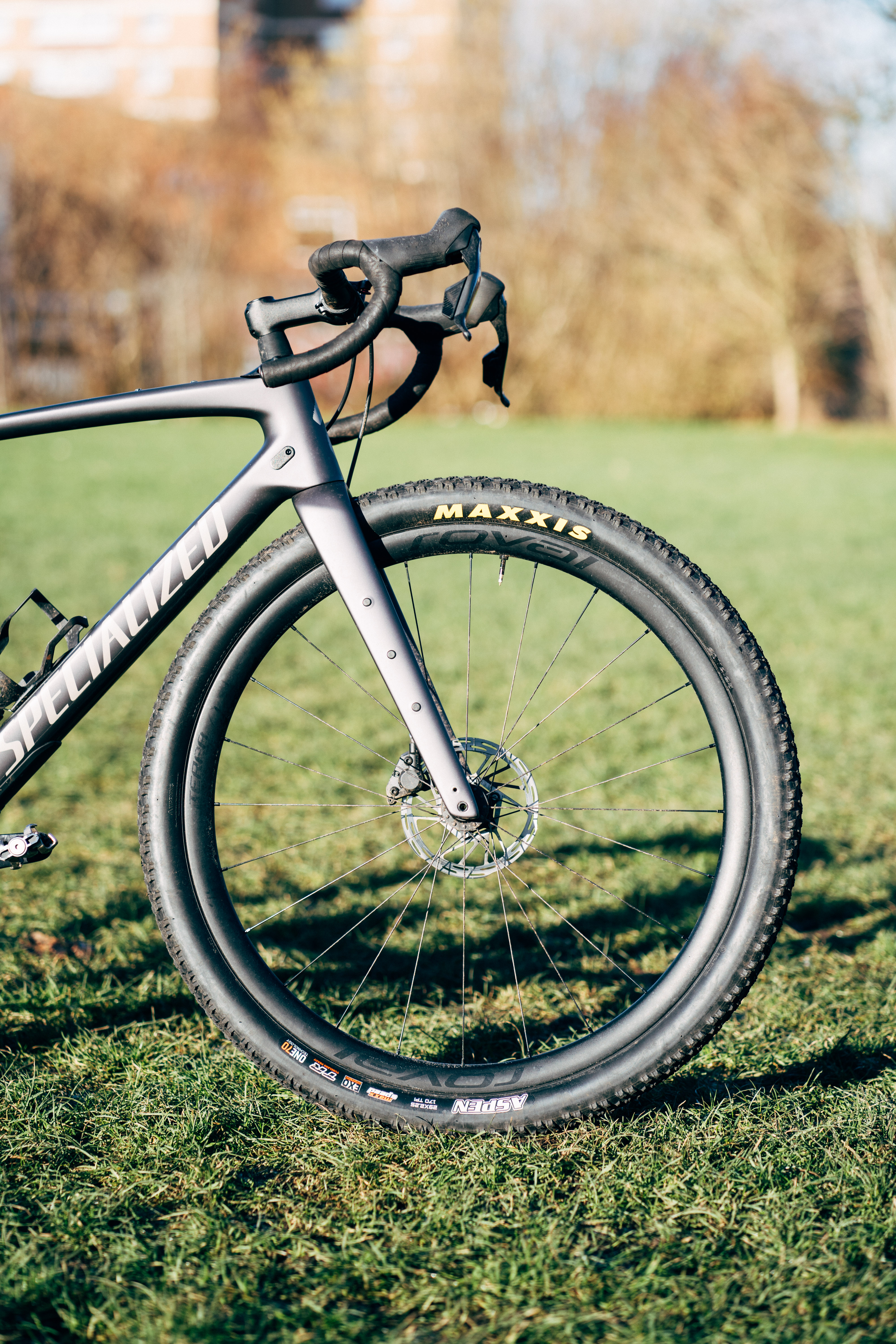
- Wheels: Roval Terra Carbon, 25mm internal
- Sizes: 49-61
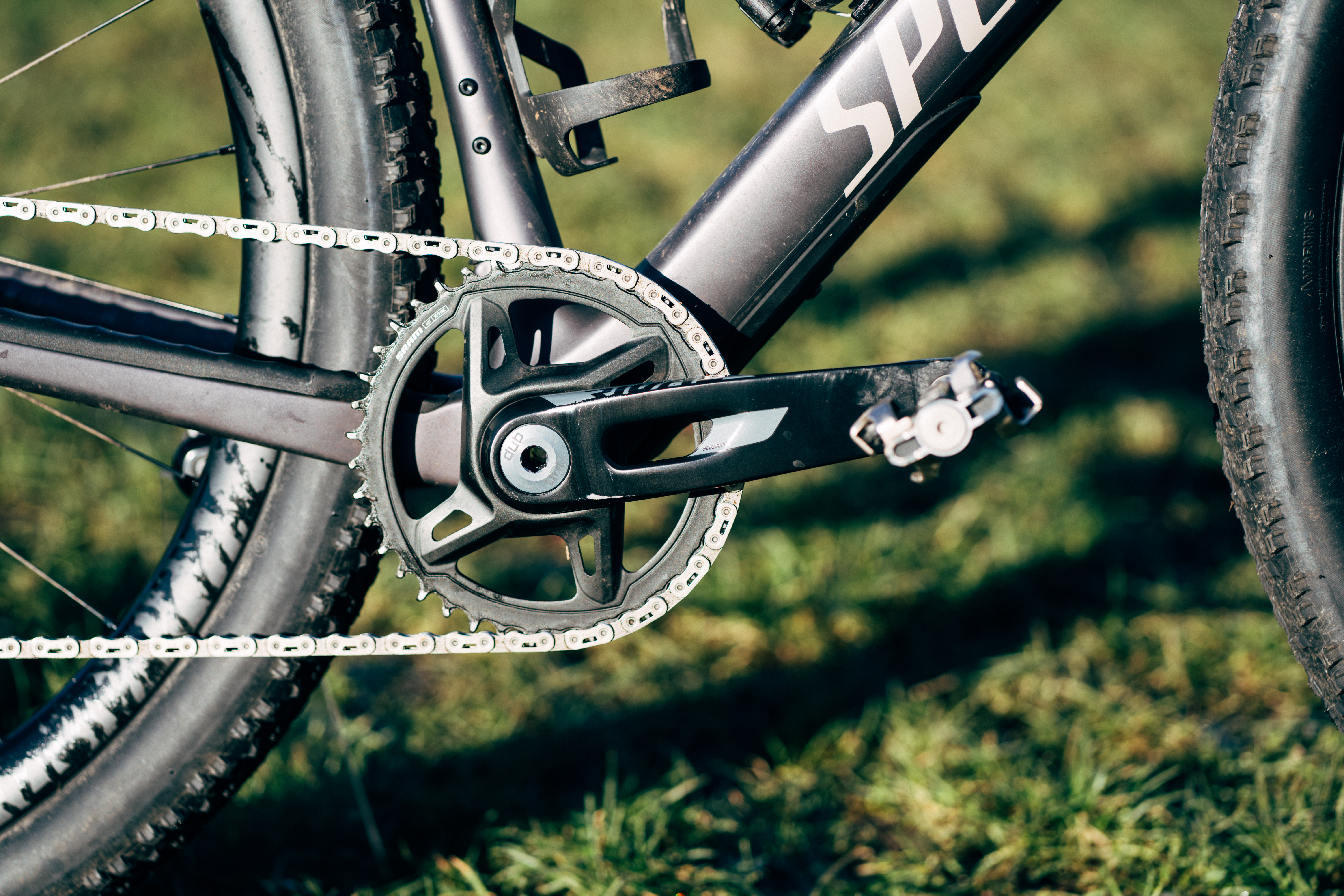
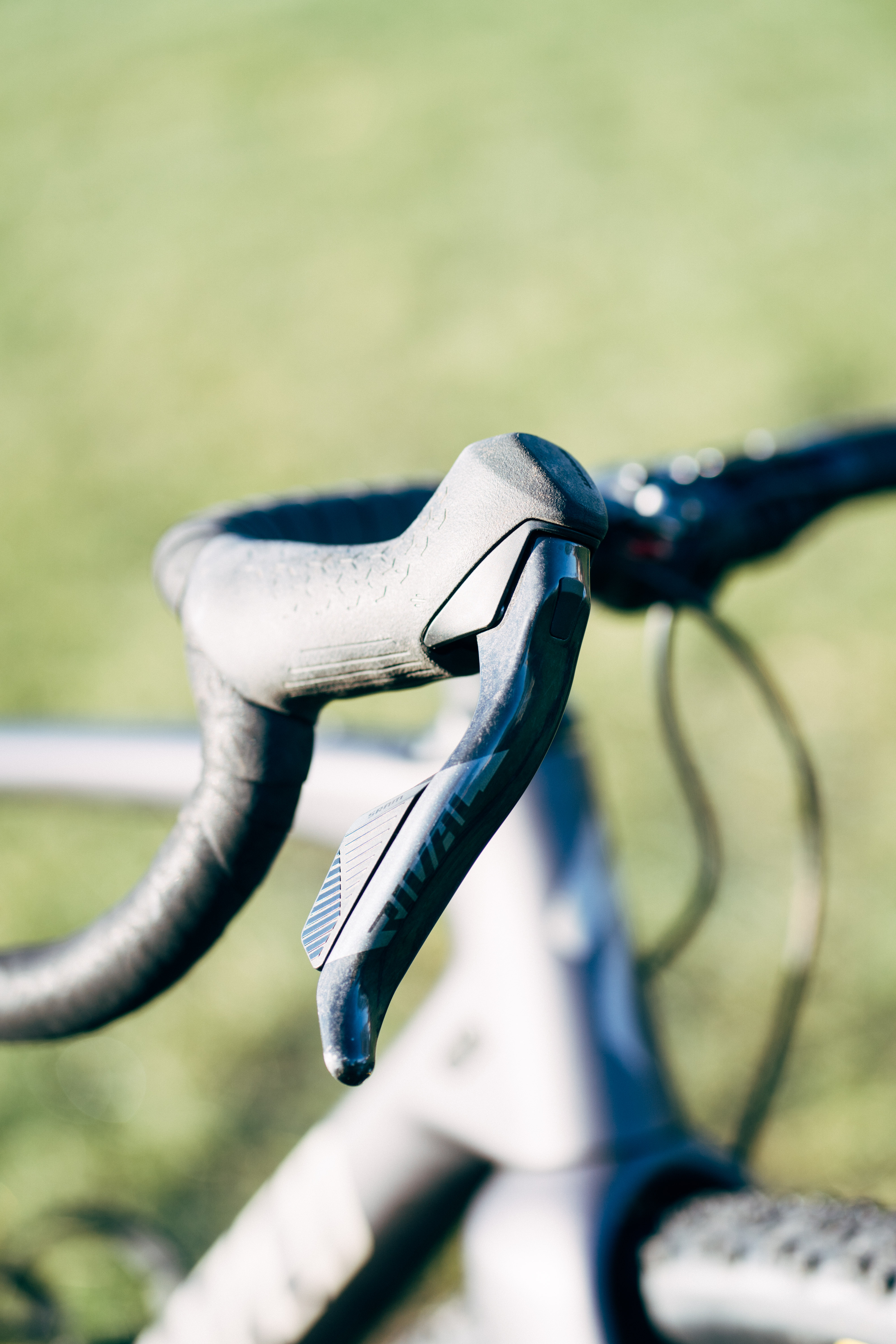
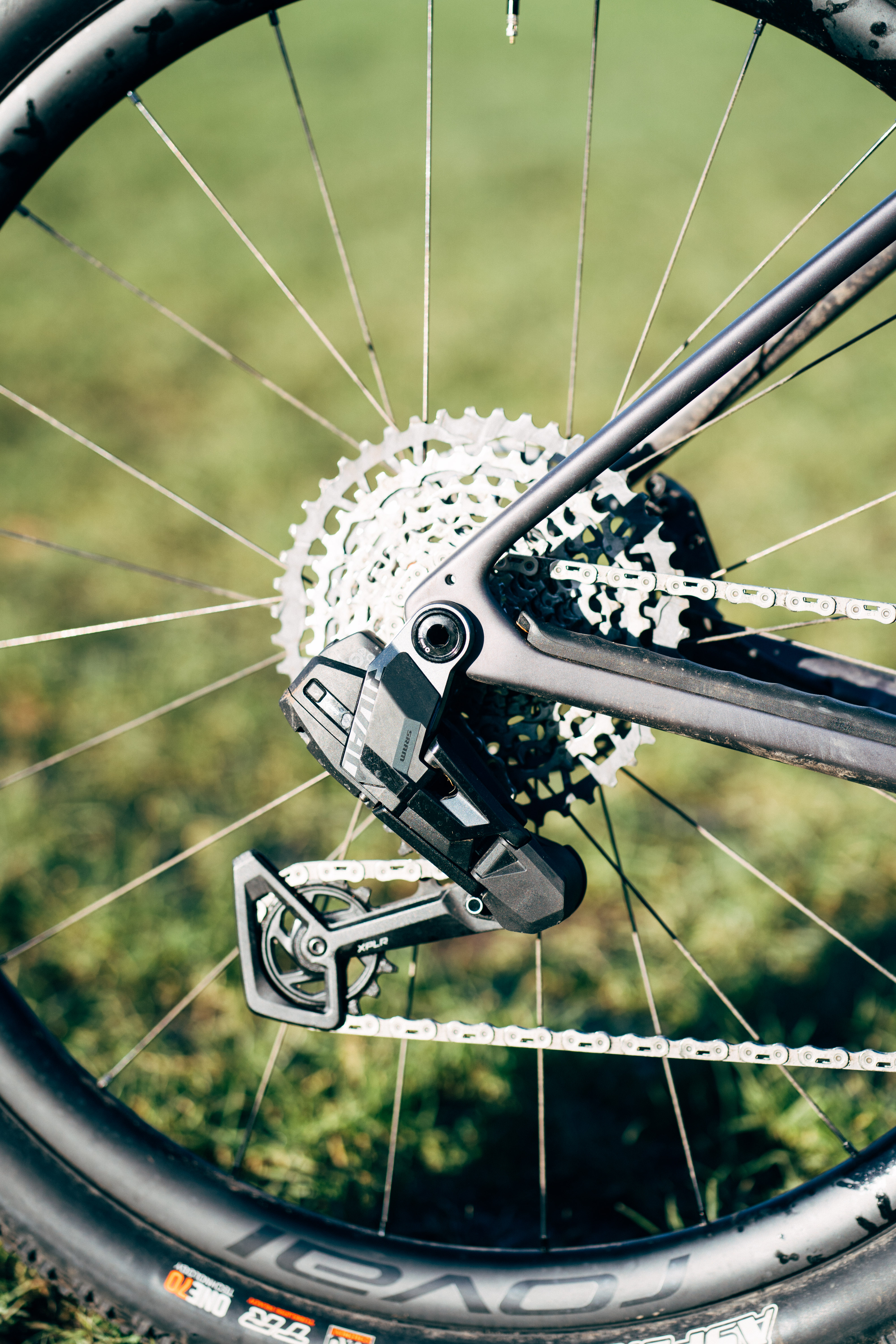
- Groupset: SRAM Rival XPLR
- Colours: Turquoise, Dark lilac
I have fallen into a trap. Maybe it’s because I like the ‘I’m cooler than you’ buzz of niche brands, or maybe it's just because of the size of Specialized even in relation to other mainstream brands, but I’ve overlooked the Diverge more or less since its inception when considering the best gravel bikes. It filled a place in my head as The Default Choice. Competent, but vanilla. The chicken tikka masala of the curry order, or the pepperoni pizza. This is even more mad when you consider that a pepperoni pizza would be my last meal on earth, but that’s by the by.
Whatever my previous opinions on the Diverge, having never thrown a leg over one in anger, I’m more than happy to admit that I was, mostly, mistaken. I still think it’s perhaps an uninteresting choice from a conversational standpoint if you were to ask someone what their favourite gravel bike is, but it is very, very good.
Having ridden a lot of do-it-all gravel bikes that ride like road bikes, it has been refreshing to ride something clearly optimised for the rough stuff. It’s a little less lively, a little more languid on the road, but the trade-offs are more than worth it on even moderately rough ground.
Design and aesthetics
Bigger and more of it, in general, is how the gravel market is going. More tyre, bigger squish, more bounce, extra rad. Some bikes, like the Factor Aluto and Merida Mission, buck this trend with their svelte figures and rather conservative tyre clearance in an effort to preserve a semblance of road-like ride character, but for the most part, each new gravel bike has wider tyres than the last, and the Diverge is no different.
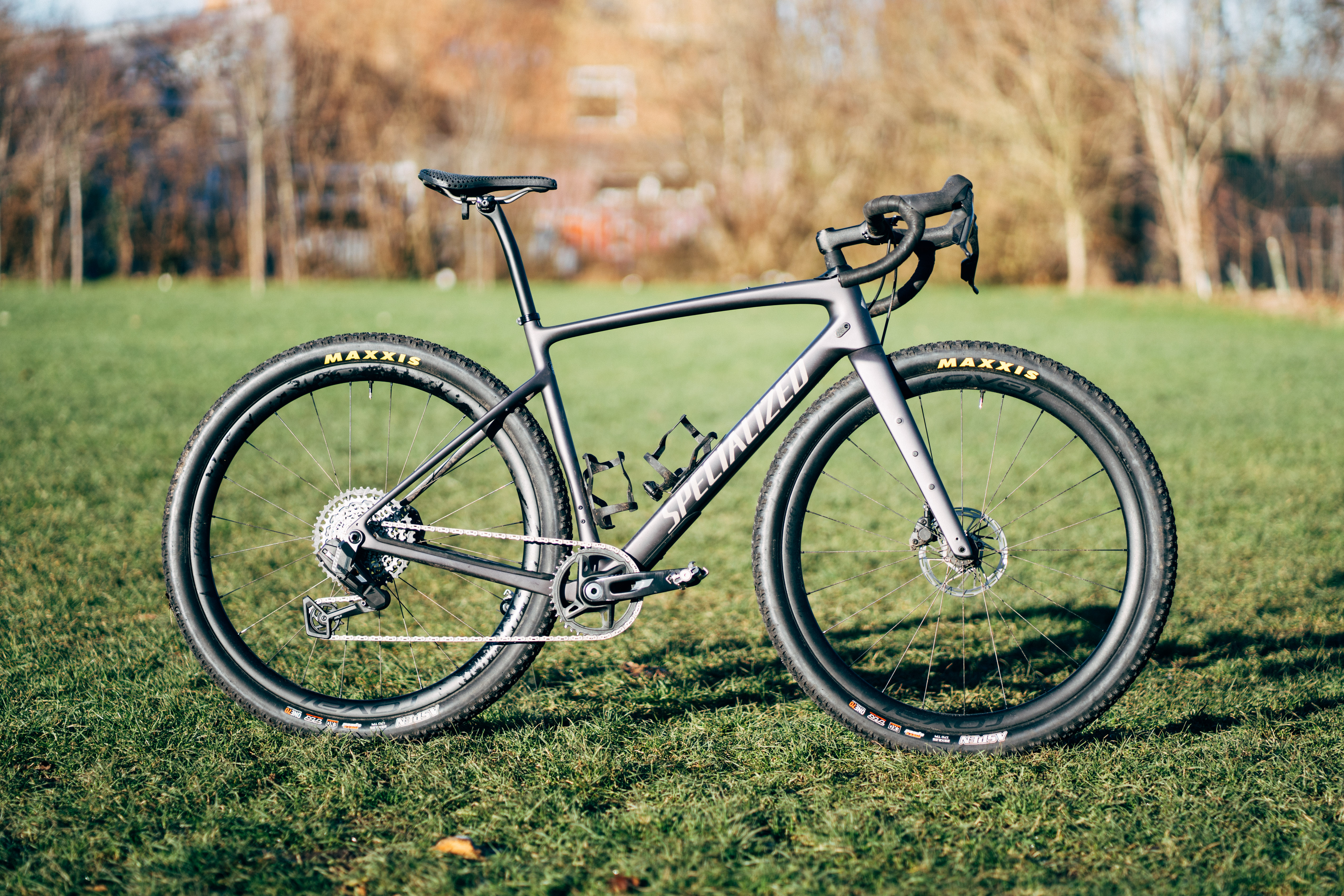
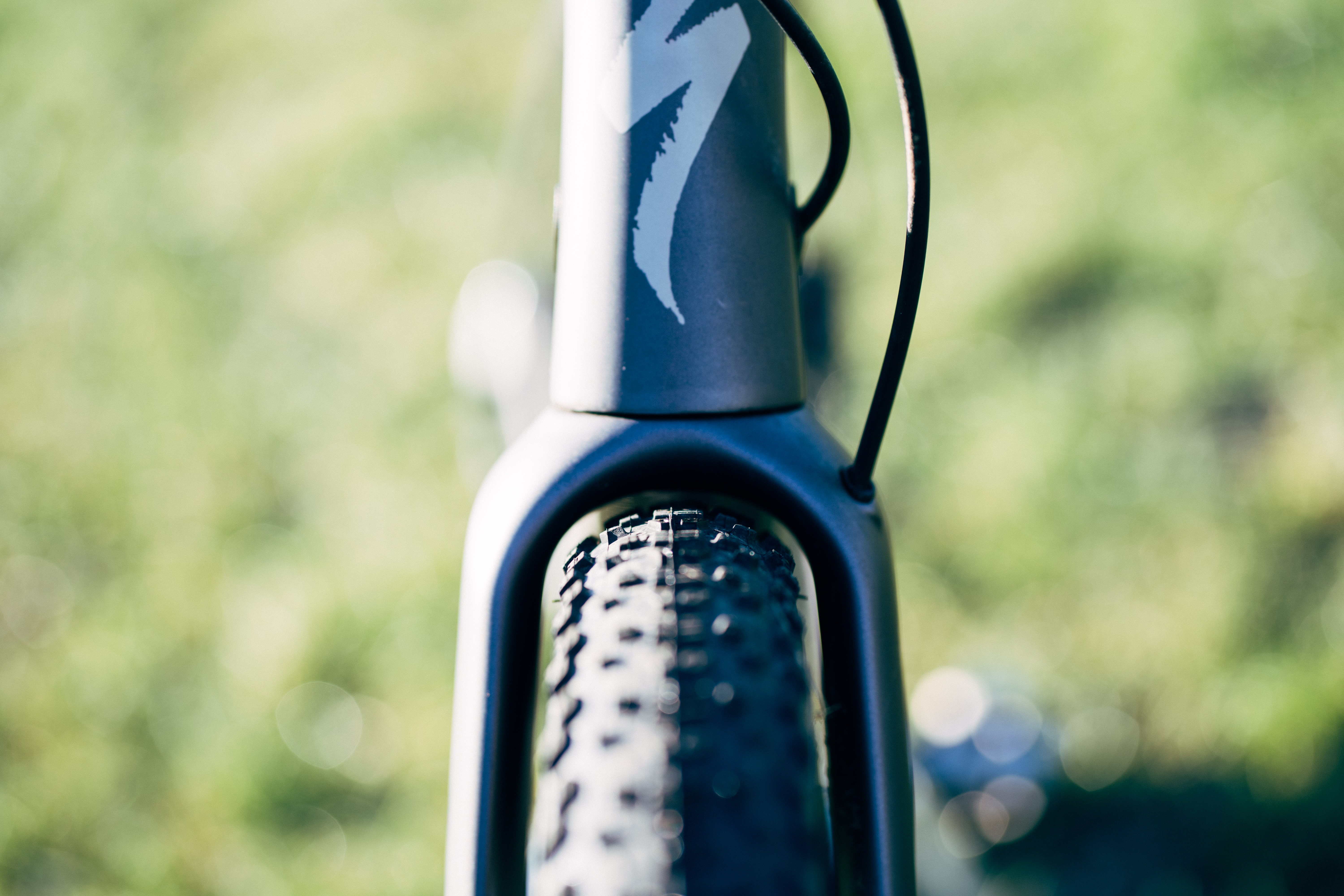
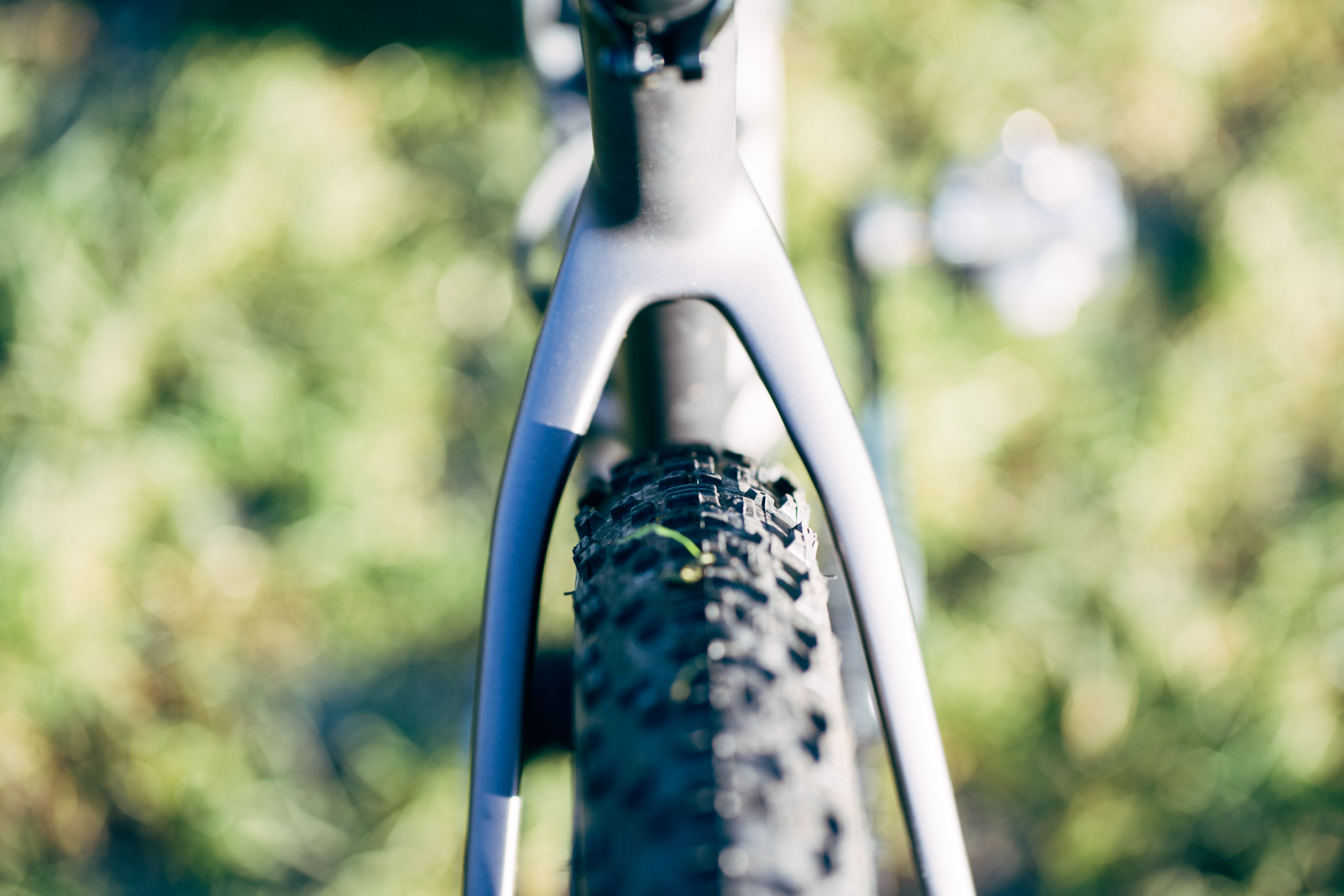
Specialized has upped the clearance here to an official 50mm, with 7mm of space around the tyre. It does also say you can fit 2.2” MTB tyres in with 4mm of space, but you will risk your paint if you do this. As you might have gathered from the images scattered throughout this article, not only did I risk the paint, but I did go one further and fit a set of wonderful, low-profile 2.25” Maxxis Aspens. There is scant room, but they do mostly fit. I’ll get into whether I think you should actually do this a little later. The Diverge does, at all tiers, come as stock with 45mm Specialized Tracer tyres, which, in my brief time with them, I did like, but I wanted to see how this bike performs at the extremes of its capabilities, so they came off relatively swiftly.
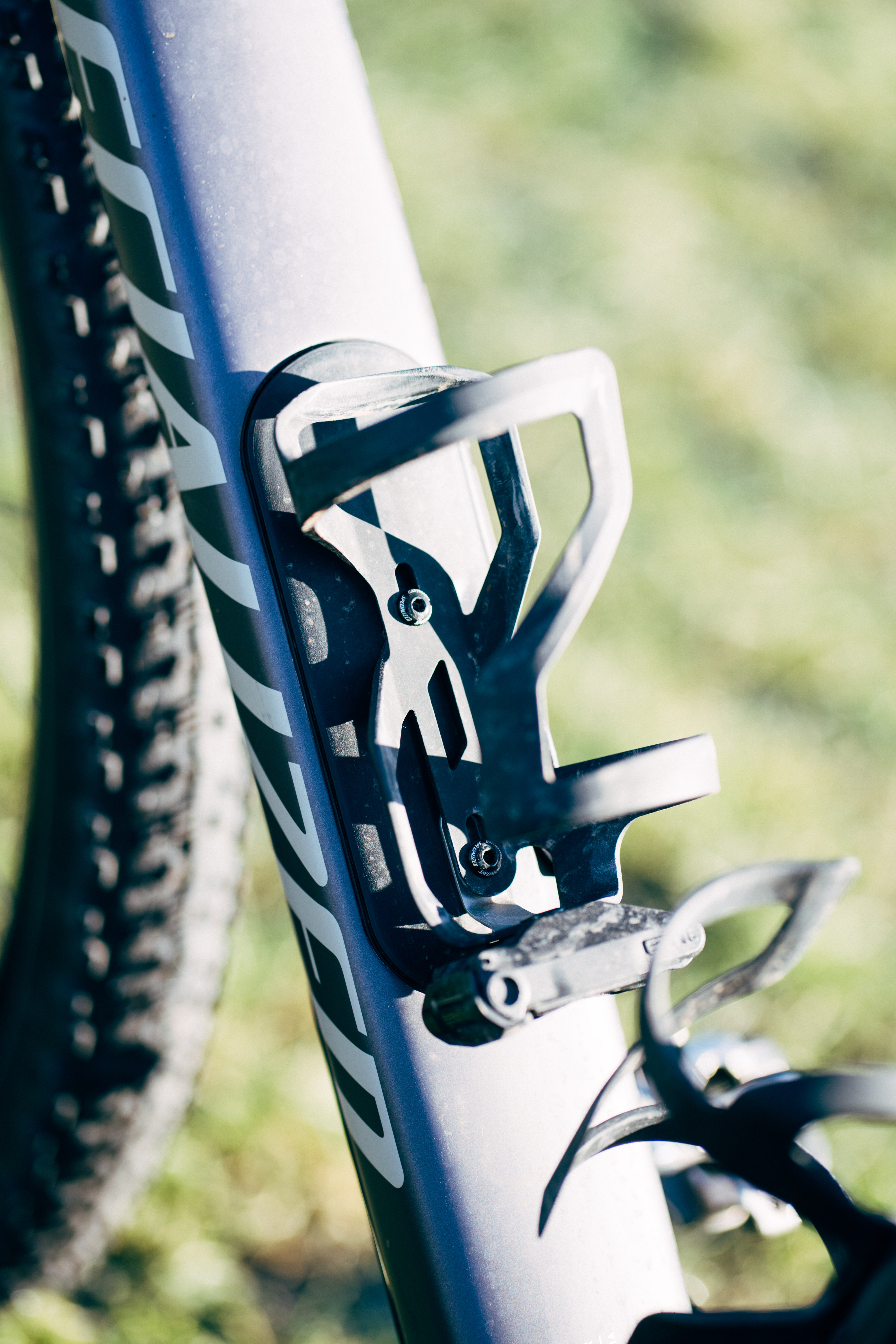
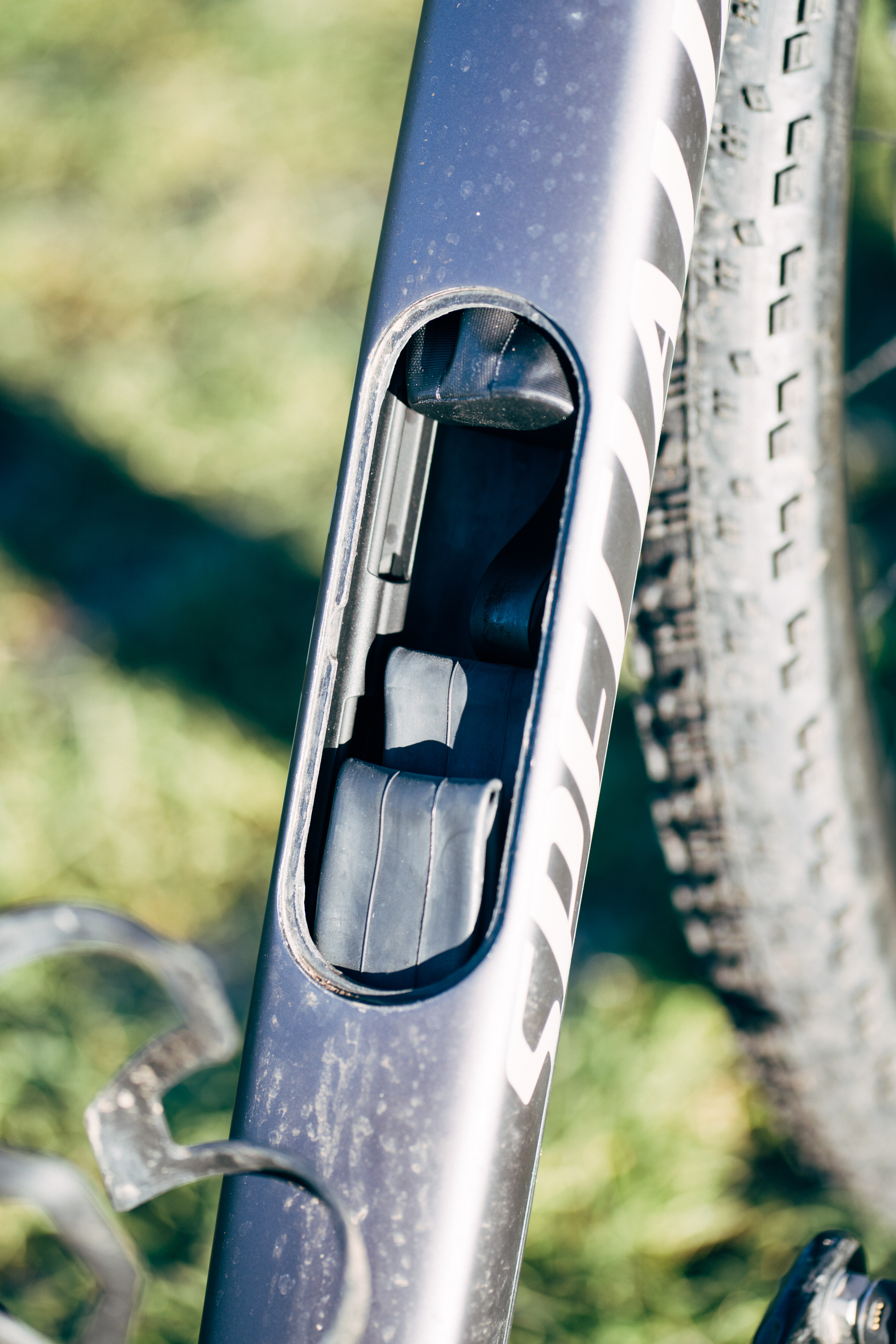
As well as more space for tyres, the Diverge (both this carbon model and even lower-tier alloy models) features downtube storage. Until now, I’ve been basically entirely ambivalent about being able to store things inside my frame, primarily because every bike I’ve tried that has storage usually only has space for a proprietary tool, or, in the case of the Aluto, nothing of use at all. The Diverge however has actually got quite a cavernous void inside of it, which, when it comes to stashing an emergency butyl tube for my whopping tyres, actually came in very handy indeed. Specialized says you can store all manner of things in there, including – to quote my own news article here – a jacket, 2 tubes (presumed TPU), plug kit, tyre boot, tyre levers, multi tool, 2x C02 or a mini pump or a battery inflator, car keys (because you’ve driven to your gravel ride) and 6x gels.
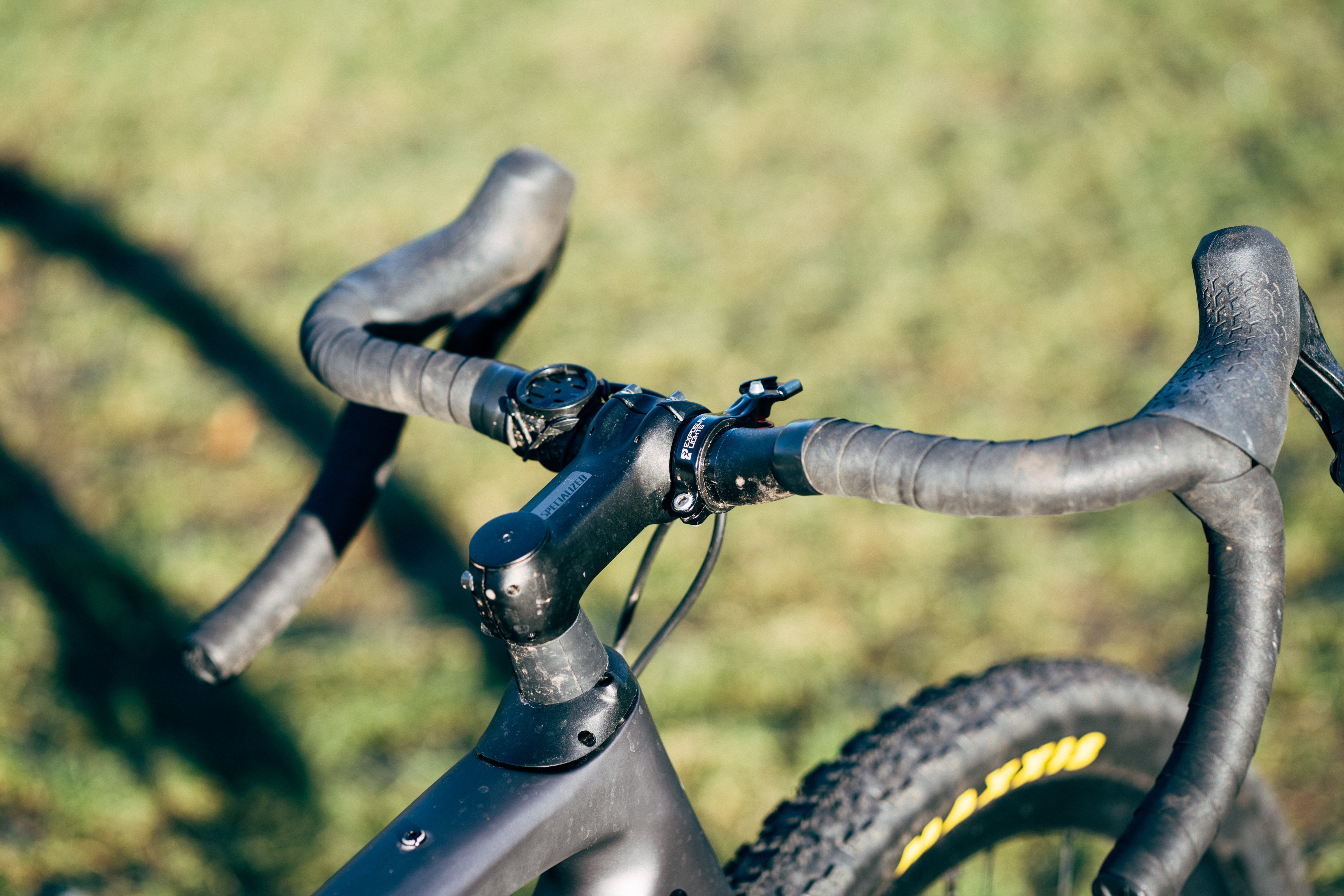
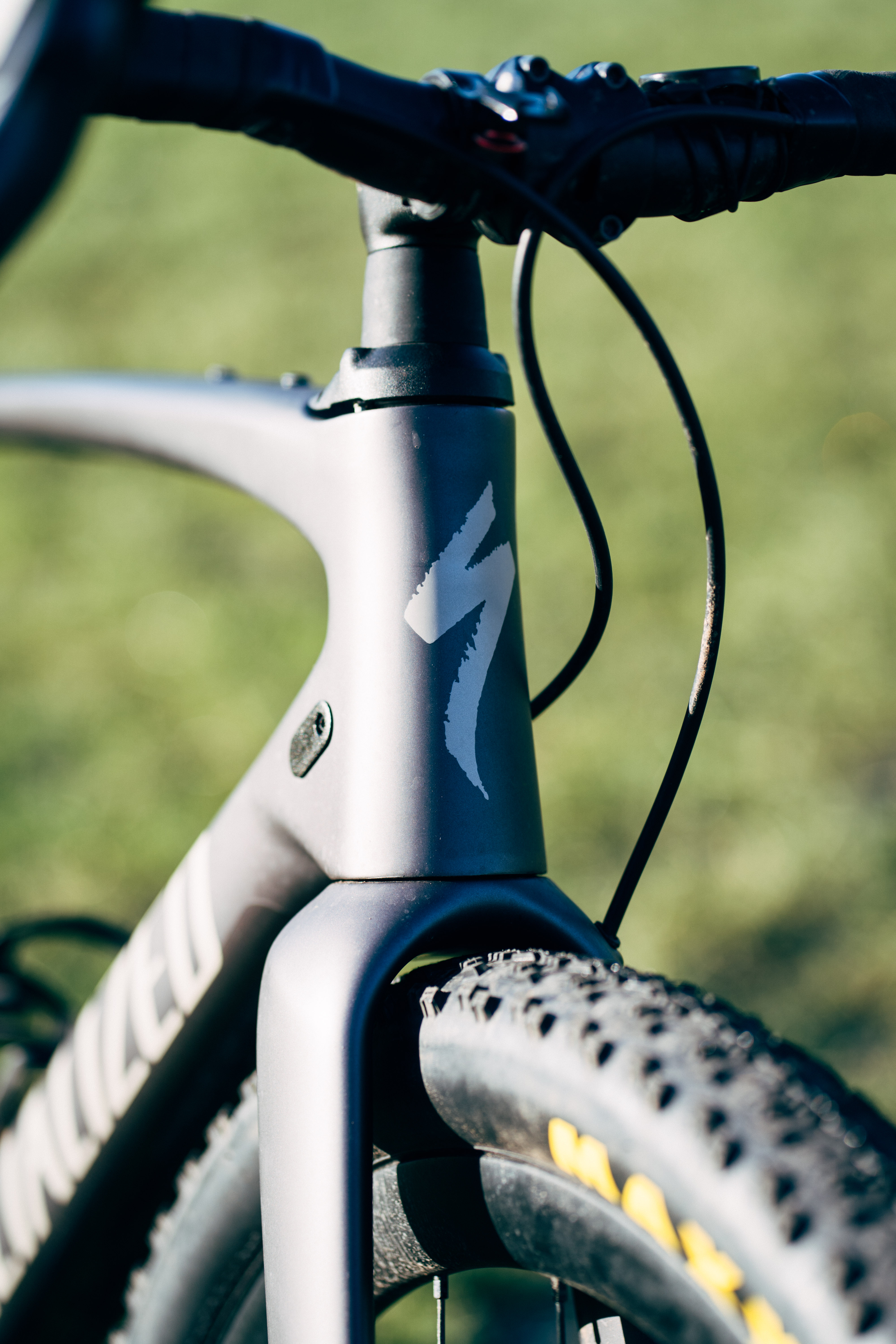
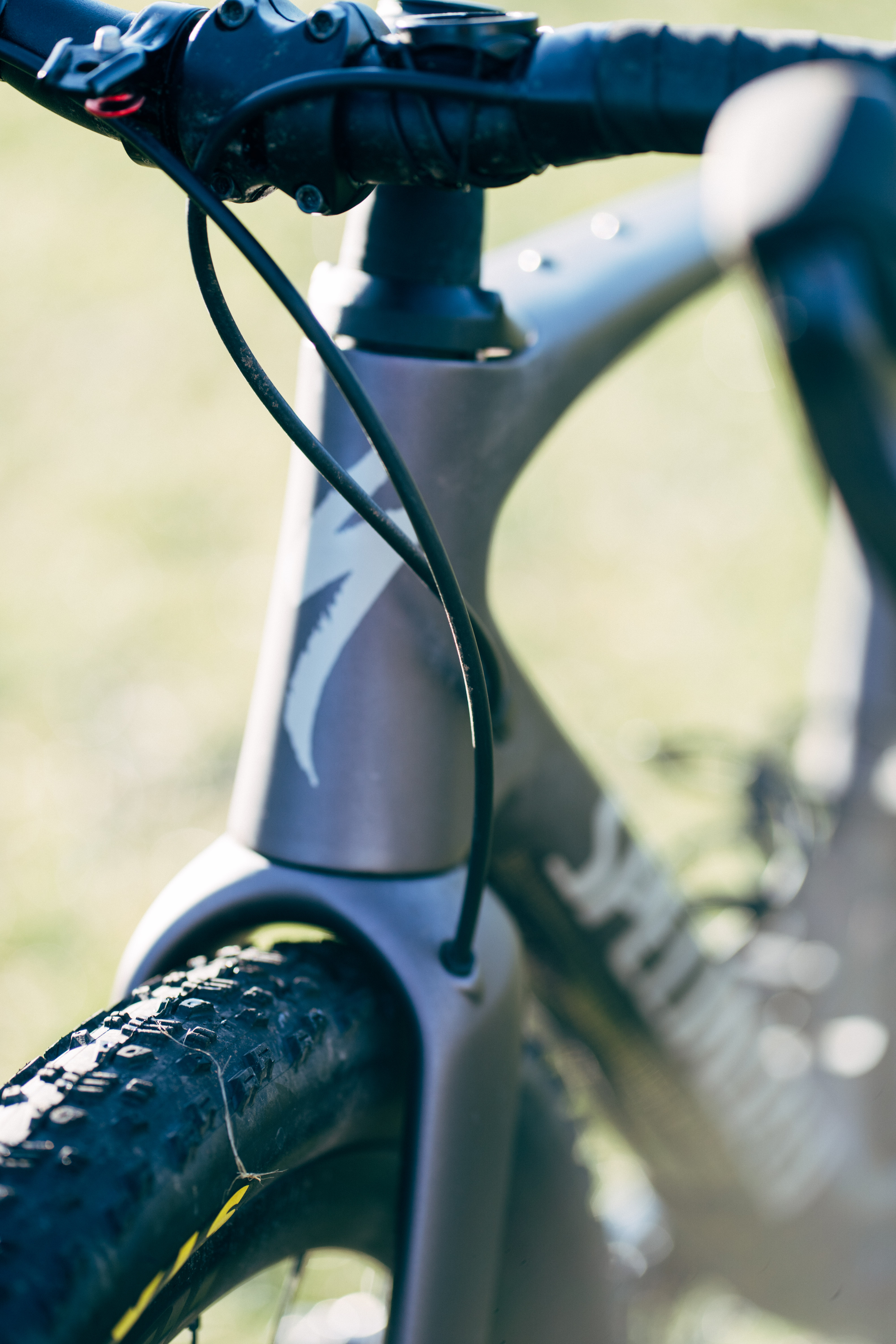
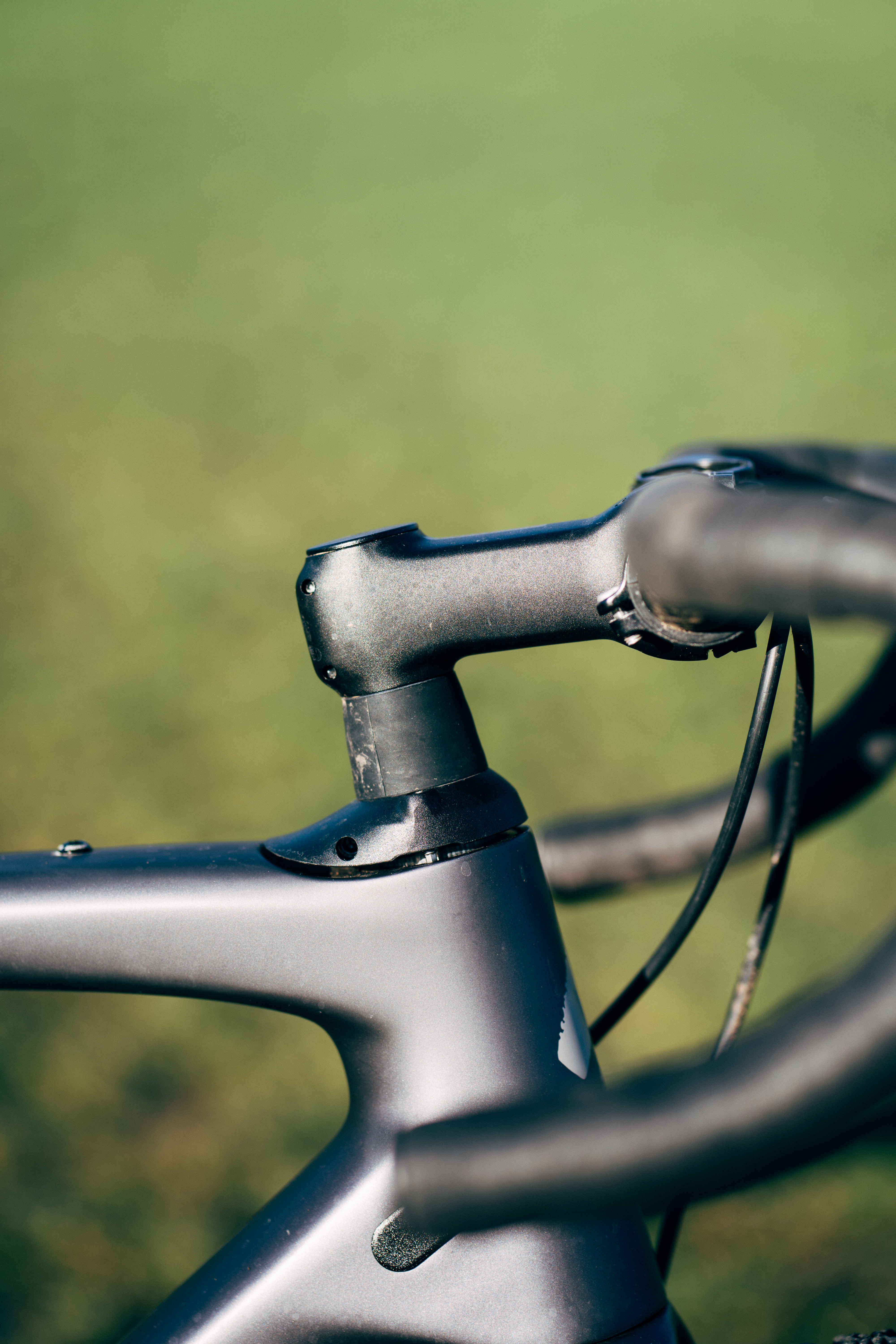
Up front, there’s the now well-established Future Shock 3.0 system. More premium models get a tunable knob, while this mid-tier model has a fixed level of cush with swappable dampers. In all honesty, having ridden the tunable version on the Specialized Roubaix, I either left it on or off, and rarely ever ‘tuned’ my suspension, and here I never felt like I was missing out on being able to dial anything in. You can dial in the front end height using different duck bill spacers, but whichever way you square it you won't be able to get that 'slammed' look. The Diverge, by the numbers, has a 32mm higher stack than the Crux, but that does include the Future Shock, but then you'll need to factor in the 15mm rise the Hover Bar cockpit adds.
Fitting bigger tyres has meant a few geometry tweaks, with longer chainstays and a longer, slacker front end, counteracted by shorter stems to add stability over rough stuff. I haven’t ridden the previous version, however, so I am unable to offer a direct comparison.
The quoted weight is 8.9kg in this SRAM Rival XPLR build, with carbon wheels helping to keep the weight down. Obviously fitting monster tyres, carrying massive spare tubes, and using half a pint of sealant in each wheel is going to impact this slightly, and even at the top level it is never going to challenge the Specialized Crux for true lightweight gravel flickability, but having ridden it I don’t think I care that much even with an 'as ridden' weight of 10.16kg, which includes pedals, a big spare tube, and a multitool.
Performance
I’m going to be honest with you, I’ve had a pretty lean year in terms of gravel testing. A lot of bikes have been totally fine, but I spent a lot of the summer messing about on a lightweight XC hardtail and, for most of the ‘gravel’ in the UK I suspect this is probably the better choice, and as such I’ve been somewhat reluctant to throw myself into another few hours of getting beaten up and filthy for very little actual flow.
That being said, the Diverge has been bloody brilliant. I’ve often bemoaned the added complexity of gravel suspension, and even went so far as ruining my gravel bike by fitting suspension forks, but the Futureshock system is undeniably very good off-road. We’ve seen from our testing of wider tyres that smoother is faster, and while Specialized makes a lot of quite hyperbolic marketing claims, I am faster at riding off-road on this than any other gravel bike I can think of, especially with these Aspens fitted. It’s actually quite alarming how isolated you can be from the bumps, big and small, with this setup. There is a downside in terms of the precision on offer, but for the most part, on bumpy but not hugely technical terrain, you can just barrel over most everything without a great deal of thought, and come out the other side with a lot less fatigue.
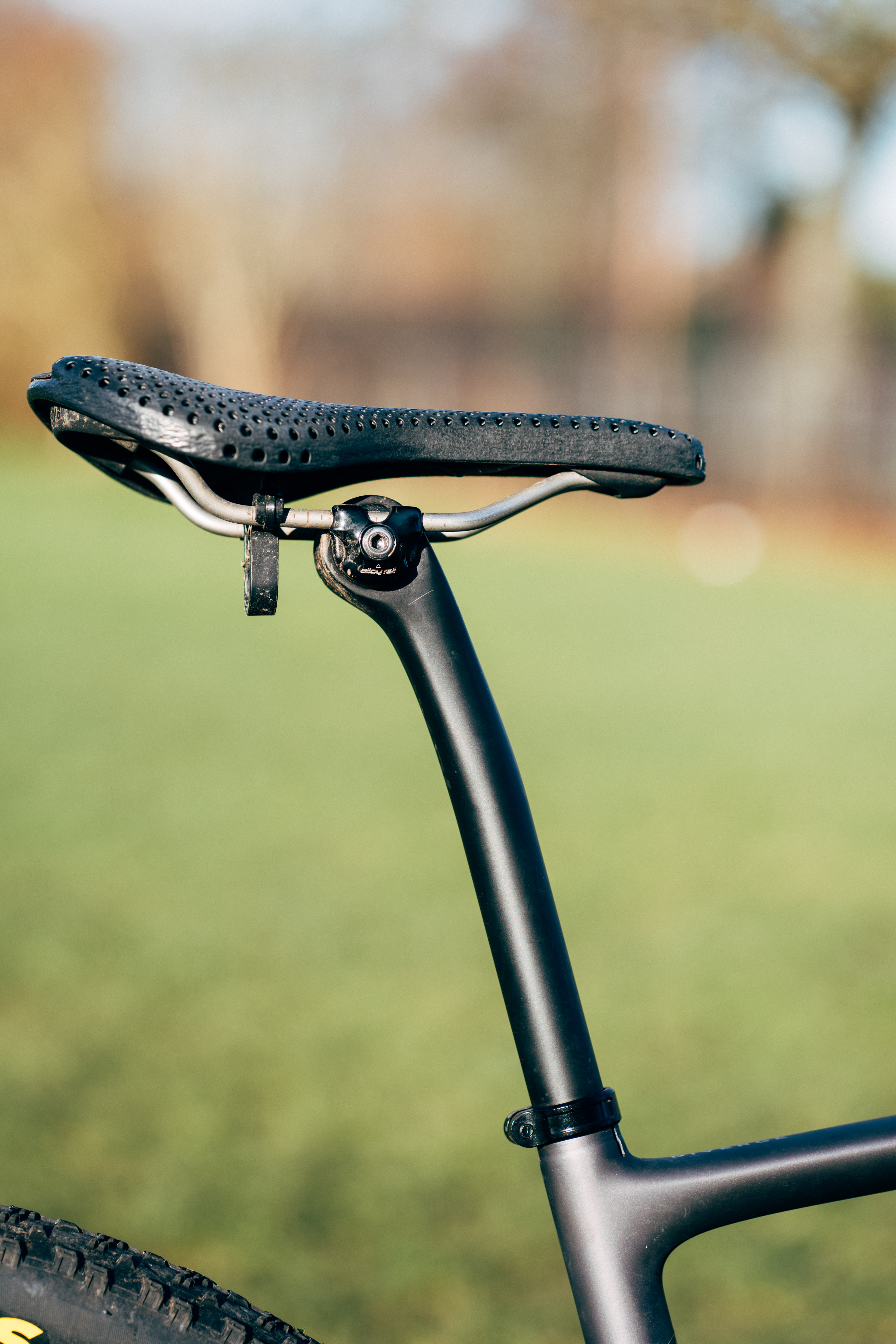
I’m not necessarily a great fan of the cockpit, but joy of joys, it’s a separate bar and stem, so you can very easily swap it to whatever you damn well please. There’s a case to be made that this bike (in a tier that suits your wallet), fitted with some very progressive, narrow bars like the Lambda cross-wings, would be a truly formidable gravel race bike. Likewise, with these round bars and a wide, flared option, you could easily fit a big ol’ barrel of a bag betwixt the drops, though that isn’t my cup of tea. I imagine with a bag load you would need to swap to a firmer elastomer, so bear that in mind.
Climbing on the Diverge didn’t feel as responsive as, say, on the Aluto, but that only rings true on non-technical sections where it’s basically a matter of weight. On technical riding, borderline MTB at times, the Diverge was excellent. The longer chainstays improve the rear-end traction, and, when the going gets slippery, big tyres just grip better. On sections where I’d have to walk, usually I could keep on truckin’ here, which was a novel joy, until my heart rate reached new highs.
I do think the steering precision is going to be a factor for some of you. Big rubber and a bouncy bar does feel a bit mushy at times, but for the majority of the time I spent off-road, which ultimately is probably why you’re buying a Diverge, I was glad to have both. What’s more, some terrain was simply rendered less technical by the compliance on offer. There’s a long stretch on my standard test loop that is a few kilometres long, and absolutely peppered by endless, deep, whooping puddles and ruts, with a pronounced crown to the road and SURPRISE ROCKS. On a less capable bike, it becomes a constant bob and weave to find the smoothest, least retarding line, but on the Diverge, it’s a lot closer to locking in on a flat stretch of road and ticking out the distance.
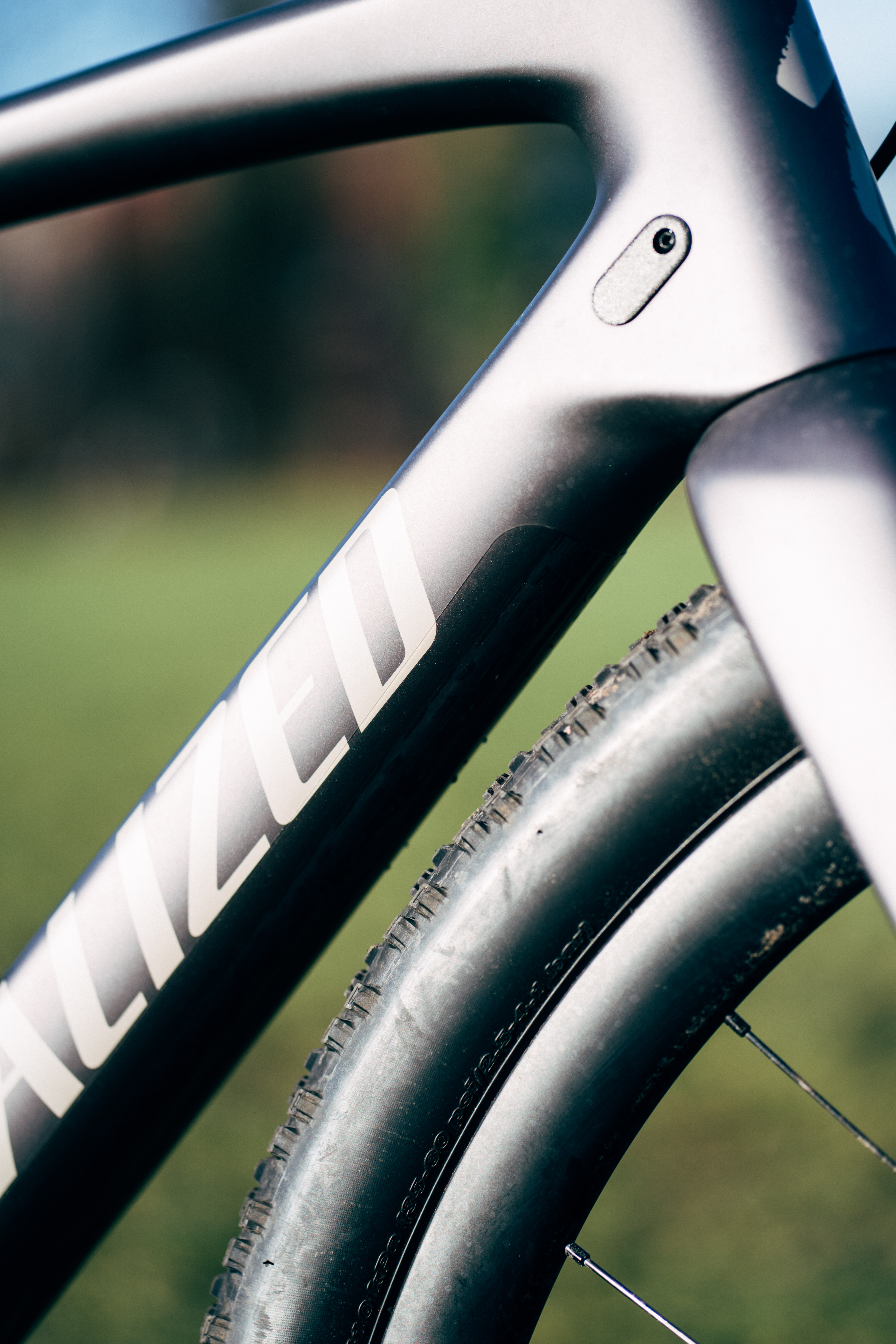
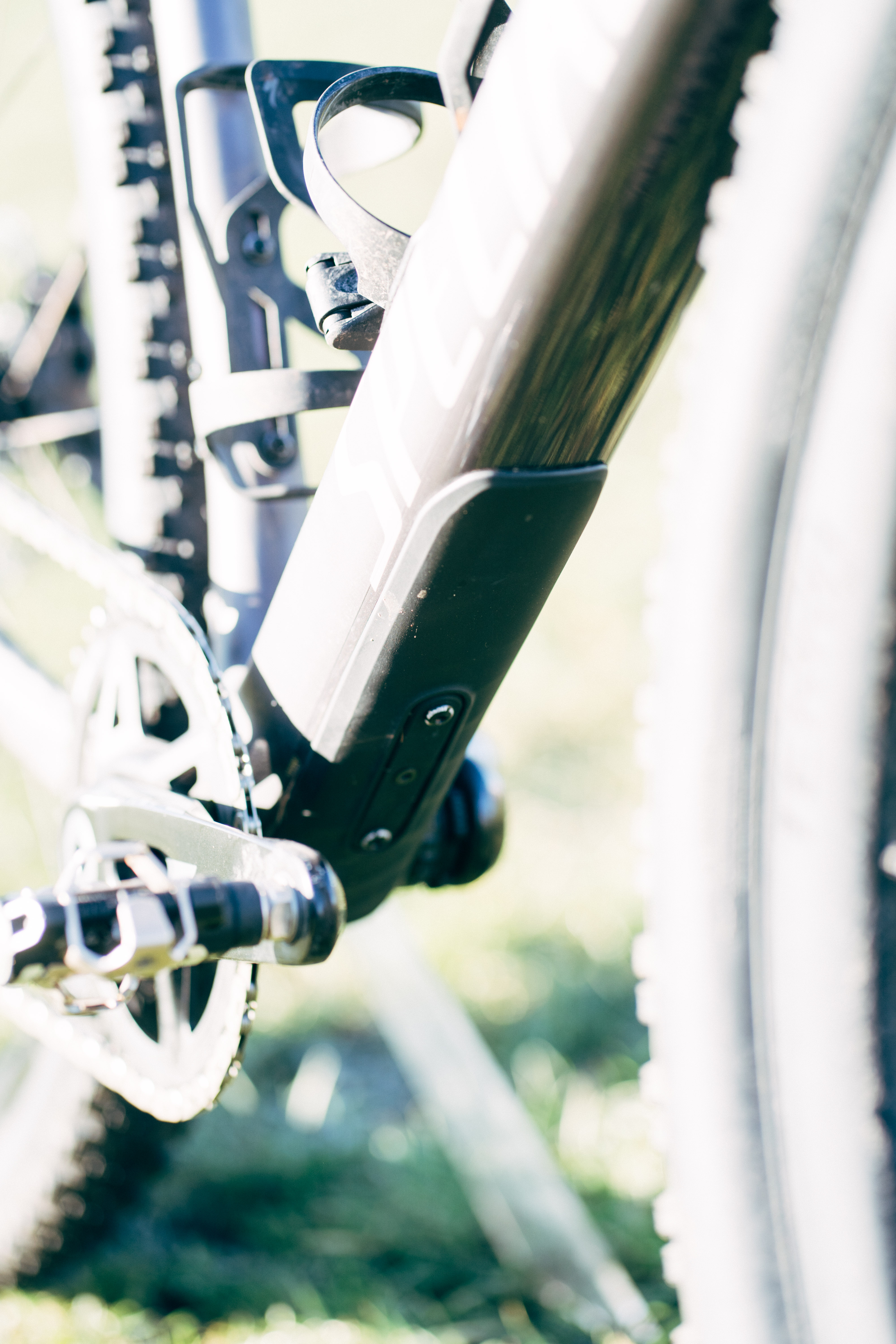
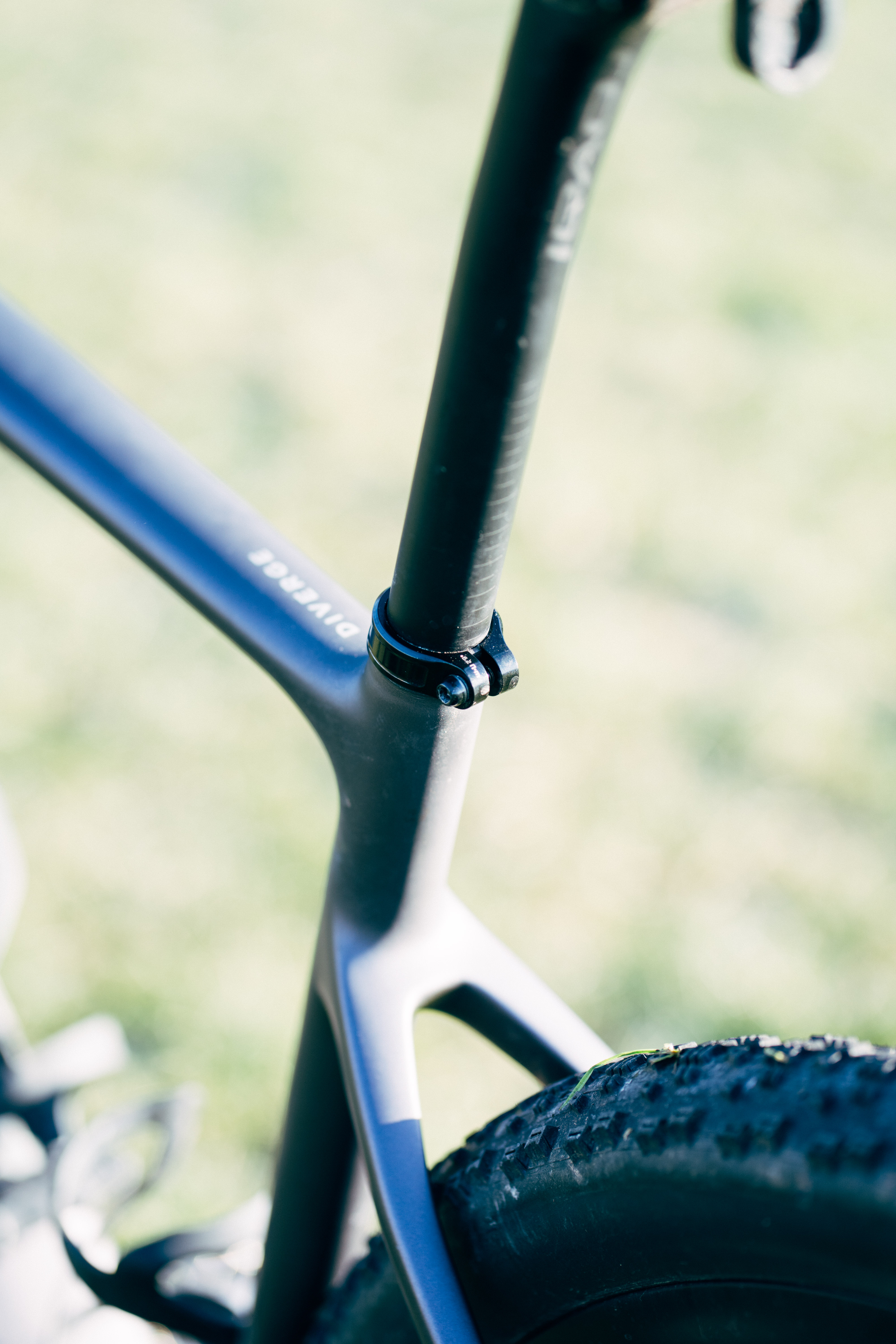
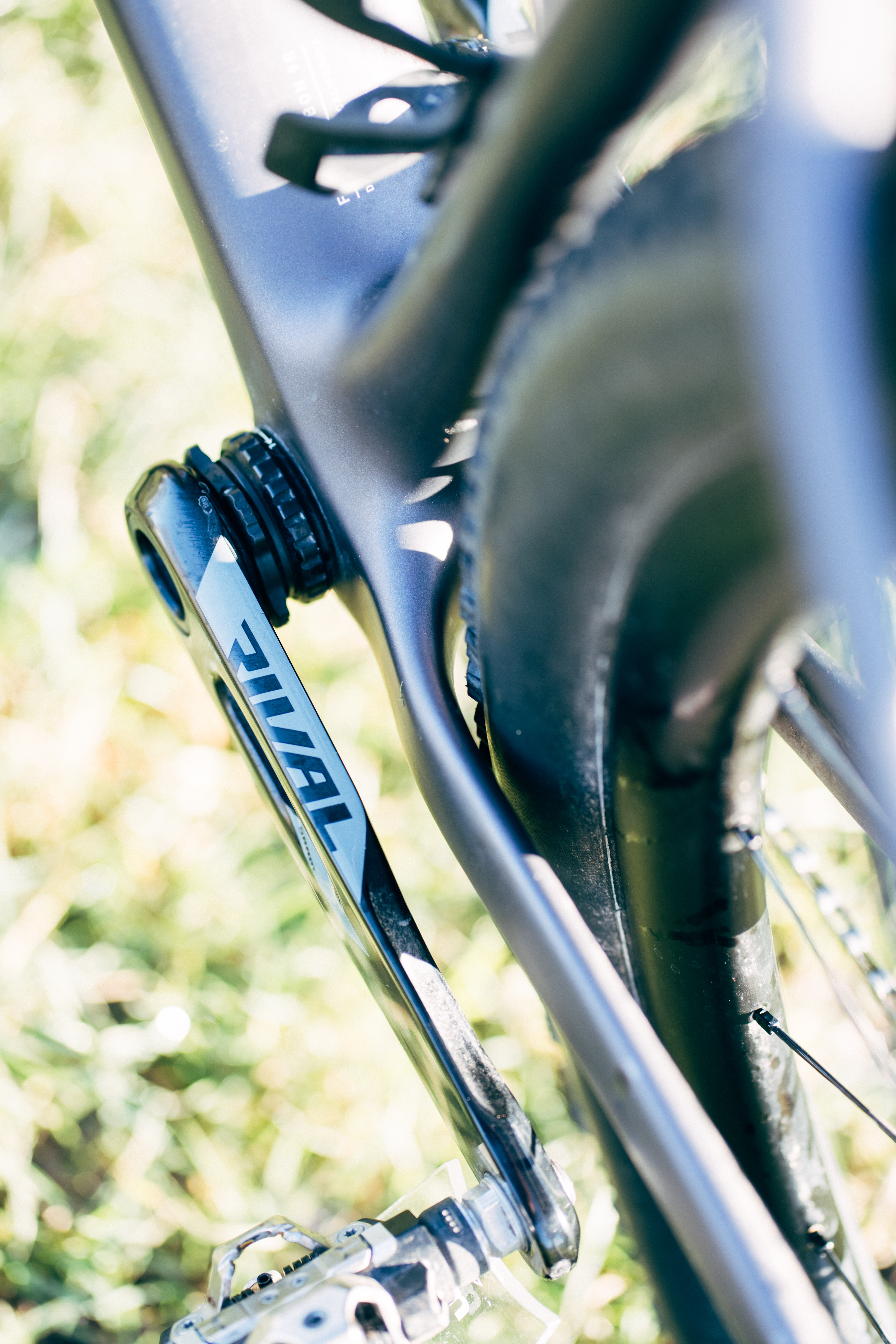
Right, let’s talk about tyres: You can fit a 2.25” Maxxis Aspen in both ends, but you shouldn’t. It feels great, and they are extremely good tyres for gravel riding, but the clearance is a little too small for it to be stress-free. Most of the time it’s fine, and the widely spaced, low-profile lugs meant that even in midwinter mud they never built up with mud and kept working, but at the back end when climbing out of the saddle there was a not infrequent ‘FZZT FZZT FZZT’ of side lugs making friends with the chainstays. Fit the 2.1” version, and you’ll have more or less just as good a time without worrying about eating through your frame. Seriously, these tyres are so good.
On the road, it’s a slightly different story. The tyres aren’t actually a problem, even the stock 45mm Tracers, but the whole machine does feel a little more languid than the likes of the Crux or the Aluto, or even the road-like Fairlight Secan. While gravel riding in the UK actually involves a lot of road, I would say the trade-off in tarmac feel is more than worth it to be able to actually enjoy yourself off-road. If you want a bike that’s good on tarmac, buy a road bike.
Finally, I was almost universally impressed by the SRAM Rival groupset, especially the brakes, which will be a huge boon to anyone. While the shifting doesn’t match GRX, the extra stopping and descending confidence offered by SRAM nowadays makes me lean more towards the Yanks. However, the jockey wheel bearings did seize up – and I mean totally lock in place – within a couple of wet rides. This is a media bike, and I have no idea who had it before me and how they treated it, but given the model isn’t even one winter old yet, it can’t have had that hard a life. This is something my colleague Graham has noticed on SRAM derailleurs, too, so keep a close eye on it and maybe be prepared to stump up for some aftermarket jockey wheels with better sealed bearings to stave off disaster.
Having initially penned most of this review before the Christmas break, I put the Diverge away for a week, whereupon the headset bearings seized so completely that I had to physically bang on the bars with the bike on its back wheel to free them. On any bike with an integrated cockpit, this is just as annoying, but despite having a separate bar and stem, and hose routing only through the fork leg and frame, without the Future Shock, this would be a simple bearing swap; basically, three bolts need undoing and tightening. With the Future Shock it is much more involved. It's not an impossible job, but it will take more care and attention for the home mechanic, or more outlay if you're paying a bike shop to do it.
Value
More bike, in the form of more bounce at the front end and a big storage canister, means more engineering and manufacturing, and ultimately more dollars you’ll have to shell out. In this spec, the Diverge costs $5,999, which is $200 more than an equivalently specced Crux. This, in itself, I don’t think is bad value at all, as you’re getting a more versatile machine that I think is probably going to suit all but the lightweight, racy purists better.
The issue comes when you step outside the Specialized ecosystem and look for competitors, especially if you train your gaze northwards towards Iceland and what Lauf is putting out. The Lauf Seigla, a bike Tom reviewed very favourably, can handle even bigger tyres, has front suspension that is entirely maintenance-free and with external hose routing to allow for extremely simple headset maintenance. It’s also got a round seatpost, allowing a dropper or extra flex, and with the same groupset (admittedly with alloy wheels), it’s $4,380.
For the cost of a SRAM Force Diverge, you can get an SRAM Rival Lauf Seigla, with carbon wheels and a single-sided power meter, and still come home with $419 in change, and that’s quite hard to look past; no matter how large a downtube canister is, it’s not worth that.
If I were in the market, with my own coin, for a do-it-all gravel bike right now, I’d probably be spending my money on a Lauf. The Diverge is very good, but the value proposition is scuppered somewhat.
Add into this the future cost of a new Future Shock cartridge when your gravel abuse has ruined yours, which will run to at lease $400 plus labour, and things do start to add up in the Lauf's favour even more, given its fork is basically maintenance free.
Verdict
Taken on its own merit, the new Specialized Diverge is truly an excellent gravel bike. It’s composed, comfortable, able to handle modern tyre widths, and is smooth as butter over surprisingly rough terrain. It handles well, climbs excellently on even very technical sections, and has actually got a useful downtube storage chamber, perhaps the first time I’ve ever been able to say that on a bike I’ve reviewed. I also think it looks great, especially with monster rubber.
If you already want one and you came here to have your preconceptions confirmed, then you’re in luck, and you won’t be disappointed. If, however, you are shopping around for a good deal, then I think you’ll get more bike for your money if you buy a Lauf Seigla, and have a better time long term if you’re a serial bearing abuser, as it’s just a bit easier to live with.
Design and aesthetics |
Good looking, with added features that actually add value rather than just another marketing line |
8/10 |
Build |
The build is solid, with good wheels and decent stock tyres. The bars aren't my favourite, but they are easy to swap. |
8/10 |
Performance |
This is a very, very good gravel bike, even considering the more entry level componentry. Maybe a little sluggish on the road but other than that it is hard to fault. |
9/10 |
Weight |
Not the most svelte machine, especially not with big rubber fitted. It's fine once you're rolling, but lacks that snappiness of lighter machines. |
7/10 |
Value |
Compared to the Lauf Seigla, which offers more or less the same on paper but better in many ways, all for a lot less cash, the value proposition isn't necessarily a great one. |
7/10 |
Overall rating |
78% |