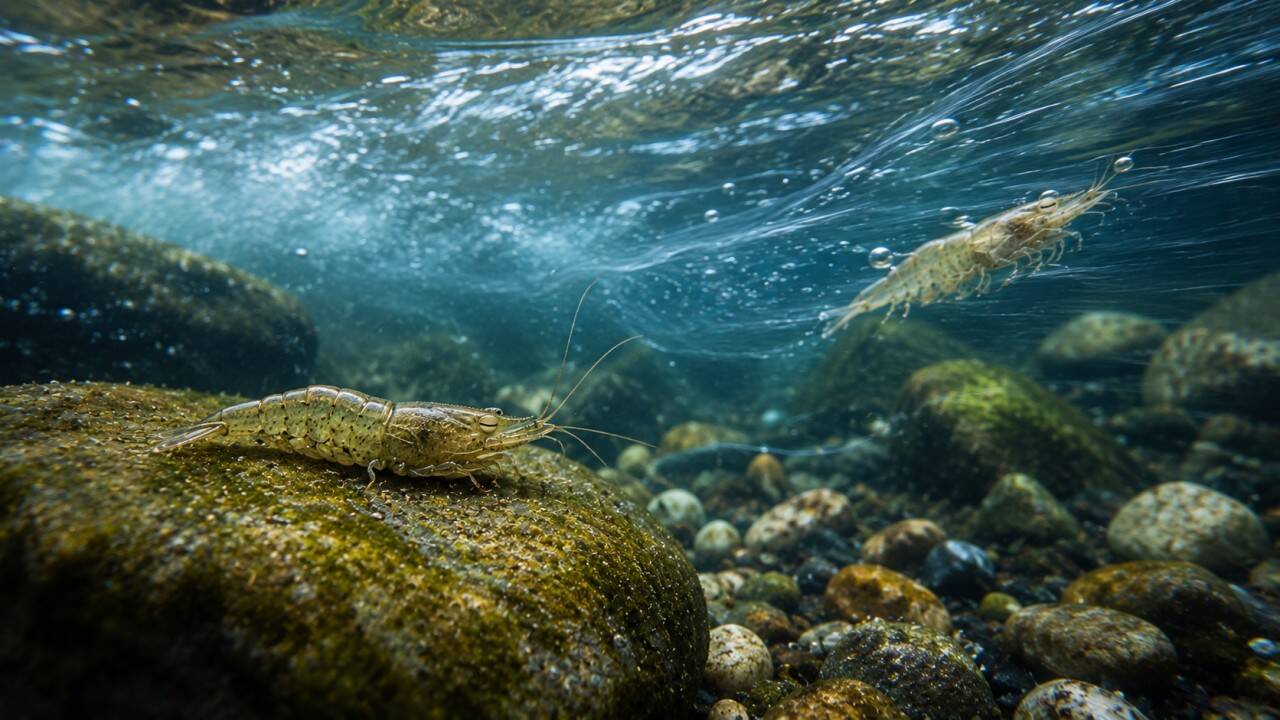
“The shrimp that sleeps is carried away by the current.”
Get breaking news anytime, anywhere. Download the TOI app now!
A shrimp resting in a river or along the coast is vulnerable to the movement of the water around it. While it remains still, the current continues to flow and can carry it away. This simple scene from nature became a Spanish proverb about a common human experience — losing control of a situation because of delay, carelessness or a failure to act in time.
Known in Spanish as “Camarón que se duerme, se lo lleva la corriente,” the proverb comes from Spanish-language traditions and is widely used across Spain and Latin America. The image reflects the relationship many communities have had with rivers, fishing and coastal life, where the movement of water was a familiar part of everyday experience. A shrimp being swept away by the current became a way to describe people who allow circumstances to move ahead without them.
The proverb compares the sleeping shrimp to a person who becomes too comfortable or stops paying attention. The current represents the things that continue moving around us — time, opportunities, changing situations and new challenges. A person who ignores those changes can eventually find themselves carried in a direction they did not choose.
The saying is often used when someone misses a chance because they waited too long. A person might keep delaying an important decision, believing there will always be another opportunity. By the time they are ready to act, the situation has changed. The opening that once existed has closed, and the current has already moved them past it.
The proverb’s meaning can be seen in ordinary moments. A student who keeps postponing preparation before an exam eventually faces the pressure of limited time. Someone who wants to learn a new skill but keeps waiting for the “right moment” can later find that others have already moved ahead. The problem begins quietly, through small delays that slowly create a bigger gap.
The same idea appears in the changing world around us. Businesses, technologies and industries continue to evolve. Companies that notice changes early have a better chance of adjusting, while those that ignore new trends struggle when the environment has already shifted. The current does not stop while people decide whether they are ready to move.
The strength of the proverb comes from the fact that the shrimp is not defeated by a sudden attack. It is carried away because it remains still for too long. The danger is easy to miss because nothing dramatic happens at first. The movement happens slowly until the shrimp is no longer where it started.
The saying also reflects personal situations. A friendship that needs attention, a conversation that keeps getting avoided or a goal that is repeatedly postponed can slowly move out of reach. Sometimes people lose things because of one wrong decision; at other times, they lose them because they waited while circumstances continued changing.
The proverb does not call for constant rushing. Moving with the current does not mean following every direction blindly. The message is about awareness — recognising when the situation around you has changed and knowing when it is time to act.
The reason this saying has lasted for generations is because the image remains easy to understand. Everyone knows the feeling of realising that time has passed or that an opportunity was missed. The shrimp and the current turn that familiar experience into a simple reminder. A creature that stays still in moving water eventually gets carried away. The proverb uses that image to show how inaction itself can become a choice, with consequences that appear only after the current has already taken hold.