SpaceX shares have only just begun trading, and the urge to pile in is already tugging at retail investors. One Motley Fool analyst thinks that money would work harder elsewhere.
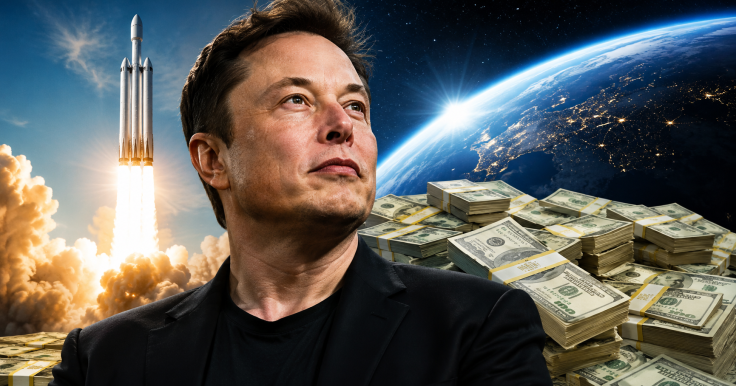
Elon Musk's rocket and satellite company closed its first session up about 19% at $160.95 (£121) on Friday 12 June, the largest stock market debut on record. It priced at $135 (£101) a share but opened near $150 (£113), so anyone buying on day one was already paying up. The listing pushed SpaceX's market value beyond $2 trillion (£1.5 trillion), CNBC reported, and carried Musk's own net worth past $1 trillion (£750 billion). For smaller investors, it revived a familiar pull: the fear of missing out (FOMO).
Writing for The Motley Fool, technology analyst Keithen Drury argued that three companies already on the market offer a smarter way to back the artificial intelligence boom than chasing the newly listed group.
Where the SpaceX FOMO Comes From
SpaceX valued itself at roughly $1.77 trillion at the offer price, yet the business is not profitable. It posted a net loss of $4.3 billion (£3.2 billion) in the first quarter, and Starlink, its satellite-internet arm, remains the only division reliably making money. Earlier in 2026, the company folded in Musk's AI start-up xAI, recasting itself as an artificial intelligence contender as much as a space firm. Musk keeps about 85% of the voting power, and not everyone trusts the price. Morningstar pegged fair value near $780 billion (£585 billion) on a discounted cash flow basis, and several smaller space stocks fell on the day SpaceX arrived.
Drury's objection comes down to that price. SpaceX made $20.7 billion (£15.5 billion) in revenue last year and grew 33%. Even if it could summon a 40% profit margin overnight, he calculated, earnings of around $8.3 billion (£6.2 billion) against the listing valuation would put the shares on roughly 210 times profits that do not yet exist. For a company this fresh to public markets, he called that a steep toll.
Amazon and Meta Offer a Calmer Way In
Drury's first pick is one of the market's most familiar names. Amazon plans to spend $200 billion (£150 billion) on data centres in 2026, the backbone for the AI workloads its cloud arm rents out, and it can fund that from cash flow SpaceX cannot yet match. He expects profits to climb once those sites are running, since Amazon Web Services earns far fatter margins than retail and already supplied 59% of group operating profit last quarter.

Meta Platforms, his second pick, is a valuation argument with an AI engine attached. The owner of Facebook, Instagram, and WhatsApp has guided between $125 billion to $145 billion (£94 billion to £109 billion) of mostly AI-related capital spending this year, according to its own results, yet still trades at about 21 times trailing and 18 times forward earnings. That is a modest multiple for a business whose revenue grew 33% last quarter, the same pace as SpaceX. To match its rival's price tag on those terms, Drury noted, SpaceX would have to grow revenue tenfold while holding that theoretical margin.
Nebius Is the Outlier on Growth
The third name is the least familiar and the boldest.
Nebius, an Nvidia-backed builder of data centres for AI workloads, is worth around $58 billion (£44 billion), a fraction of its trillion-dollar peers, but it is growing far faster. First-quarter revenue reached $399 million (£299 million), up 684% on a year earlier, according to the company's own results, and demand ran so high that Nebius sold out of capacity. Management expects annual recurring revenue to climb from $1.25 billion (£940 million) at the end of 2025 to between $7 billion and $9 billion (£5.3 billion to £6.8 billion) by the close of this year.
Drury, who described it as 'a real rocket ship of a company', pointed to analyst forecasts of about 550% revenue growth in 2026 and a further 225% in 2027, a pace he said SpaceX cannot realistically match at its size.
Each of the three carries its own risks, and Drury disclosed that he personally holds shares in Amazon, Meta, Nebius, and Nvidia. His wider point is plain: investors tempted by the SpaceX story can find cheaper valuations, sturdier cash flows or faster growth in stocks they can already buy.
Disclaimer: This article is for general information only and does not constitute financial advice. Investing carries risk, including the possible loss of capital. Always do your own research or speak to a qualified financial adviser before making investment decisions.