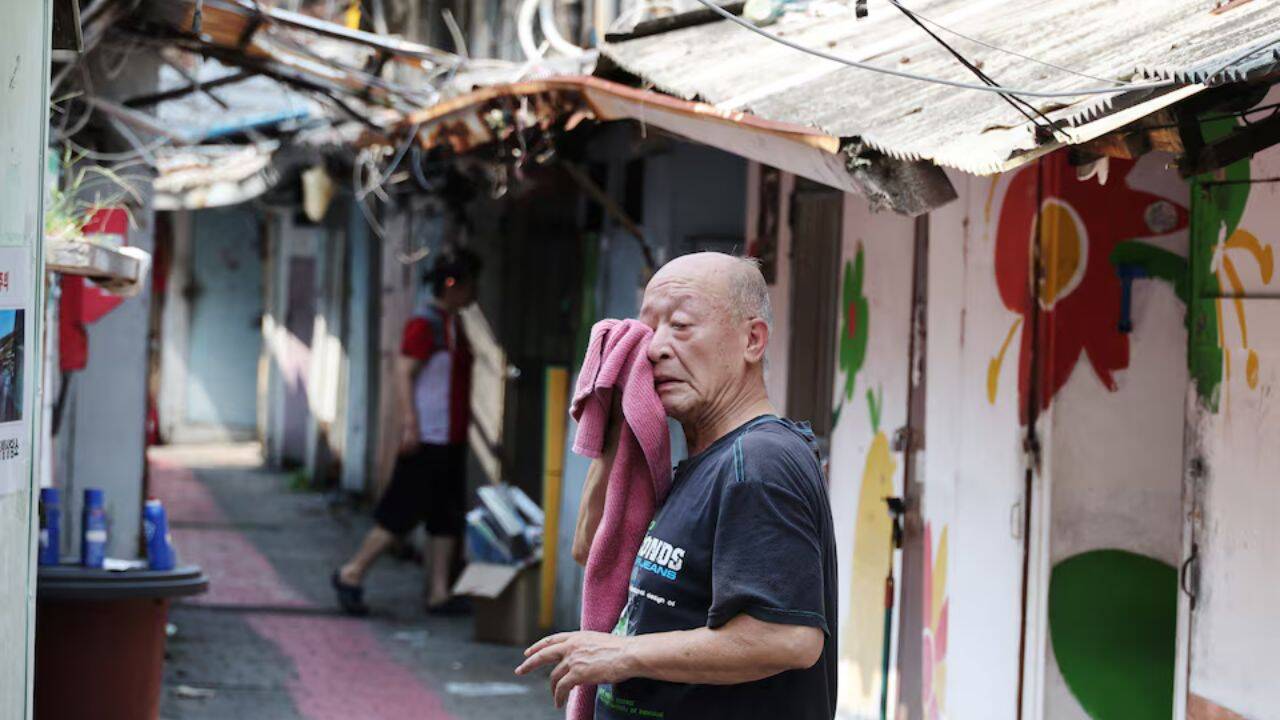
South Korean President Lee Jae Myung on Tuesday directed authorities to step up support for people affected by a record-breaking heatwave after the death toll from heat-related causes rose to 16.
Get breaking news anytime, anywhere. Download the TOI app now!
Speaking at a cabinet meeting, Lee called for urgent measures to protect vulnerable residents, ensure the stability of the power grid as air-conditioner use surges, and overhaul the country's disaster response system, warning that extreme weather is becoming increasingly frequent rather than exceptional.
"We need to make efforts for a fundamental overhaul of the national crisis system, since this extreme weather is becoming normal," Lee said.
South Korea's weather agency said the southeastern inland city of Yangsan recorded a temperature of 42.5°C (108.5°F) on Sunday, the highest officially recorded in the country's 122 years of weather observations.
The Korea Meteorological Administration (KMA) also issued its first-ever severe heatwave warning for parts of Seoul and neighbouring Gyeonggi Province on Monday before expanding it to cover the entire capital on Tuesday, underscoring the exceptional nature of the ongoing heatwave.
Why is this heatwave unusual?
While South Korea typically experiences hot and humid summers under the influence of the East Asian monsoon, temperatures above 40°C are exceptionally rare. The country has a temperate climate with four distinct seasons, and average daytime temperatures during July and August generally range between 25°C and 30°C. The extreme heat also reflects a broader shift in the country's climate patterns.
According to the Korea Meteorological Administration (KMA), the current heatwave is being driven by a combination of meteorological and climate factors. A key reason is the earlier expansion and prolonged influence of the North Pacific high-pressure system, which is allowing hot and humid air to persist over the Korean Peninsula for longer than usual.
Strong summer sunshine further intensifies daytime heating, while warmer surrounding sea surface temperatures help maintain high humidity and keep overnight temperatures elevated, resulting in more frequent tropical nights.
According to the Korea Meteorological Administration (KMA), South Korea's heatwaves are becoming more frequent, arriving earlier in the year and lasting longer than they did in the past. The agency's analysis found that the country has experienced significantly more heatwave days and tropical nights over the past decade than in previous decades, reflecting a clear shift towards more prolonged and intense summer heat.