All today's top Society news and comment
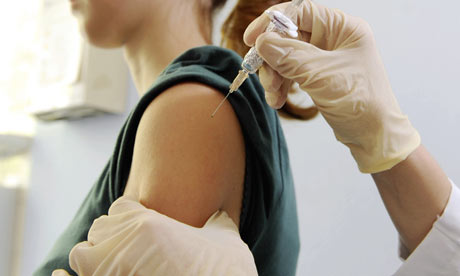
Swine flu response costing £1.2bn 'proportionate'
Home births are good for mothers but riskier for babies, says study
Dartmoor jail still has pervasive negative culture, says inspector
George Osborne needs 2m private jobs rise to balance public sector losses
Kenneth Clarke hints at prison sentencing reform with attack on 'bang 'em' up culture
Erwin James: I always knew Ken Clarke was a progressive
Jamie Oliver hits back at health secretary over school meals 'insult'
Other news
According to the FT, Treasury officials have reprieved the Tenant Services Authority by blocking the government's attempts to abolish it. While the quango is still under review, it will no longer automatically face the chop.
Meanwhile, soaring compensation claims have seen councils hand out over £100m to people who have tripped on pavements over the last five years, the Daily Telegraph reports.
Reforms to incapacity benefits
The government's proposed reforms to incapacity benefits seem to have ignored the risk of unintended consequences.
Writing in Societyguardian.co.uk, one severely disabled man says reforms to the disability living allowance and other benefits will be a disaster for him. One of the recipients of the highest rate of disability living allowance, the author says he is lucky as he doesn't have to attend job interviews or the harsh medical assessments brought in when incapacity benefit (IB) was replaced by the employment and support allowance (ESA) in 2008. He also is one of the first recipients of a personal budget, which allows him to get specialist rehabilitation care.
Now I am afraid that the local authority, in order to meet "efficiency savings", will attempt to return me to my previous inept care provider. I have just received a phone call today from social services asking me to call them back. My funding, which has only been in place for a couple of months, is now seriously in jeopardy.
Having struggled through the labyrinth to get benefits, I am scared of the further, even more difficult medical assessments that the proposed cuts might mean. And I am scared of having my benefits cut. The welfare budget is to be slashed and I fear that the trapdoor is already underneath me.
He is not alone. A flurry of other commentators - Dawn Willis, Anne Wollenberg, Emmanuel Smith - all made the point that as disabled people, they are not benefit scroungers, but simply need disability living allowance to help them live full, independent lives. And there is evidence that the whole basis of the case for reform is flawed. According to the editor of Disability Now, speeding up the rate at which assessments are made on people's ongoing entitlement to IB or its replacement ESA is "just plain wrong".
First it relies on that old discredited idea that IB has done nothing more than offer a passport to benefits for a load of work shy scrounging good-for-nothings out to milk the state to fund their betting, boozing and fags. In fact, all of the evidence indicates that it's the very assessment process which is at fault, not the claimants it's shovelling back to work. A recently published report by the national advice charity Citizens Advice, highlighted major concerns about the extent to which the assessment is a blunt instrument. From across their network of centres they found numerous examples of people who'd been found to be capable of work, taken off benefit and put into a job when in fact they were still severely affected by a whole range of impairments and conditions which prevented them from doing that job capably. A study in Scotland identified similar causes for concern. Both studies had been triggered by what looked like alarmingly high numbers of people (69%) the assessment had found to be capable of work. You'd think the CAB and Scottish findings would have had them rigorously overhauling or even abandoning a process which is so clearly broken. But no, they're going to ask it to go on doing the same, only faster. It's like finding that a critical bolt has sheered through on a roller coaster and, instead of shutting it down, loading it with even more passengers and running it 20% faster. Excuse the pun, but Osborne better hope this doesn't turn out to be his nemesis. It certainly spells greater danger for disabled people.
Given the continued difficulties disabled people have in finding work, it is hard to see where these job opportunities would be, even if work were an option. The public sector has a better track record on diversity than many areas of the private sector, yet the Office for Budget Responsibility says there will be 600,000 fewer jobs in public services by 2016. The next few years don't augur well for those on disability benefits.
Guardian awards
Guardian Public Services awards 2010
Society Guardian social enterprise summit
We are starting to plan this year's Society Guardian Social Enterprise Summit. Last year's summit was a great success - you can read about it here. Once again we are looking to showcase inspiration, innovation and practical ideas on how social enterprises can deliver public services. Whether you are from the public sector or from a social business, we want you to tell us who you'd like to see and what you would like to see discussed. Email to charmian.walker-smith@guardian.co.uk. You can Follow Guardian Social Enterprise on Twitter
Society Guardian blogs
Sarah Boseley's global health blog
Society Daily blog
Society Daily blog editor: Patrick Butler
Email the editor: Patrick.Butler@guardian.co.uk
Follow Patrick Butler on Twitter
Sign up to Society Daily email briefing
Society Guardian Links
Follow Society Guardian on Twitter
Enter the Guardian Public Services Awards
Public - the Guardian's website for senior public sector executives
The Guardian's public and voluntary sector careers page
Hundreds of public and voluntary sector jobs
Society Guardian editor: Alison Benjamin
Email the SocietyGuardian editor: society@guardian.co.uk