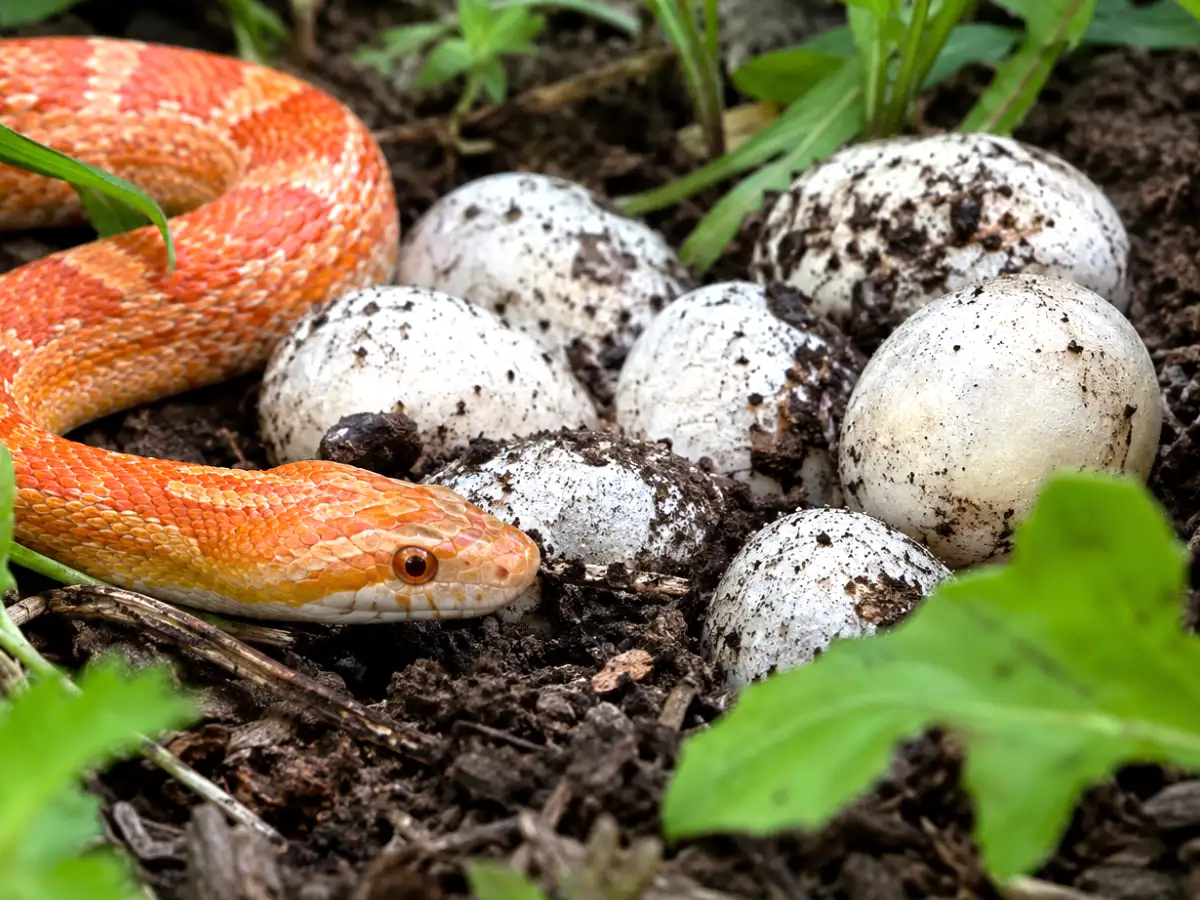
You're finally winning the war against your overgrown flower bed, and then, tucked under a pile of leaves, you spot them: a cluster of leathery, oval eggs. Your first instinct might be to scoop them up and relocate them somewhere safer, but you should hold onto that thought. According to a 2015 study published in Scientific Reports, the long-standing warning against turning or repositioning reptile eggs is rooted in real biology.
However, the same research found the picture is more complicated than most backyard advice suggests. That nuance is exactly why you shouldn't touch the eggs until you understand what's actually going on inside them.
Why moving the eggs is riskier than it looks
Snake eggs are basically soft pouches of yolk and embryo wrapped in a leathery shell. Unlike bird eggs, they don't have chalazae, the stringy internal fibers that keep a chicken egg's yolk centered no matter how you tilt it. That's the biological reason breeders and vets have long warned against flipping or rotating a reptile egg once it's been laid: without those anchoring fibers, shifting the yolk's position could put pressure on a developing embryo.
Here's the twist, though. In the same Scientific Reports study, ‘Myth busting? Effects of embryo positioning and egg turning on hatching success in the water snake Natrix maura,’ researchers found that embryo position affected metabolic rate and hatching time, but turning the eggs did not significantly reduce hatching success in that species.