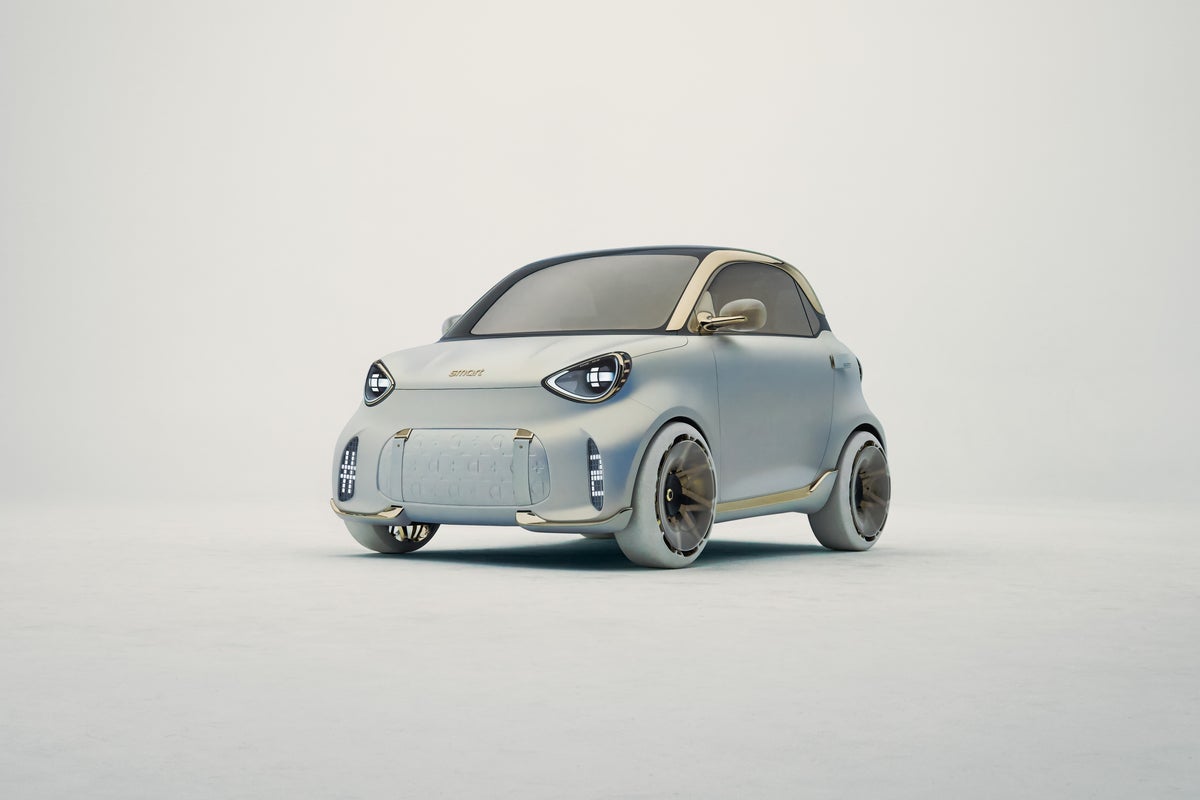
Smart is going back to its roots and one of its most recognisable models – the tiny two-seater city car – with the Concept #2 electric city car.
Revealed at the brand’s Global Brand Event in Beijing under the banner “Change of Perspectives”, the Concept #2 offers the clearest look yet at the long-awaited return of a spiritual successor to the original Smart, the Fortwo. The production version of the Concept #2 is due to make its world debut at the Paris Motor Show in October.
The concept is the first physical representation of that new model and signals a notable shift in direction for Smart as it continues to expand its lineup beyond the #1, #3 and #5. The brand says its portfolio will grow from three to five models globally this year as part of a broader push into new segments and markets – however, don’t go thinking those numbers say anything about a Smart’s size – as the smallest #2 proves.
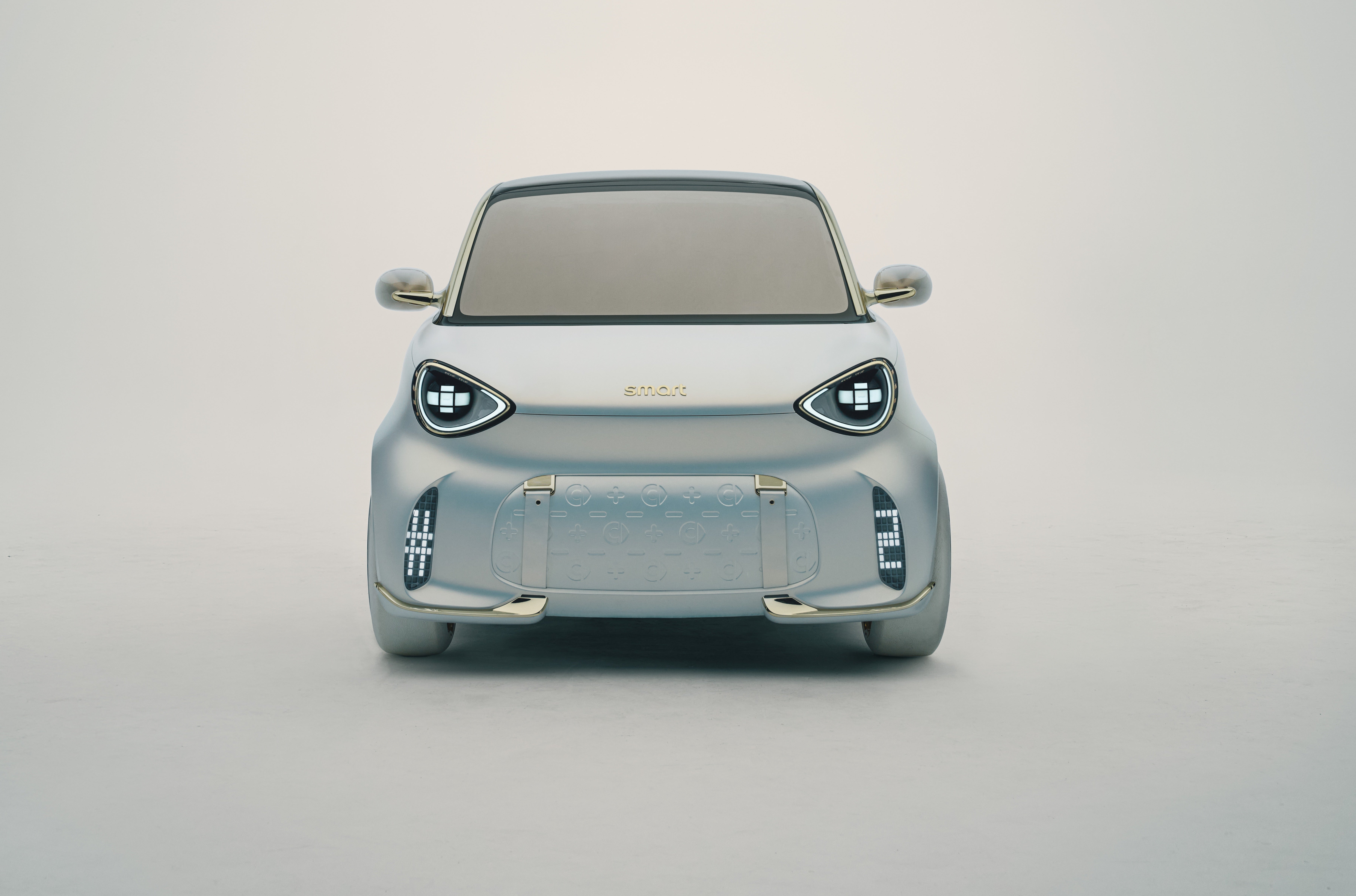
While recent Smart models have moved up in size and ambition, the Concept #2 returns to the brand’s original urban brief – albeit with a more design-led and premium feel. Styled by the Mercedes-Benz Global Design Team, it follows a philosophy described as “Love, Pure, Unexpected”, with what smart calls a “Function becomes Fashion” approach.
That translates into a compact, pared-back silhouette finished in a matte white and warm gold two-tone colour scheme, with details such as leather hardware and hidden features beneath translucent surfaces intended to give the #2 a more lifestyle-focused appeal. The idea, according to Smart, is to move the city car beyond pure practicality and make it a form of personal expression.
Wolfgang Ufer, CEO of Smart Europe, said: “For me personally, it is a very special moment to present the Smart Concept #2 as the first concrete outlook on the reinvention of our iconic two-seater.
“The Concept #2 combines the creativity and passion of our Mercedes-Benz design team and provides a clear vision of the future qualities of the Smart #2. It is a vehicle shaped by the way European Smart customers truly live and move – effortless, agile and efficient.”
Despite its focus on style, the Concept #2 sticks closely to the practical strengths that made the original Fortwo so popular in cities. At just 2,792mm long, it remains firmly in microcar territory, while a wheels-at-the-corners layout is designed to maximise interior space. A tight 6.95-metre turning circle is also claimed, underlining its urban credentials.
Under the skin, the concept previews smart’s new Electric Compact Architecture (ECA), a proprietary platform that will underpin the production model. The brand says this will deliver “new standards for modern electric performance”, although detailed specifications for the final car are yet to be confirmed.
For now, Smart is pointing to a target range of around 186 miles along with DC rapid charging capable of taking the battery from 10 to 80 per cent in under 20 minutes. The concept also showcases Vehicle-to-Load (V2L) functionality, allowing the car to power external devices, something that’s becoming increasingly common across new EVs.
The Smart brand, now a joint venture between Mercedes-Benz and Chinese giant Geely, has undergone a significant transformation in recent years, moving away from its niche city car roots to become what it describes as a “contemporary premium EV brand”. The Concept #2 suggests that while Smart is evolving, it hasn’t forgotten where it started.
With the production version set for a Paris debut later this year, Smart will be entering a hotly contested market for small affordable EVs, with Volkswagen set to enter the fray and Renault already having played its cards with the brilliant new Twingo. A Kia EV1 is also expected to be unveiled later this year.