Sinking Sundarbans: An exhibition of photographs by Peter Caton
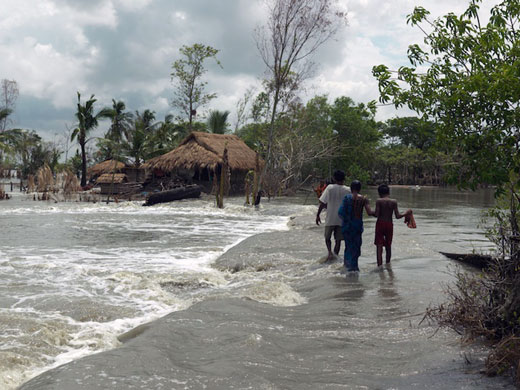
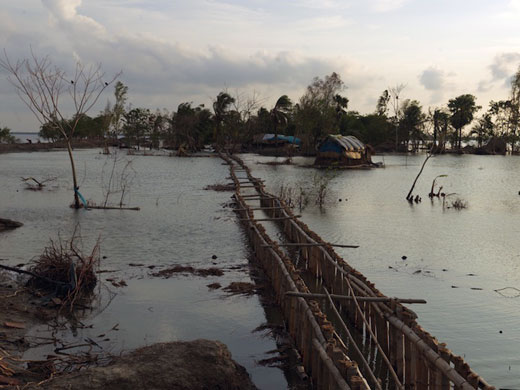
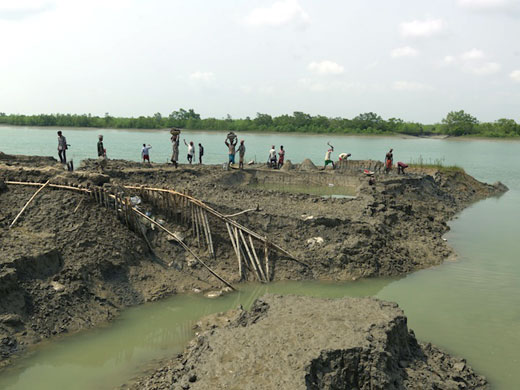
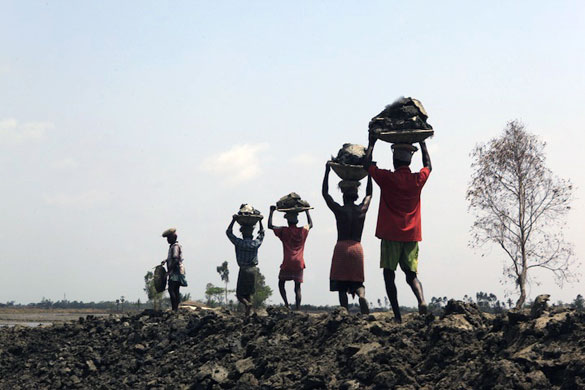
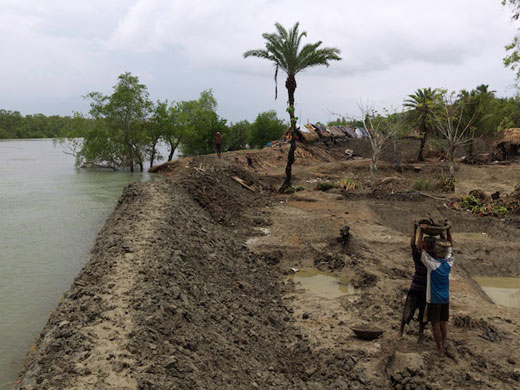
Nearly a month after cyclone Aila reached the Sundarbans, the river banks have still not been repaired and strong water currents invades Satjellia island during a high tide caused by the new moon, crossing rice pads, pathwalks and homes.Photograph: guardian.co.ukThe villagers' attempt to build a new dyke a hundred metres inland from the shoreline. However, their brave attempt is in vain as a high tide inundates the whole Satjellia island during the new moon, one month after Aila cyclonePhotograph: guardian.co.ukVillagers work to rebuild the river bank. Despite their efforts, the river bank bursts every time a high tide comes, especially when the moon's phase changes. Some villagers believe that to prevent this situation, the river banks should be made of concrete. However, the method applied is still the same old one using mud and bamboo. Photograph: guardian.co.uk
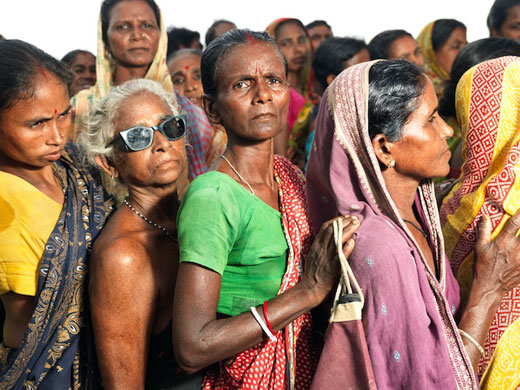
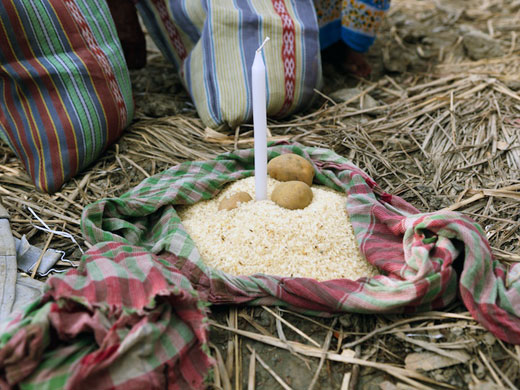
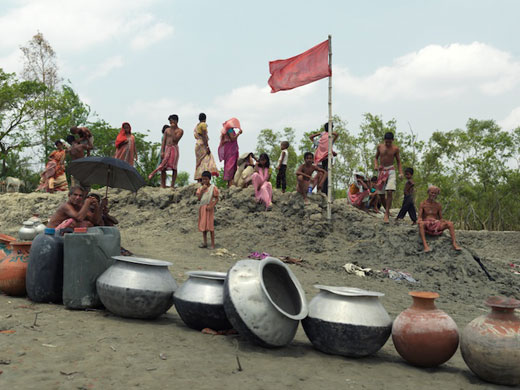
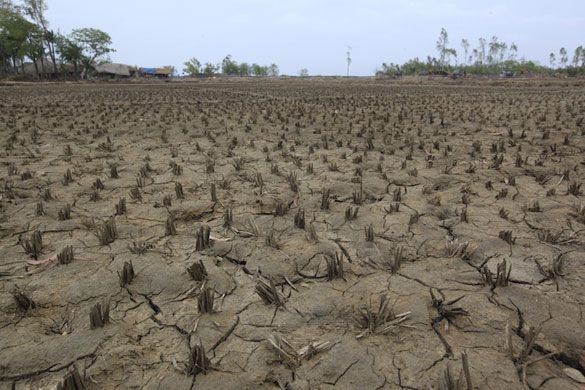
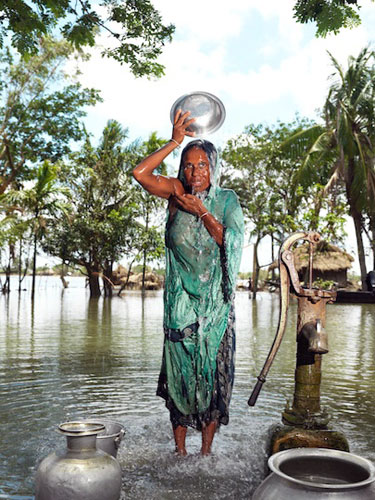
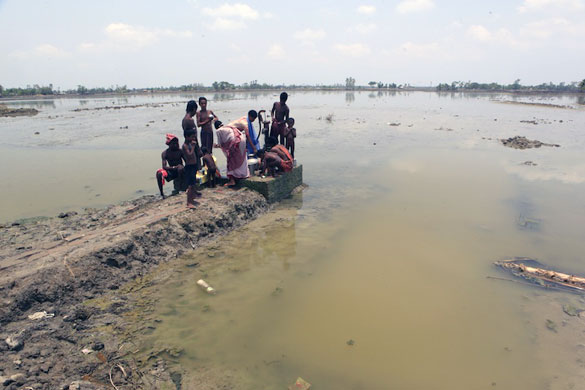
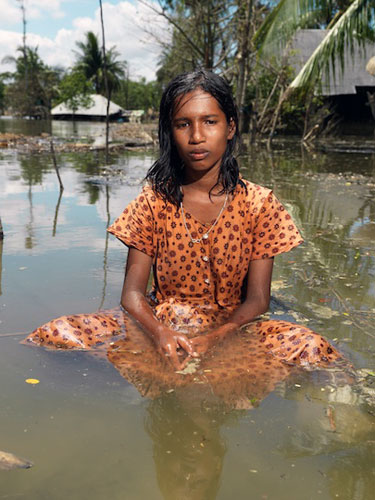
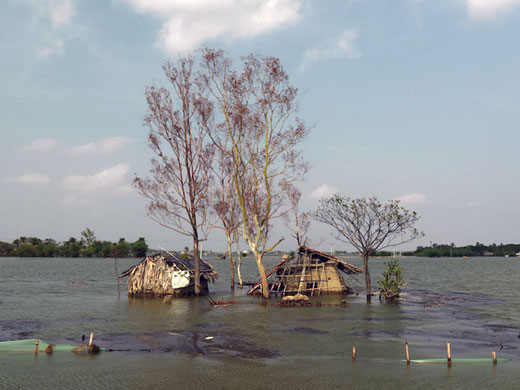
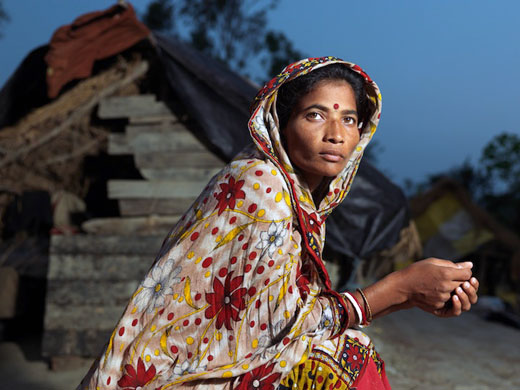
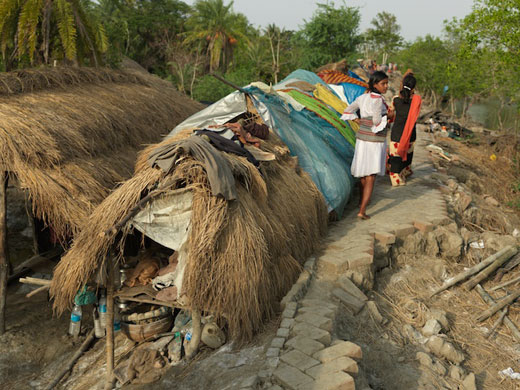
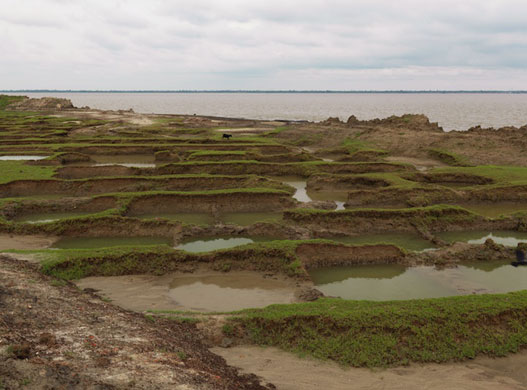
Villagers desperately try to build higher and stronger dykes as a barrier against the rising sea levels. Many dykes are already destroyed causing mass inundation. Photograph: guardian.co.ukThe new river bank barely holds the river's high tide in Saheb Ghat Village.Photograph: guardian.co.ukVillagers await food relief supplies that are randomly distributed by local NGOs on the shoreline of the islands. Whoever is lucky to be in the right place at the right time gets the reliefPhotograph: guardian.co.ukWomen stand in a queue to receive emergency relief supplies. Quote from the woman in yellow (first left) "At present, we are staying by the road inside a tent. Today, at noon, the water level increased so much that we stood in neck high water with two children on my arms! Well, we are not getting any food relief supply inside the village, as our roads are flooded. When we get some supplies then we can eat. Otherwise we remain close to starvation. In this way we are spending our days here. When we come near to the river we will get some relief if we are lucky. Due to this situation, we live by the river bank. We shall not leave this place… our father and mother in laws were born here. They maintain their livelihood here so we will not leave this place. Where would we go?"Photograph: guardian.co.ukVillagers of the Sundarbans receive a minimum source of food, which helps them to survive one day after another in the hope that more emergency relief will comePhotograph: guardian.co.ukVillagers from Dayapur Village wait for water relief to be supplied by the Indian Government. "The pots are placed in a queue but if they are going to be filled we don't know", says a villagerPhotograph: guardian.co.ukThe vulnerable Sundarban Islands suffered huge tidal surges during cyclone Alia. The salt water that inundated the islands destroyed rice crops for many years. This creates a void in the local island's economy. Photograph: guardian.co.ukSurrounded by contaminated water and under an unbearable heat above 40 degrees celsius, a villager try to keep herself clean and fresh in Satjellia Island Photograph: guardian.co.ukUnder an unbearable heat due to a delayed monsoon, villagers pump water surrounded by the flooded and polluted rice field, leading to danger of contaminated water supply. Photograph: guardian.co.uk"My name is Anjana Koyal. I am a student from class seven. The level of the river water is increasing particularly in the night. There are too many mosquitoes, flies, and a bad smell comes from the water. We walk through water up to our necks."Photograph: guardian.co.ukRising temperatures and floods have lead to a dramatic increase in diseases both from mosquitoes and such water-borne illnesses as cholera, typhoid, hepatitis and a variety of skin problems. The large number of people suffering from diarrhoea and fever has meant the school has had to be taken over and converted into a medical centre. Photograph: guardian.co.ukFlooded homes in Kali Nagar village. 4000 people have been displaced peoplePhotograph: guardian.co.uk"My name is Sita Mondal. I used to live on the bank of the river. I used to maintain my family by catching the fishes from the river. Due to the breakage of the river bank, my home has been washed away. Nothing is left. As the river gave me everything, the river has also taken everything back."Photograph: guardian.co.ukMakeshift tents of landless and homeless families in Satjellia Island are located by the roadpath - the only space available that belongs to the Indian Government.Photograph: guardian.co.ukRemnants of displaced homes on the edge of Ghoramara Island. The island is disappearing fast, with only one third of the island remaining above the sea level since 1969. Photograph: guardian.co.uk"My name is Shukdev Das. I live in Ghoramara. I lost my house due to the rising sea water. We are certain that in the near future, our Island will also be under water. We don't know where we shall live."Photograph: Peter Caton
Sign up to read this article
Read news from 100’s of titles, curated specifically for you.