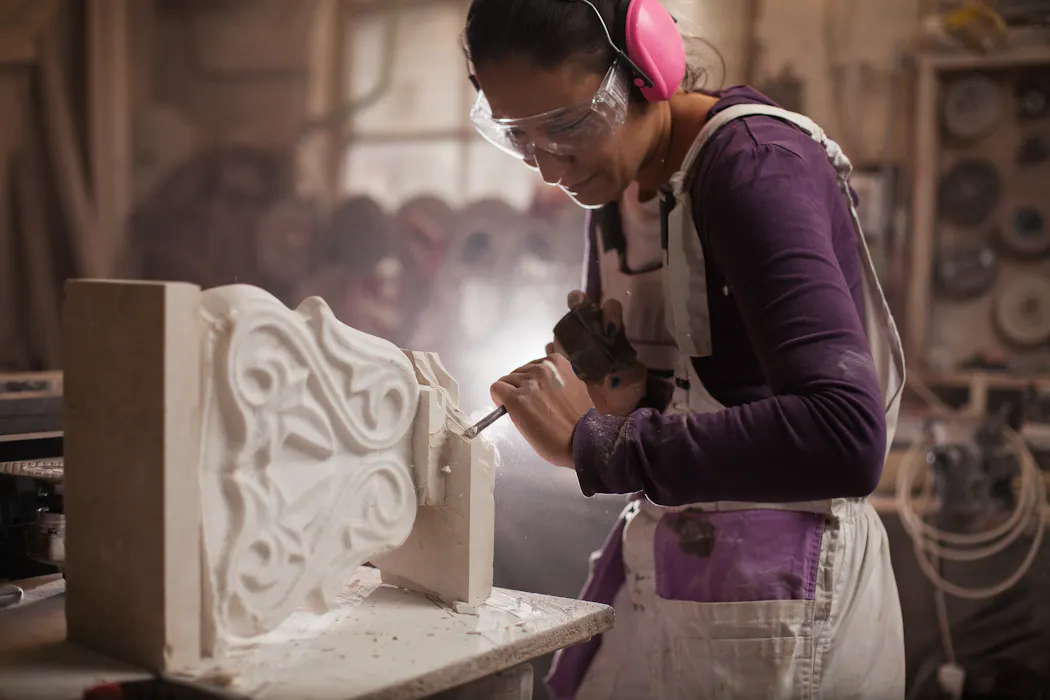
When John, a stonemason working at Glasgow Cathedral, finishes repairing a section, the highest praise he can receive is that no one notices. “When we get things that come together you just see a couple of wee bits of stone”, he explains. “You don’t actually see the work that went into it. But it’s satisfying getting it to all come back as if it’s never been touched.”
This is the paradox at the heart of skilled conservation work: the better you are at your job, the more invisible your efforts become. John spent years mastering complex stonecutting techniques precisely so his interventions will disappear. When all goes well, the building appears untouched.
We live in a culture that celebrates creativity, innovation and leaving your mark. Disruption is praised as the highest achievement. AI companies sell us on their power to generate novel content. Tech executives move fast and break things. Politicians advocate for glorious revolutions and talk of progress. Even on the right, conservativism has recently been given an increasingly radical inflection. In the UK, visions of reform tap into mainstream disaffection with the status quo. In the US the Trumpian hope that America can be “great again”, involves a similar vision of wholesale change. The result is that some of the most valuable forms of work often go unrecognised.
“There is a kind of love, called maintenance”, U.A. Fanthorpe wrote, in her 1995 poem, Atlas, a tribute to the many unseen acts that keep our domestic lives going. From paying bills, to home maintenance and the small acts of kindness that sustain filial relations, she highlights this “sensible side of love”. In a similar spirit, we want to highlight the undervalued work of maintaining and retaining what matters – as Fanthorpe puts it: “the permanently rickety elaborate structures of living”. From the relationships we maintain to the institutions we rely on, this kind of invisible labour shapes our lives in ways we don’t acknowledge and value as much as we ought.
Through ethnographic research with people engaged in the work of preservation, we’ve come to see that maintenance isn’t always passive. The more things change, the more it takes work to keep things the way they are. Often this is deliberate, thoughtful – and sometimes it’s profoundly difficult.
Discipline, not creativity
Stonemasons value discipline over creativity in their work. The real difficulty, they explain, is doing the same thing over and again: staving off boredom, keeping your mind on the task, carrying on when your fingers are numb with cold, repeating the same action, even when threatened with distraction.
Conservation architects describe their work in similar terms. One, who works for the national conservation agency in Scotland, contrasted his current role with previous work as a commercial architect. “Humility matters,” he said. “It’s important that you try and just ease back, because if you are quite an egotistical person, then that can cloud your decisions … you’ll cloud that by actually saying, ‘me, here’s my mark on the building!’”
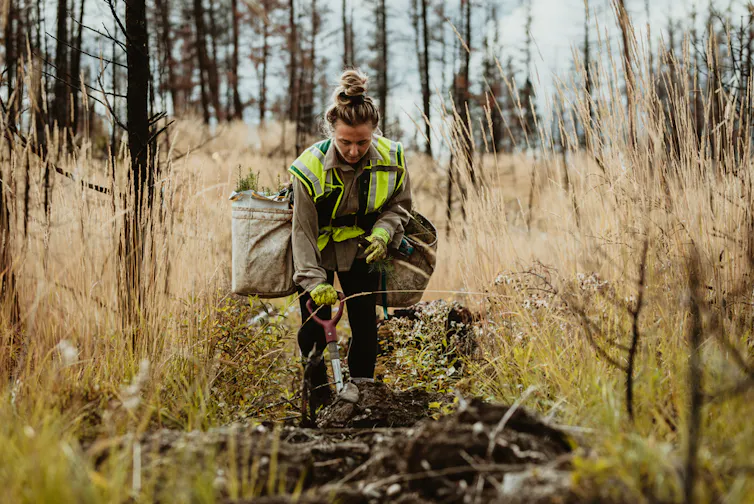
The same orientation appears in other unexpected contexts. Think of the work involved in maintaining a functioning institution, like a school: the administrative and volunteer labour of a range of different types of people, the relationship-building between teachers and parents through parent teacher associations, the training of new staff in established practices and even something as basic as the repair of old equipment. None of that work shows up in political discourse as “reform”, “innovation”, or “progress”. It doesn’t change things or build anything new, and is often directed precisely at keeping something running more or less as it always has.
Many of us who’ve worked in institutions know that keeping something going can involve a great deal of time, effort, judgment and expertise.
Continuity and social life
The work of continuity also matters for our personal politics and social life. What would political discourse look like if we valued continuity as highly as innovation?
On both left and right, our political language is dominated by reform, progress, disruption and revolution. We lack an equivalent vocabulary to describe the deliberate work to keep things as they are. We tend to undervalue this work, in part because we fail to see when it happens. This is particularly so in the current moment, when narratives of broken Britain and general disaffection with the way things are, directs hope towards widespread, radical change. Even on the right, conservative political philosophies are increasingly presented as routes to profound transformation, whether as reform or restoration.
Preservation isn’t morally superior to reform, and this is not an argument against political change. Nor is it an argument for maintenance as inertia or inaction. Clearly feelings about broken Britain reflect real frustrations with dysfunctional institutions. Yet there is much about our political and social life that almost all of us would wish to preserve and sustain. Our point is precisely that such preservation can be active. Indeed, the more that things break or wear out, the harder and more necessary this work becomes.
Political and social life involves making choices about what to change and what to sustain. But when we only celebrate (or attack) transformation, creativity, and innovation we overlook the skilled, thoughtful work done with the aim of leaving (some) things as they are. Often, movement is needed in order to remain still. And if all we are offered is either disruptive change or wholesale reactionary resistance, we miss this.
A lack of change is not inherently a failure or an absence. Stonemasons have consciously and skilfully cultivated the ability to not innovate. Their work is difficult and important. But they are clear that its value is not captured in the language of “creativity”. They’ve learned something our innovation-obsessed culture has forgotten: that some of the most valuable human work lies not in making things new, but in the patient, humble, disciplined practice of helping what matters to endure.
This article was originally published on The Conversation. Read the original article.