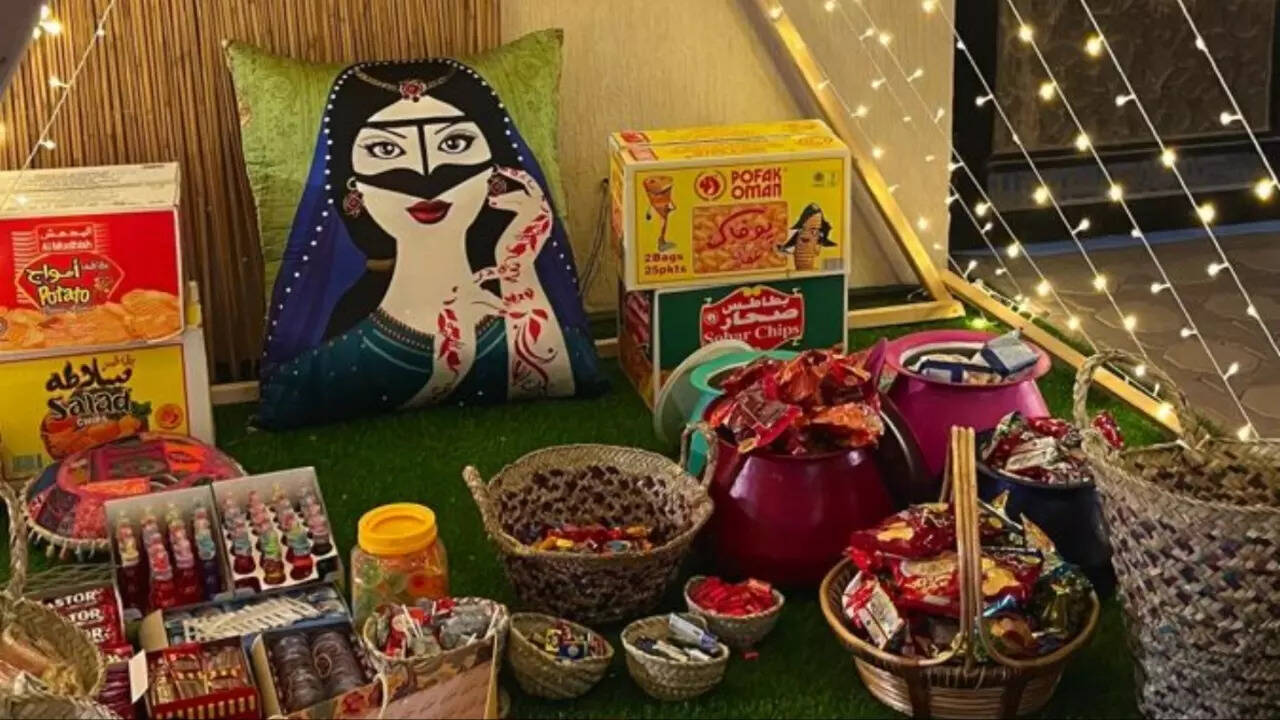
As the Islamic lunar month of Sha‘ban reaches its midpoint this year, the Emirati tradition of Haq Al Laila (a joyous evening of community, generosity and spiritual reflection) has again come into focus. Earlier this week, the UAE Council for Fatwa issued a religious clarification (fatwa) on whether observing Haq Al Laila is permissible under Islamic law and its response has now become one of the most talked-about topics among families, faith communities and cultural commentators across the emirates.
What is Haq Al Laila in the UAE?
Haq Al Laila, sometimes spelled Hag Al Laila or known in other Gulf countries under similar names like Gargee’aan, is a cultural celebration observed on the night between the 14th and 15th days of Sha‘ban, about two weeks before Ramadan begins. It is a night rich in family fun with children in traditional dresses going door-to-door asking for sweets and small gifts, households preparing goodie bags and communities hosting heritage events that blend activity with shared memory.
#News | Dubai Police Share the Spirit of Haq Al Laila with Children and Families at Global Village.
Details :https://t.co/5x1dvMRgQV@GlobalVillageAE#SeasonOfWulfa #HagAlLeilaInDubai pic.twitter.com/WnhafNfOZp
— Dubai Policeشرطة دبي (@DubaiPoliceHQ) February 2, 2026
Observers describe it as an occasion that strengthens family bonds, community cohesion and intergenerational connection, which are values deeply prized across Emirati and wider Islamic societies. Yet, because it combines social customs with a date that some Muslims associate with spiritual merit, questions have arisen about whether the practice is religiously permissible, controversial or potentially an innovation (bid‘ah). However, this question has now been addressed directly by the UAE Council for Fatwa .
UAE fatwa council’s Haq Al Laila clarification: Permissibility with context
According to the recent statement from the UAE Council for Fatwa, observing Haq Al Laila as a cultural and social tradition is religiously permissible (mubah) so long as it does not contradict core Islamic principles or objectives (maqasid al-shariah). This conclusion is based on several key jurisprudential foundations -
-
Cultural Customs Are Generally Allowed: Islamic law often treats customary practices that are not directly addressed in foundational religious texts as permitted, provided they do not conflict with Islamic teachings.
-
Silence in Islamic Law Implies Leniency: The Council noted that when Islamic law remains silent on a practice, neither affirming nor forbidding it, such matters are generally handled with leniency.
-
Social Objectives Align With Islamic Values: Celebratory acts that foster joy, affection, social bonds and community cohesion, such as exchanging sweets and gifts, are seen as positive outcomes that reflect Islam’s broader encouragement of kindness and generosity.
The Council also highlighted Prophetic traditions and historical reports associated with the night of mid-Sha‘ban, noting narrations attributed to early Islamic figures such as Aisha (may Allah be pleased with her) and Abu Bakr Al-Siddiq RA, which speak of divine mercy and forgiveness on this special night, even as these narrations are viewed as recommended rather than obligatory to observe.
What the UAE fatwa council’s ruling means in Islamic practice
Importantly, the Council’s statement emphasised that -
- Observing the night through worship (including voluntary prayers, supplication (du‘a), Qur’an recitation and reflection) is recommended (mustahabb) rather than mandatory.
- Celebrating via social customs such as giving sweets, sharing gifts and engaging children in heritage activities is permissible as long as it does not involve anything prohibited in Islam.
- Those who choose not to observe the occasion in either religious or cultural ways bear no blame and the Council discouraged disputes among the public over differing practices.
In practical terms, this means families and communities across the UAE can continue to celebrate Haq Al Laila, enjoying its social rituals and festive atmosphere while also being mindful that the occasion is not an obligatory religious feast the way Eid al-Fitr or Eid al-Adha are.
How the UAE's Haq Al Laila tradition looks on the ground
Across the UAE this week, the Haq Al Laila season has been in full swing:
- Dubai Police and community partners hosted a family-friendly event at Global Village featuring live performances, giveaways, mascots and activities that brought together Emirati heritage with unity and inclusion.
- Abu Dhabi City Municipality organised heritage games, food stalls and traditional activities aimed at preserving this celebratory legacy.
- Sharjah and other emirates have similarly run heritage-centred programmes, often including sweets distribution, cultural storytelling and interactive games that delight children and families.
These events reflect Haq Al Laila’s evolution from a home-to-home custom into a modern cultural festival, part of broader government efforts like the “Season of Wulfa” initiative, designed to celebrate Emirati culture year-round. The Fatwa Council’s clarification arrives at a moment when many Muslims, both within the Gulf and globally, are increasingly navigating how local cultural expressions intersect with religious jurisprudence.
🌙 Haq Al Laila (Mid-Sha’ban) — Legal & Community Perspective (UAE)
Haq Al Laila is not only a joyful cultural night — it is a reflection of Emirati values, social harmony, and respectful community living guided by awareness of public conduct and shared responsibility.
🇦🇪… pic.twitter.com/LHZhRrUjdB
— Lex and Strategy Legal Consultancy (@LexandStrategy) February 3, 2026
Some Islamic communities elsewhere debate similar traditions, contrasting views that categorise celebrations beyond Eid as innovations (bid‘ah) with more flexible approaches recognising cultural heritage. In this context, the Council’s ruling reflects a moderate and culturally grounded stance.
ضمن احتفالات موسم الولفة أجواء حق الليلة تملأ نادي دبي لأصحاب الهمم بالفرح والبهجة.
As part of the Al Wulfa season celebrations, the spirit of Haq Al Laila filled the Dubai Club for People of Determination with joy and happiness.#dxb #موسم_الولفة pic.twitter.com/94ktAp1fGo
— نادي دبي لأصحاب الهمم♿️ (@DCDuae) February 2, 2026
It affirms the validity of cherished local customs while upholding core Islamic principles and avoiding unnecessary polarisation. It also underscores the role of established scholarly bodies in guiding practice thoughtfully rather than through fragmented online opinion. The UAE’s Fatwa Council has clarified that celebrating Haq Al Laila, both through cultural festivities and spiritual observance, is permissible so long as it does not conflict with Islamic law.
This ruling honours the tradition’s social value, acknowledges its spiritual context and encourages communities to celebrate with both joy and faith. As the night of mid-Sha‘ban approaches on February 03, 2026, families across the Emirates are embracing this blend of heritage, generosity and reflection, a hallmark of the shared path from Sha‘ban into Ramadan.