The Iranian navy is escorting foreign tankers through the Strait of Hormuz in return for significant fees paid in Chinese currency and crypto, according to a report.
The regime is still enforcing a selective blockade of the vital waterway, cutting traffic by 90 per cent and forcing up oil prices around the world.
Several countries have already cut deals to guarantee unimpeded transit. One Iranian lawmaker said last week that Tehran was charging $2 million for a journey.
But people with knowledge of the situation say that a more formal system is now emerging to offer certain ship operators safe passage in return for a variable fee.
The Iranians are said to have a grading system from one to five for nations based on how friendly they are to Iran, according to Bloomberg. Friendlier countries may get better rates, starting at $1 per barrel of oil on board.
After going through a vetting process - the ships cannot have links to the US, Israel or other perceived hostile states - operators negotiate terms to be paid in Chinese yuan or stablecoins.
Stablecoins are cryptocurrencies pegged to fiat currencies like the dollar or the euro. A big tanker can carry around two million barrels. A barrel of crude oil was priced at $108.32 at the time of writing.
Successful payment grants ships access to a route and a secret passcode they can broadcast on approach to the Strait, summoning a patrol boat for escort through the channel.
They are also reportedly expected to raise the flag of the nation that negotiated the passage agreements. The FT reported in early March, before such a system existed, that ships were using their transponders to declare themselves as Chinese to avoid attacks.
Almost all of the journeys taken in the past three weeks have taken a detour through the narrow channel north of Larak Island, away from the normal route, according to shipping intelligence firm Windward.
Windward says that ships have been spotted queuing up north of the island awaiting clearance, and that some have been turned back in recent days.
More than a third (36%) of the transits seen on March 31 were on US-sanctioned vessels, the firm reported, adding that 27% were Greece-owned bulk carriers shipping agricultural commodities to or from the Islamic Republic.
“This highlights how the selective blockade of the Strait of Hormuz is benefiting Iran,” it assessed.
Iran’s parliament committee reportedly approved a plan to impose a steady toll on foreign ships on Tuesday, according to local media reports. Such a move is considered to be a breach of international law.
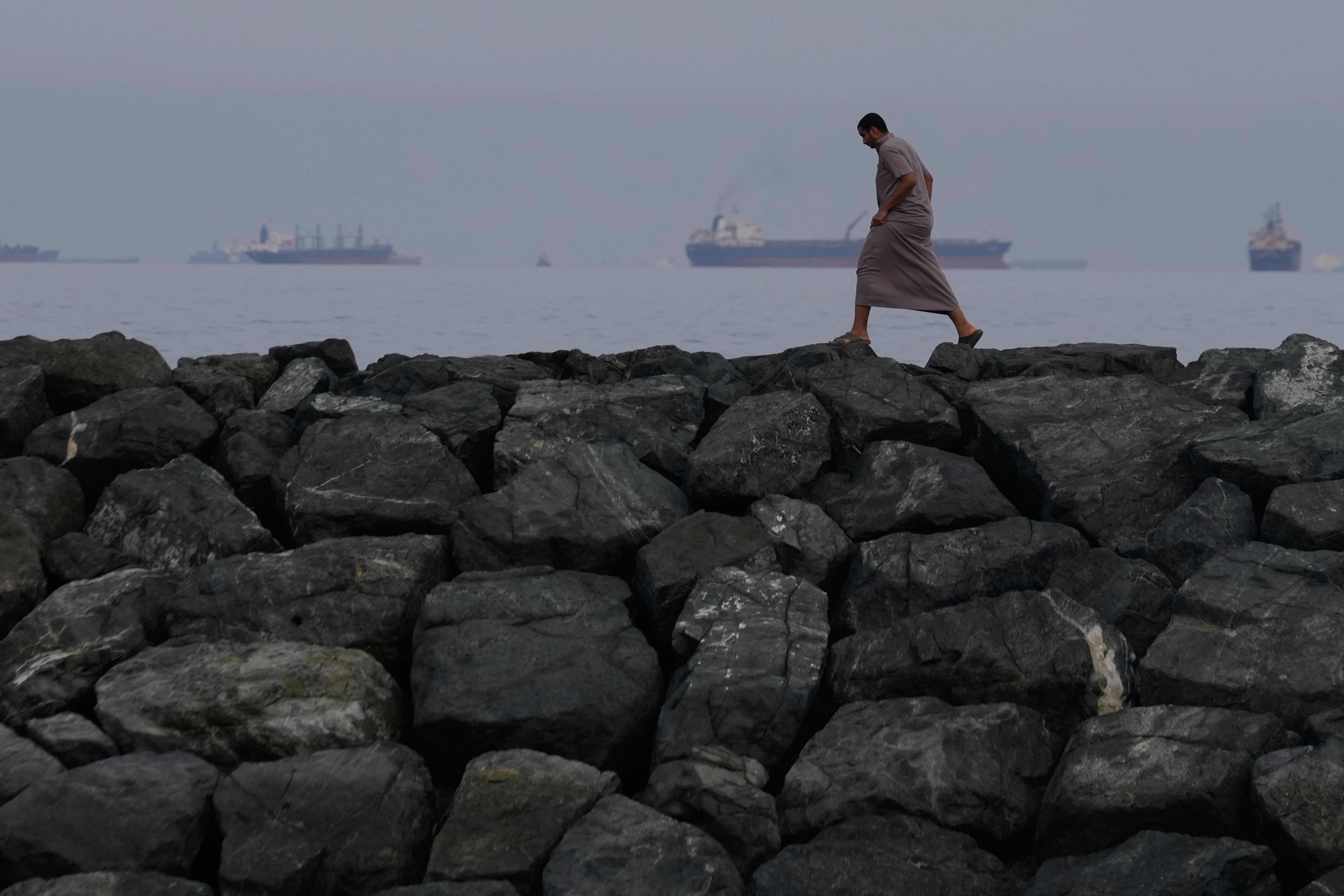
Britain is set to host talks on Thursday aimed at forming a coalition of countries to explore ways to reopen the Strait of Hormuz after Donald Trump said securing the channel was a problem for other nations to resolve.
British foreign minister Yvette Cooper will chair the virtual meeting of about 35 countries including France, Germany, Italy, Canada and the United Arab Emirates around midday in London to explore ways to restore freedom of navigation in the area. The United States is not due to attend.
The meeting takes place after Trump said in an address to his nation on Wednesday evening that the Strait could open "naturally", and it was the responsibility of countries that rely on the waterway to ensure it was open.
A look at the UK's Royal Navy, which has faced jibe after jibe from Trump and Hegseth
Renewables generated record share of UK electricity in 2025, data shows
Trump’s spiritual advisor sparks backlash for comparing president’s life to Jesus
Trump says ‘I don’t care about Iran’s uranium’ in stunning U-turn
Iran executes man arrested over January protests
Iran-US war latest: Tehran says conflict will go on ‘until enemy’s surrender’