Seattle corporate travel spending reached $1.2 billion in 2026, with technology companies driving a measurable uptick in premium transportation demand above the national average. Regional tech firms show a roughly 30% higher rate of upgrading to luxury ground transport compared with national benchmarks, with executive airport transportation and chauffeur-driven limousine service in Seattle emerging as key factors. Local providers such as Seattle Black Limo, operating from 2640 S Holly St, Seattle, WA 98108, United States, have become central to the growing market for private car service as executives move between Downtown Seattle, Bellevue, and SEA-TAC Airport routes.
Seattle Corporate Travel Market Overview
The $1.2 billion corporate travel spend projected for 2026 covers several key areas, including ground transportation, air travel, hotels, and events, with growing attention on ground transportation and premium transfer services. Data from the Global Business Travel Association (GBTA) shows that ground transportation now accounts for 14.7% of total corporate travel spending, up from 11.2% in 2019.
Regional growth is driven by expanding business activity in Downtown Seattle, South Lake Union, Bellevue, and Redmond. The area's proximity to Seattle-Tacoma International Airport (SEA) and Paine Field, along with the presence of major institutions such as the University of Washington and UW Medical Center, continues to support consistent executive travel demand.
Key locations shaping the local landscape include Seattle-Tacoma International Airport (SEA), Boeing Field, Pike Place Market, and the Space Needle.
2026 Travel Spending Trends: Growth Drivers and Numbers
Quantifying The Increase
The total $1.2 billion figure reflects year-over-year growth tied to rising demand for executive transfers. Corporate ground transportation spending typically ranges from $2,400 to $4,800 per frequent traveler each year, while technology companies average between $2,100 and $3,400 per traveler. Executive transfers generally cost between $125 and $225 per trip, depending on vehicle type and distance.
Ground transportation now makes up 14.7% of total corporate travel spending, showing its larger role in overall travel budgets. Data from the Port of Seattle and surveys from GBTA help confirm these trends.
Geographic and Temporal Patterns
Weekday executive travel peaks occur tied to business districts, including Downtown, South Lake Union, and Bellevue. Event-driven spikes correlate with Seattle Convention Center activities and stadium events at Lumen Field and Climate Pledge Arena.
SEA peak arrival windows show increased flight volume trends at SEA and Paine Field. Major airlines, including Alaska Airlines and Delta, operate substantial routes serving these corridors. Premium hotels such as Four Seasons Hotel Seattle and Fairmont Olympic Hotel serve as key accommodation points.
Technology Sector Influence On Executive Travel Budgets
Corporate Travel Budgets At Major Tech Firms
Microsoft, Amazon, Google, Meta, Apple, Salesforce, Adobe, Oracle, and Nvidia have updated travel policies emphasizing executive-level allowances that drive premium ground transfers. SEC filings and expense trends from these companies demonstrate how executive travel budgets prioritize premium transportation options.
Business Travel Use-Cases Driven By Tech Activity
Executive commutes between Redmond, Bellevue, South Lake Union, and downtown Seattle create consistent demand. Inter-site visits, investor roadshows, and premium client entertaining drive additional bookings. Corporate destinations, including Bellevue Square, Seattle Convention Center, and Grand Hyatt Seattle, serve as key meeting points.
Company headquarters and campuses, including Amazon HQ2 elements and Microsoft's Redmond campus, anchor travel patterns. Seattle Black Limo (SBL) is widely used by tech company travel managers for campus transportation.
Rising Demand for Premium Transportation in Seattle
- Rising executive expectations: Privacy during travel, secure rides, punctual arrivals, and licensed and insured service remain non-negotiable requirements for corporate procurement.
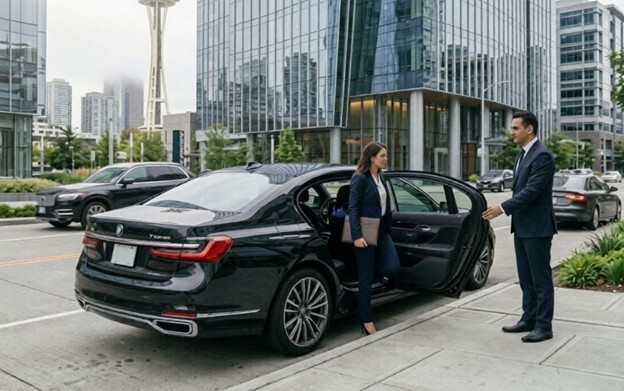
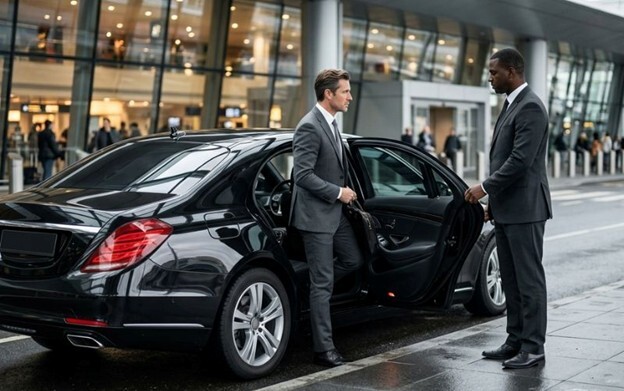
- Fleet preferences: Luxury sedans and SUVs, including Mercedes-Benz S-Class, BMW 7 Series, Cadillac Escalade, Lincoln Navigator, Chevrolet Suburban, and Mercedes-Benz Sprinter, serve executive groups. Seattle Black Limo offers these fleet options as a local provider.
- Event-driven demand: Higher bookings are tied to conventions at Seattle Convention Center and corporate hospitality at T-Mobile Park and Lumen Field, particularly during FIFA World Cup 2026 stadium transportation periods.
- Role of hotels: Transfers to/from Four Seasons Hotel Seattle, Hyatt Regency Seattle, and The Westin Seattle generate consistent ancillary bookings for premium transportation suppliers.
Luxury Transportation Trends Above The National Average
Seattle's premium transportation uptake shows a 30% differential compared to the national average upgrade rates to luxury ground transport. Industry surveys from GBTA and the U.S. Travel Association confirm this regional advantage.
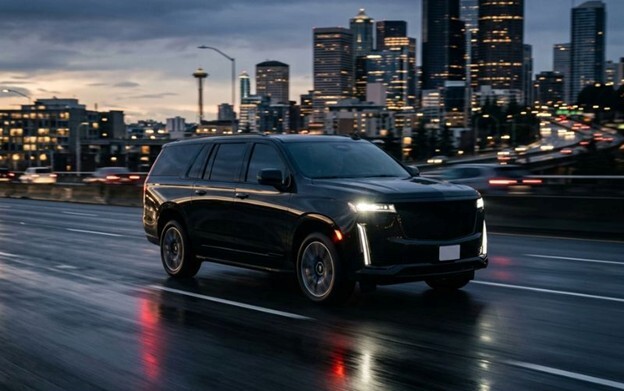
Regional causes include the concentration of high-value tech employees, frequent investor and enterprise travel, and the convention calendar at the Seattle Convention Center. Airport-specific trends show SEA-TAC Airport car service demand growth, with private airport car service arrivals varying by time of day.
Local traffic corridors, including Interstate 5, Interstate 90, SR-520, Mercer Street, and Aurora Avenue, drive executives' preference for chauffeur-driven car service for predictability. Seattle Black Limo serves as one example of local chauffeur-driven services responding to these trends.
Executive Airport Transportation: Demand And Operational Priorities
Peak Airport Transfer Patterns
Inbound/outbound patterns at SEA and Paine Field tie directly to executive schedules, with SEA flight data and conventions/events creating predictable demand spikes. SEA-TAC Airport car service keywords emerge naturally when discussing airport-focused routes.
Service-Level Expectations For Airport Travel
Punctual arrivals, luggage handling, flight monitoring, licensed and insured chauffeurs, and local route familiarity define service expectations. Seattle Black Limo serves as a case example for private airport car service offerings, with routes along I-5 and SR-520 connecting to Grand Hyatt Seattle and Fairmont Olympic Hotel. Boeing Field also serves private aviation transfers.
Car service Seattle usage remains concentrated in these airport transfer corridors.
Chauffeur-Driven Transportation Services and Professional Standards
- Professional chauffeurs: Background checks, training in client confidentiality, and business etiquette form the foundation of professional standards. Seattle Black Limo references professional chauffeur standards and corporate account practices.
- Vehicle standards: Cleanliness, connectivity including in-car Wi-Fi, and executive comfort featuring leather seating and climate control remain essential.
- Security and privacy: Secure pick-up/drop-off practices, discrete routes, and non-disclosure practices for high-profile clients protect executive travelers.
- Contractual elements: Licensed and insured service, corporate billing, and account management for enterprise customers define contractual requirements.
Seattle car service demands reflect these professional standards across business districts.
Business Travel Efficiency And Comfort: Technology And In-Vehicle Productivity
Real-time technology integration, including flight-tracking, routing apps, in-vehicle connectivity, and calendar sync, enables executive productivity. Enterprise tools and apps support these capabilities.
In-ride work environments feature Wi-Fi, charging ports, privacy partitions, and comfortable seating, including Mercedes-Benz S-Class and BMW 7 Series. Cloud teams from Microsoft, Amazon, and Salesforce use travel time for briefings and calls. Seattle Black Limo provides premium car service in Seattle with in-vehicle amenities for executive productivity.
Corporate Events, Conventions And Conference Transportation Demand
Trade shows and conferences at Seattle Convention Center, Summit Building, and Arch Building drive group transportation needs, including executive transfers, small VIP convoys, and shuttle alternatives with luxury vans like Mercedes-Benz Sprinter.
Hotels and venues, including Grand Hyatt Seattle, Hyatt Regency Seattle, Four Seasons Hotel Seattle, and stadium events at T-Mobile Park and Lumen Field, create ancillary bookings.
Seattle Business Districts And Corporate Hubs: Micro-Travel Patterns
Downtown Seattle serves finance and conventions, South Lake Union hosts Amazon and biotech firms, Bellevue and Redmond contain enterprise campuses, and Kirkland features tech and professional services.
Typical routes include Bellevue–Downtown, Redmond–South Lake Union, and SEA–Downtown, with Mercer Street and Aurora Avenue as common corridors. Local institutional anchors, including the University of Washington, Swedish Medical Center, Virginia Mason Medical Center, and Bellevue College, drive executive movement.
Privacy, Security And Compliance Expectations For Executive Travelers
Privacy requirements for C-suite travel include NDAs for drivers where appropriate and secure passenger handling. Insurance, licensing, and regulatory compliance in Washington State and King County remain mandatory.
Washington State Department of Licensing, Port of Seattle, and major corporate travel managers regulate chauffeur-driven car service and private airport car service. Corporate policies from tech and finance buyers establish compliance standards. Operators like Seattle Black Limo serve as a compliant vendor example.
Future Outlook For Seattle Executive Mobility
Expected demand drivers include continued tech hiring cycles at Microsoft, Amazon, and Google, the convention calendar, and hybrid work travel patterns. Fleet and service trends point toward electrification, larger SUVs and Sprinter vans for group transfers, and expanded SEA-TAC Airport car service capacity.
Operational trends include increased integration of real-time data, corporate account platforms, and emphasis on sustainability in vehicle choices.
Data Sources And Methodology Note
Primary sources include Port of Seattle traffic reports, GBTA studies, U.S. Travel Association data, Washington State employment and commerce data, company filings, local hotel occupancy reports, and SEA passenger statistics.
Interviews or quotes from travel managers at Microsoft, Amazon, and Bellevue hotels supplement factual data. A factual quote from Seattle Black Limo operations staff provides an operational perspective. Proprietary figures require attribution, and speculative statements are avoided.
Final Thoughts
Seattle corporate travel spending grew to $1.2 billion in 2026, driven by tech sector influence and a 30% premium transport upgrade above the national average. Core trends include increased private airport car service demand, rising chauffeur-driven car service uptake, and executive comfort/productivity priorities.
Continued tech-driven demand will shape future adjustments in premium fleet offerings and airport transfer patterns. Seattle Black Limo serves as a local example of a chauffeur-driven transportation provider responding to these market dynamics.