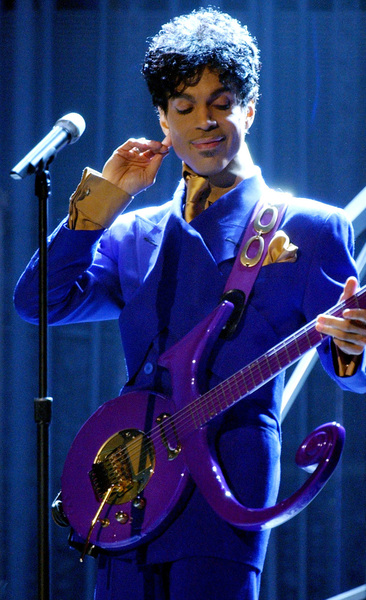
MINNEAPOLIS _ Investigators searching Paisley Park within hours of Prince's death last April found prescription medications in pharmaceutical bottles labeled in the name of a friend and business associate, and a pamphlet on how to be weaned from drugs, according to search warrants unsealed Monday.
But they found nothing that would confirm the source of the powerful drug fentanyl that killed the musician. Investigators said they found no prescriptions under Prince's name.
Prince, 57, died April 21 from an accidental, self-administered overdose of fentanyl, according a report released last June by the Midwest Medical Examiner's Office. The report gave no indication of how Prince obtained the painkiller, nor did it list any other cause of death or "significant conditions."
Authorities have said neither foul play nor suicide is suspected.
Carver County authorities investigating Prince's death executed a total of 11 search warrants between April 21, the day two of Prince's associates found his lifeless body inside a Paisley Park elevator, and Sept. 19. The warrants were unsealed Monday, nearly a year after his death.
Kirk Johnson, Prince's drummer, friend and longtime business associate, told investigators at Paisley Park in the hours after he and Meron Bekure, Prince's personal assistant, found the musician's body in an elevator, that Prince was struggling with opioid abuse and withdrawal, according to the search warrants.
Johnson, who was also head of Paisley Park security, also told them that Prince reported "not feeling well" in the hours before he died, the warrants said.
Authorities were called to Paisley Park at 9:43 a.m. April 21 after his body was discovered. Prince was pronounced dead less than a half-hour later.
He had not been seen or heard from since 8 p.m. April 20, according to the warrants. He may have been dead for as long as six hours.
According to the warrant affidavits:
Investigators found six people at the death scene when they arrived, including Andrew Kornfeld, who had arrived in the Twin Cities at 6 a.m. that day on a mission to meet with Prince and assess him for a drug dependency program run by his father, Dr. Howard Kornfeld. He told detectives that he had controlled substances in his backpack that he brought along to help Prince, but would not have administered them without a doctor present. He said his father was unaware that he had brought the medications.
Dr. Michael Todd Schulenberg told detectives that he had treated Prince on two occasions, April 7 and 20. He said he had issued a prescription for oxycodone, an opiate, under Johnson's name to protect the star's privacy.
Prince, an intensely private person, traveled under the name Peter Bravestrong to help protect his identity. That name was on a luggage tag during his trip to perform in Atlanta the week before his death. It was on the return trip that he made an emergency stop in Moline, Ill., after Prince passed out on the plane. He admitted that he had taken some painkillers.
Investigators conducted interviews far and wide in the weeks and months that followed Prince's death, including a June 16 interview with the singer Judith Hill. Investigators later learned that she had been involved in a romantic relationship with Prince since 2014. She said she communicated with Prince through an email account set up under the name of one of Prince's former managers, Julia Ramadan.
Sources told the Star Tribune in the days after Prince's death that a joint state and federal criminal investigation, which is still ongoing, has focused on his use of painkillers and how he obtained them. Fentanyl was never prescribed to Prince, according to the search warrant affidavits. The drug is considered highly potent and addictive and is prescribed to patients who have become tolerant of other opioids for pain relief.