The NFL Draft is perhaps the world’s longest, and most bizarre, job application process.
Over the course of a few months NFL hopefuls will have their lives picked apart by a small group of individuals who hold in their hands the keys to the proverbial castle. Every aspect of their lives are examined. Their best moments. Their worst. With more “applicants” than jobs available, teams are sometimes forced to make difficult decisions, and that leaves incredibly talented applicants on the outside looking in when the final decisions are made.
Think about the last time you applied for a job. What you put on your resume to separate yourselves from the rest of the applicants. The things you said during the interview to make you a more attractive candidate. With such a high level of competition, every little thing you can do to make yourself stand out can mean the different between starting a new gig, or looking for another shot.
Now think about this year’s wide receiver draft class. Many consider it to be a “historic” group of talent. Daniel Jeremiah, the top draft analyst for the NFL Network, declared before the Scouting Combine that he had 27 players with a Day One or Day Two grade on his overall board at the wide receiver position.
I’ve got 27 wide receivers with top 3-round grades in this draft. And consider average 31 are taken. We had a max of 35 taken in, I believe that was in 2017. So this is a really phenomenal group of wideouts. Not all those guys are going to go early. They’ll end up spreading throughout the draft. But it’s really a good group.
With such a deep candidate pool, how does one stand out? Conversely, what might cause a candidate to slide?
That brings us to Justin Jefferson.

The LSU wideout put up impressive numbers for the Tigers last season during their run to a National Championship. He also was one of the best performers at the Scouting Combine, as his 4.43 40-yard dash was a bit unexpected, but showed that he has the long speed to function at a high level in the NFL. Yet there are many who express reservations about him.
The main reservation for many? A matter of potential usage in the NFL, and the notion this his skillset is a bit more limited than some of the other options in the draft. His huge numbers last season might be due to the fact that he operated nearly exclusively out of the slot. Jefferson, according to charting data from Pro Football Focus, played 870 snaps last year from a slot alignment.
Just five of those were on the outside.
While 11 offensive personnel (three wide receivers, one tight end and one running back) has become a base personnel package for the majority of NFL teams, making slot receiver a starting position, how that spot is used functionally makes it a bit of an easier position to play. The slot receiver gets the benefit of pre-snap movement, making it easier to avoid press coverage off the line of scrimmage. Additionally, the slot receiver has a “two-way go” off the release, giving the cornerback more to think about. Slot receivers, thanks to their alignment on the field, can run routes breaking both inside and outside.
Boundary receivers, however, are limited with what they can do working towards the outside. On routes where they break towards the sideline, they either have to cheat their alignment towards the middle of the field pre-snap (perhaps indicating to the CB what they are doing) or create space with their route, perhaps by stemming inside first and then breaking outside.
Therefore, receivers with a proven track record of playing outside, and beating press coverage, might be more valuable commodities. If it is harder to find that type of player, teams will be willing to pay a premium for them in terms of draft capital, and wait to draft players whose job might be easier in the league.
So where does that leave Jefferson?
On the outside of the first round looking in, according to many.
But that might not be the right way of viewing him, if you examine the total resume.
Returning to the job application hypothetical for a moment. If there was something in your background as an employee that might make you more attractive to prospective employers, you would be sure to list it on your resume. Say you were applying for a job as a litigation attorney. Even if your past ten years were spent practicing contract law, but fresh out of law school you practiced for two years handling civil litigation of personal injury cases, you’d emphasis that on your resume. It is relevant, it shows you can handle that part of the job – or at least have experience doing so – and it might make you a more valuable applicant.
For Jefferson, it is his sophomore season, when he spent 553 of his 697 snaps playing on the outside, and just 133 of his snaps in the slot.
Two years ago, the LSU offense was more of your father’s – or even your grandfather’s – offense. This was a run-heavy offense that used a lot of play-action and maximum protection concepts in the passing game. But this past season, under passing game coordinator Joe Brady the Tigers were more of a passing team, relying on five-man protection schemes and giving quarterback Joe Burrow more targets to choose from on each route concept.
Diving into the 2018 gives us a chance to examine Jefferson’s ability to play on the outside.
What you might find is a player who might still be best suited to play in the slot, given just how great he is there, but someone who when aligned outside can still function at a high level.
Take this example, from Jefferson’s game against Alabama in 2018. He aligns to the right side of the formation against press coverage, and runs a stop route. His suddenness with the break, and his ability to sink his hips into the cut, enable him to get separation from tight coverage:
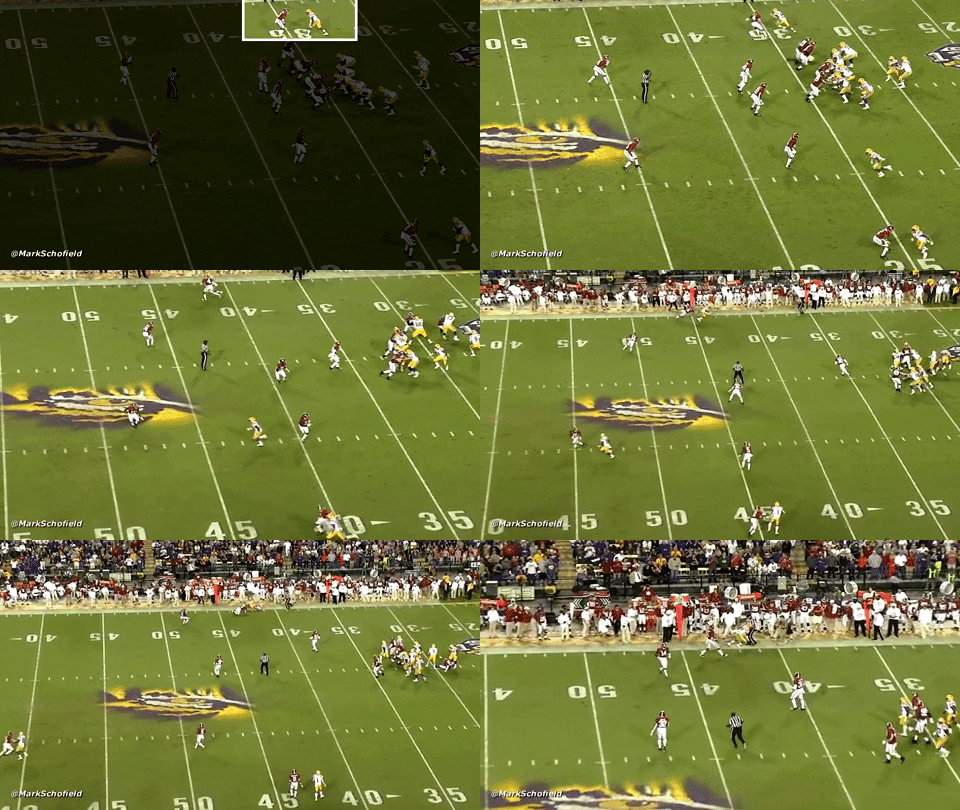
Also notable on this snap is how Jefferson uses his left hand. The cornerback tries to get a slight jam on him but the wide receiver deftly brushes the CB’s right arm away, preventing the corner from controlling the receiver’s path. Jefferson then stops on a dime, creating the separation, and works back to the football to make the reception, turning second and long into third and short.
You can also see here the impact of playing on the outside, and how difficult it is to create space along the sideline from a boundary alignment. Jefferson begins the play aligned at the “top of the numbers,” giving him some room pre-snap to the outside. But the cornerback forces him to release outside with his pre-snap leverage, shrinking the real estate Jefferson has to work with. Only by his sudden break and how he effectively works back to the football does the receiver create enough of a window for his quarterback to complete this throw.
Let’s look at another snap from the Alabama game with Jefferson facing a cornerback in press alignment:
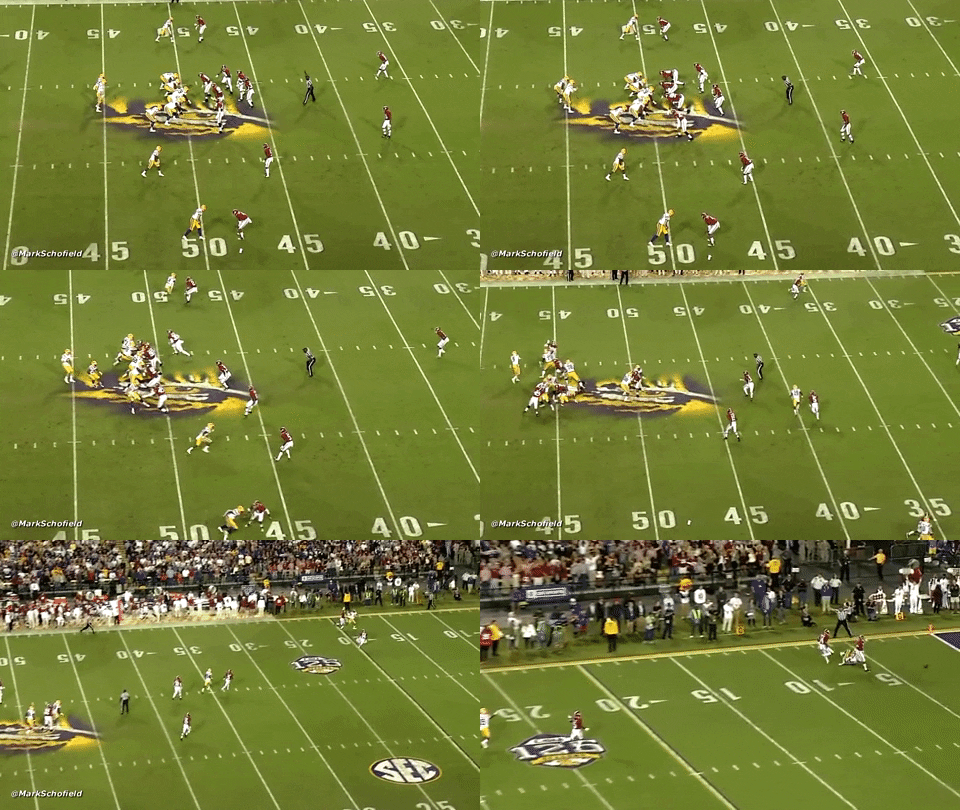
Jefferson begins this play aligned above the numbers, and is running a straight go route. The cornerback forces him to the boundary with hi alignment, as he plays inside leverage. Jefferson is able to get separation – perhaps due to the speed he showed at the Combine – but also does a tremendous job of staying vertical and not drifting towards the sideline. This gives Burrow a big window to throw into. The pass is slightly underthrown, giving the corner a chance to recover, but Jefferson does his job on this play.
These two examples illustrate Jefferson starting to the outside on his route, with the cornerback giving him the boundary thanks to his pre-snap alignment. Perhaps a better situation to examine is whether Jefferson, facing that inside leveraged press defender, can still work across his face on an in-breaking route.
On this play against Miami from the 2018 season-opener, Jefferson faces an inside leveraged defender. He runs an in-breaking route, and although he does not get thrown the football, he was open thanks to his technique:
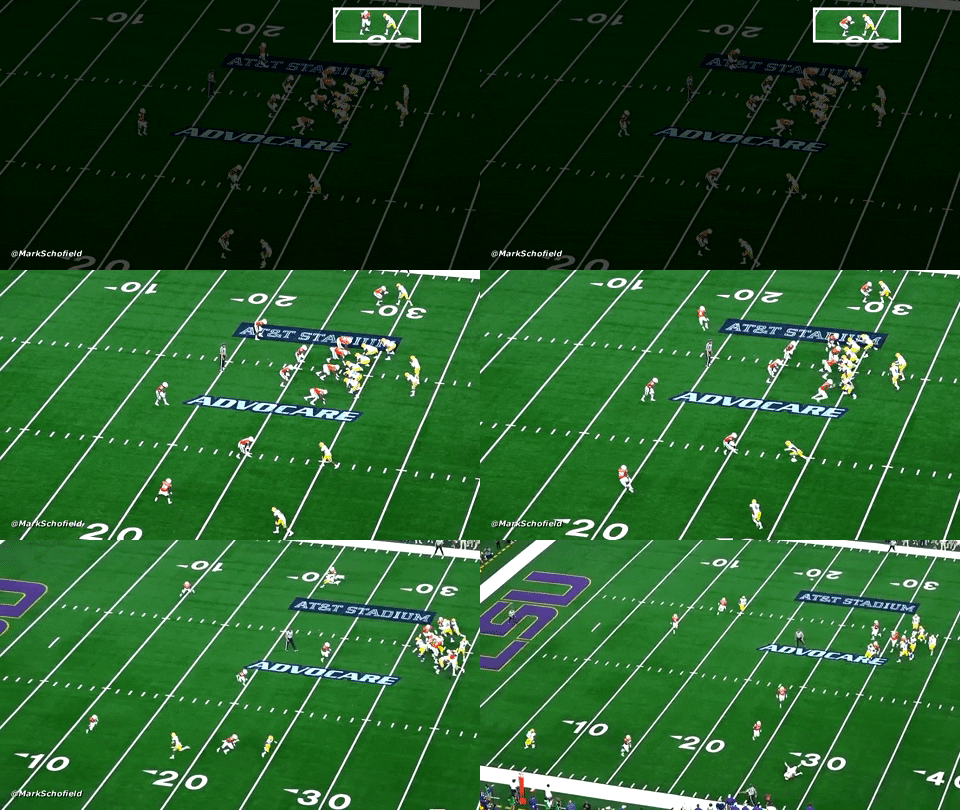
Jefferson uses a stutter-step release, and threatens the cornerback towards the outside. This gets the defender to bite on the potential outside release, and the defensive back flips his hips towards the sideline ever so slightly. Then, Jefferson cuts back to the inside, and when the corner tries to jam him, he is able to swat the DB’s hands away with his left hand, beating the press.
Here is another example of Jefferson getting vertical against press alignment, and getting the necessary separation downfield:
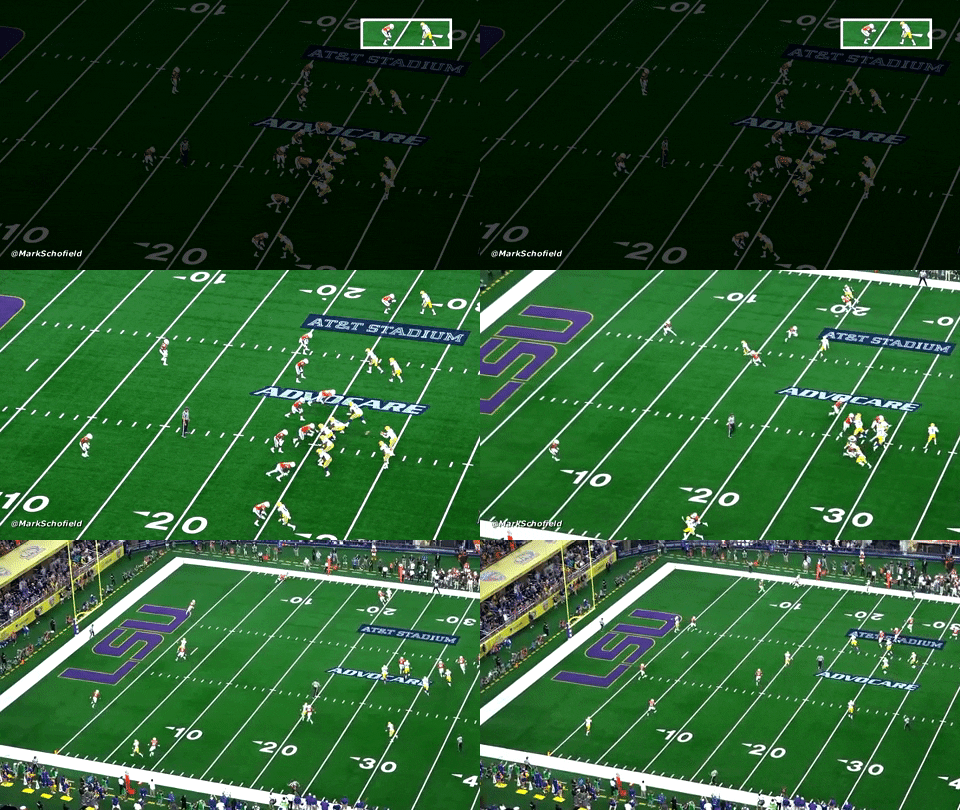
While a wide receiver’s hands and upper body strength can assist in beating press coverage, his feet are critical to the endeavor. Here, Jefferson’s stutter-step move gets the corner to both flip his hips towards the slideline, but gets him flat-footed for a split-second. That is all Jefferson needs to burst downfield vertically, and there is a big window for Burrow to hit this go route. Unfortunately, the QB is flushed from the pocket and rolls to the right. Jefferson stops his route and tries to make himself a target, but the late throw gives the CB a chance to recover.
On this play against Georgia, Jefferson faces again tight coverage from a press alignment. Here, the WR shows how he can use his upper body strength, combined with his sudden change-of-direction ability, to create enough of a window for a completion:
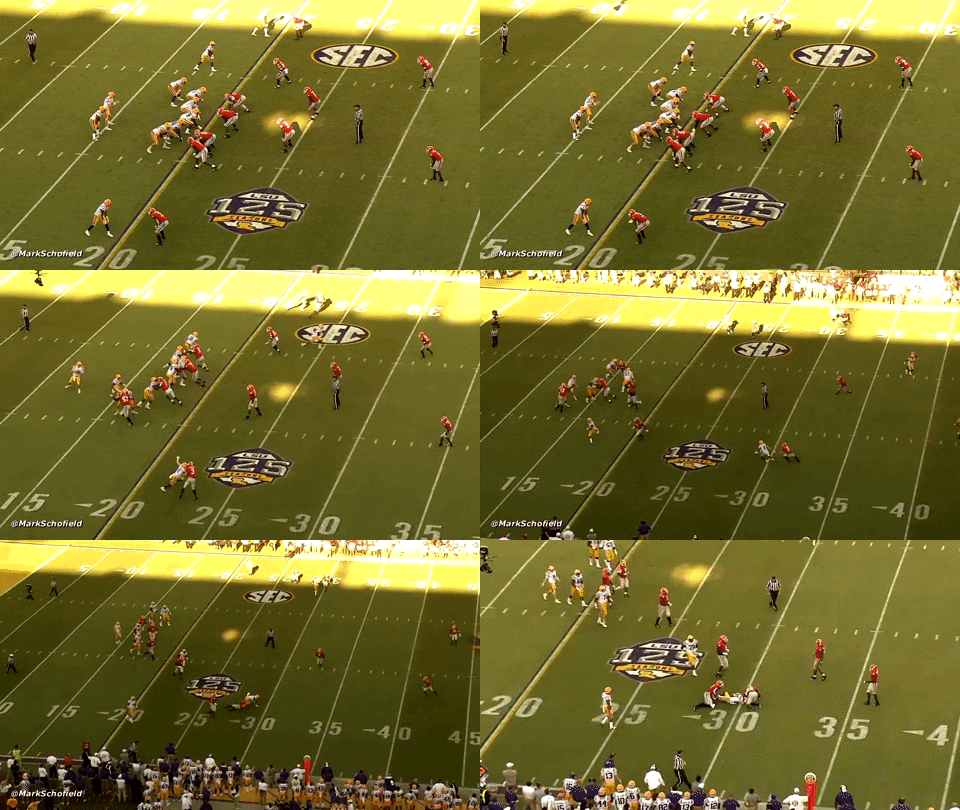
Here, Jefferson’s upper-body strength and his ability to stop on a dime stand out. The cornerback is draped on him, but Jefferson uses his right shoulder and arm to build the window. Then he throws that window open like Scrooge on Christmas morning, announcing to the world – and his quarterback – that he is open for business. That is all that Burrow needs to complete the throw.
Now, in a former life I was paid to anticipate the rebuttal. Here, the potential response to an argument like this is “well, these are but a smattering of clips, and the larger body of work illustrates that Jefferson is best used in the slot.”
Well, yes. Last year’s production out of the slot alignment would support such a conclusion. But the argument advanced here is not “Jefferson is better on the outside” but rather “Jefferson is not a one-trick pony. He is not just a slot receiver. He can do both.”
Returning to the job application hypothetical for a moment, the more you can do for a prospective employer, the more valuable you are. Jefferson, while perhaps best used inside given his short-area quickness and change-of-direction ability, can also work outside. That versatility makes him a very valuable commodity, and in a number of offenses, even systems that play predominantly 12 offensive personnel, Jefferson is a very viable option at receiver.
His experience on the boundary, coupled with his technique outside, make him an option in that alignment. It might not be his best usage, but he can operate outside.
In a class with many deserving applicants, the more you can do, the more attractive you are.
Jefferson is an extremely attractive applicant.