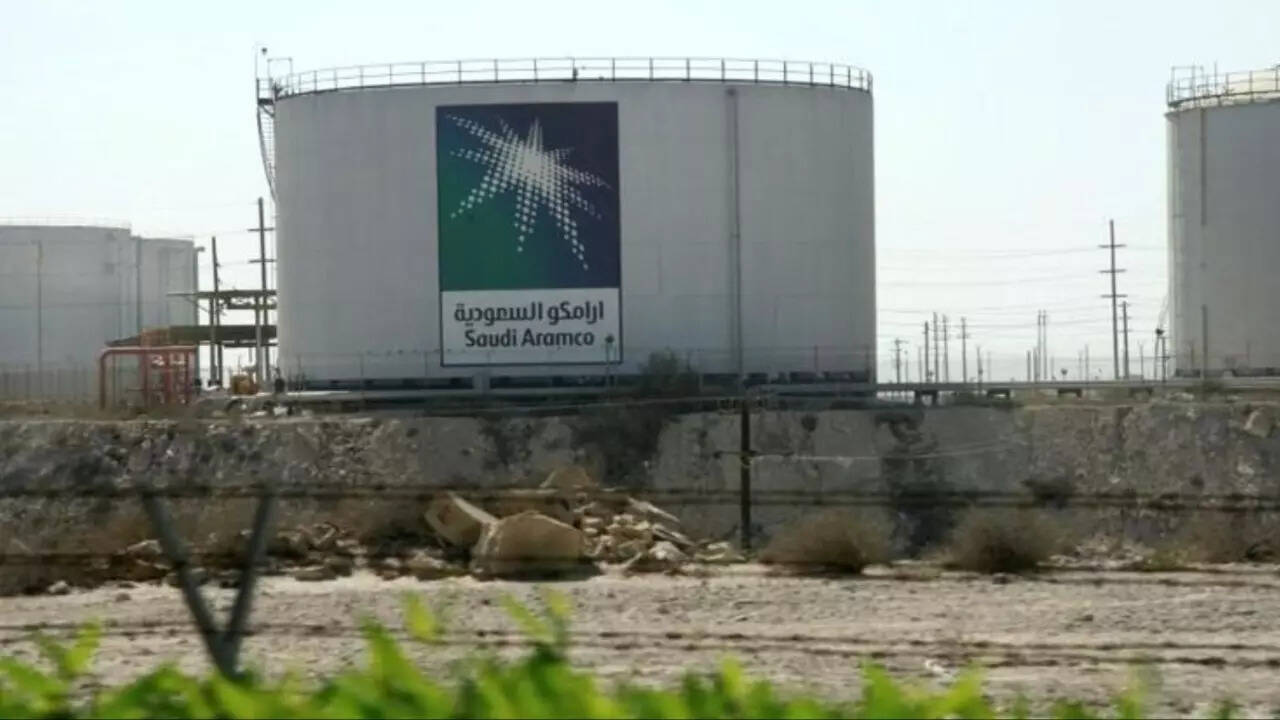
Saudi Arabia’s oil giant, Saudi Aramco, has successfully completed a major $4 billion bond issuance, underscoring strong investor confidence in the company’s financial stability and its strategic capital management approach. The multi-tranche bond sale, a part of Aramco’s Global Medium Term Note Programme, was priced on January 26, 2026 and formally completed in early February 2026, with the notes listed on the London Stock Exchange.
This development has attracted attention not just within the energy sector but also among global investors and market watchers, as it reflects broader trends in risk appetite, corporate financing and the evolving role of oil majors in capital markets.
What Saudi Aramco’s $4 billion bond deal entails
Saudi Aramco issued bonds across four tranches, each with different maturities and coupon rates, creating a diversified debt structure designed to appeal to a wide range of investors:
- $500 million tranche maturing in 2029 at a 4.0% coupon.
- $1.5 billion tranche maturing in 2031 at 4.375%.
- $1.25 billion tranche maturing in 2036 at 5.0%.
- $750 million tranche maturing in 2056 at 6.0 %.
These USD-denominated notes were marketed under both Rule 144A and Reg S offerings, broadening interest across US, European and other global investors. The varied maturities offer investors options across short, medium and long time frames, potentially enhancing liquidity and appeal across different investment strategies. Listing the bonds on a major exchange like London also boosts their visibility and tradability in global fixed-income markets.
Investor confidence and attractive pricing of Saudi Aramco
One of the standout aspects of the transaction was the pricing conditions achieved by Aramco. According to company statements, three of the four tranches were priced with negative new issue premiums, a technical indicator that suggests bonds were issued at yields slightly below comparable secondary market levels. This is generally interpreted as strong investor demand and trust in the issuer’s credit quality.
😬 $BTC is no longer a top-10 asset by market capitalization.
Its steep drop over the weekend knocked it out of the ranking.
Saudi Aramco enters as a new top-10 asset. pic.twitter.com/YBSXrgl931
— RAREMINTS (@raremints_) February 4, 2026
Ziad T Al-Murshed, Aramco’s Executive Vice President and Chief Financial Officer, described the issuance as part of a focused strategy to optimise the company’s capital structure while enhancing shareholder value over the long term. He further noted that the “attractive pricing achieved reflects global investors’ continued confidence in Aramco’s financial strength and resilient balance sheet.”
Saudi Aramco’s strategic financial management at a time of market uncertainty
Aramco’s decision to tap the international debt markets for $4 billion comes at a time when global energy markets are in flux. While oil price volatility persists, with prices having earlier been pressured by weaker demand signals and lower pricing environments, large and credit-strong corporates like Aramco are still able to secure financing on favourable terms compared with sovereign and many corporate peers.
Despite occasional pressure on oil prices, Aramco’s robust balance sheet and dominant market position as the world’s largest crude exporter help sustain investor interest in its debt. Its ability to secure funding at such pricing speaks to both its investment grade profile and the perceived safety of dollar-denominated issuances from non-sovereign entities in the Middle East.
The floating roof of the largest storage tank built by SNEI for Saudi Aramco's Amiral Project was successfully lifted into place, marking completion of the main structures of 11 tanks in the northern tank farm. The lift was carried out safely using a 600-tonne crawler crane.📹 pic.twitter.com/i6KQgpQPch
— Sinopec Saudi Arabia (@Sinopec_SA) January 28, 2026
More broadly, bond markets have remained receptive to high-quality credits, even amid macroeconomic uncertainties, as global investors seek stable returns in an environment of shifting interest rate expectations and geopolitical risk. Aramco’s successful issuance is thus both a reflection of company credibility and broader market dynamics.
Implications for Aramco and Saudi Arabia’s economy
The proceeds from the bond issuance are expected to support Aramco’s ongoing capital expenditure, including investments in upstream oil and gas capacity, downstream refining and chemicals projects and future business diversification efforts. They also provide the company with strategic liquidity as it navigates a transition toward cleaner energy opportunities and broader industrial growth ambitions.
For Saudi Arabia, Aramco’s strong performance in debt markets also signals the kingdom’s continued integration with global capital markets, a priority under its broader economic transformation strategies, which aim to reduce reliance on oil revenues while expanding industrial and technological sectors. Large, well-capitalised issuances contribute to enhanced financial market depth and investor confidence in the region.
Looking ahead: Debt markets and energy transition finance
Aramco’s successful bond issuance may set a precedent for other Middle Eastern corporates and sovereign entities looking to access debt markets for strategic funding, especially as the energy sector increasingly intersects with transition finance, funding initiatives that support lower-carbon projects and diversified energy portfolios.
🛢️ Largest Oil & Gas Companies by Market Cap 2025 ;
1. 🇸🇦 Saudi Aramco — $1.590T
2. 🇺🇸 Exxon Mobil — $555.07B
3. 🇺🇸 Chevron — $336.95B
4. 🇨🇳 PetroChina — $261.29B
5. 🇬🇧 Shell — $211.23B
6. 🇫🇷 TotalEnergies — $142.54B
7. 🇨🇳 CNOOC — $140.53B
8. 🇺🇸 ConocoPhillips — $125.31B pic.twitter.com/JqCqFLaJ6D
— Fact scope (@Factnews2003) February 3, 2026
As global investors continue to seek yield amid tightening monetary conditions and competitive credit landscapes, well-priced, high-quality issuances like Aramco’s $4 billion bonds are positioned to remain attractive, reinforcing the role of bond markets in fuelling long-term industrial and economic strategies.
Saudi Aramco’s completion of a $4 billion multi-tranche bond issuance offers a clear signal. Even in times of broader energy market volatility, capital markets still place strong confidence in major energy producers with stable financial fundamentals. By leveraging global debt markets under attractive terms, Aramco not only strengthens its financial position but also contributes to shaping investment flows and economic confidence across Saudi Arabia and the broader Middle East, a trend with implications for investors, policymakers and energy markets alike.