New Delhi: The per-kilometre construction cost of the proposed 220 kmph Sarkhej-Dholera semi high-speed double rail corridor, which was cleared by the government early this month, will be less than half that of the Delhi-Meerut Regional Rapid Transit System (RRTS), which has a design speed of 180 kmph, railway officials said.
On May 13, 2026, the Union Cabinet approved the construction of Indian Railways' first semi-high-speed corridor - a 134-km double-line rail project between Sarkhej (Ahmedabad) and Dholera in Gujarat - at an estimated cost of around Rs 20,667 crore.
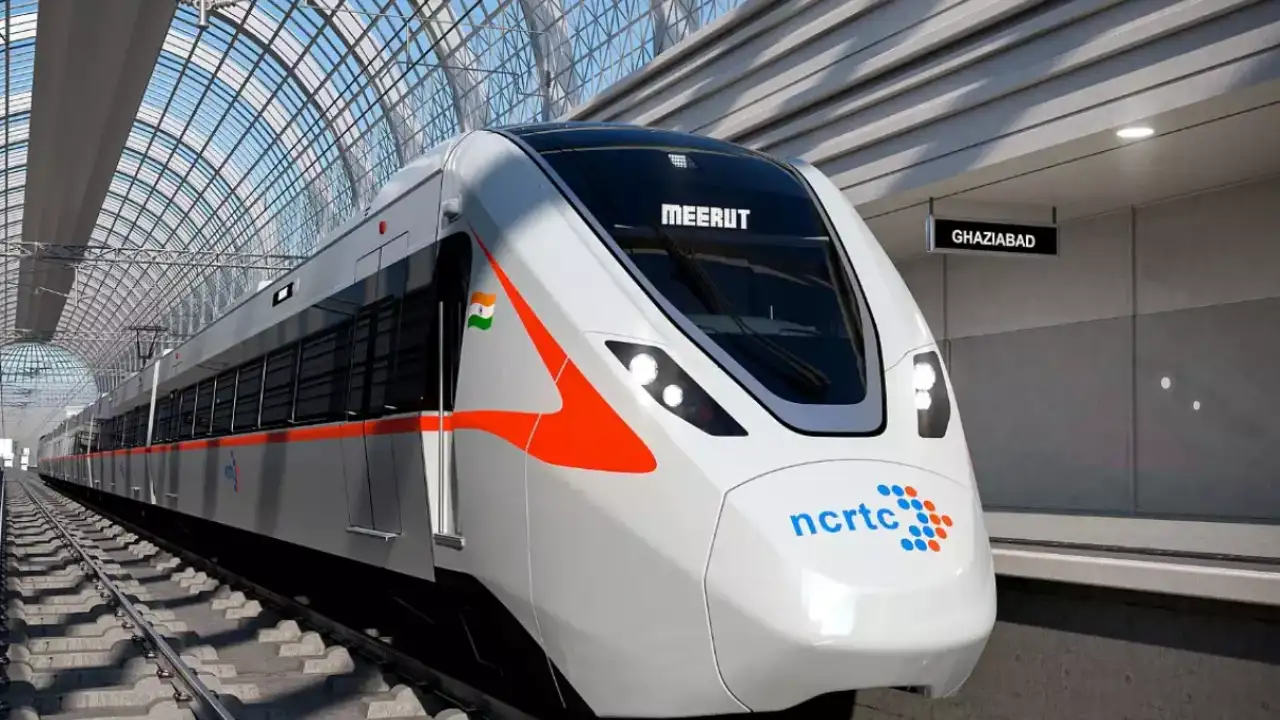
Officials said a comparison among different railway systems in India shows that while the Sarkhej-Dholera semi high-speed corridor is costlier than conventional railway lines, it is significantly cheaper than both the Delhi-Meerut Namo Bharat RRTS corridor (82 km) and the Mumbai-Ahmedabad High-Speed Rail project (508 km).
While the Ahmedabad-Dholera semi high-speed corridor will use 1676 mm broad gauge - meaning the distance between the two rails is 1676 mm - similar to conventional Indian Railways lines, both the RRTS and the Mumbai-Ahmedabad High-Speed Rail corridor use the internationally prevalent 1435 mm standard gauge system.
"The construction of a conventional railway line capable of supporting speeds up to 160 kmph on 1676 mm broad gauge costs around Rs 50 crore per kilometre, including signalling systems but excluding rolling stock," a railway official said.
"In comparison, the Ahmedabad-Dholera semi high-speed double line, designed for speeds up to 220 kmph and operating speed of 200 kmph on 1676 mm broad gauge, will cost approximately Rs 154 crore per kilometre," the official added.
The officials said that the Delhi-Meerut RRTS corridor, being developed by the National Capital Region Transport Corporation (NCRTC), costs around Rs 336 crore per kilometre for construction on 1435 mm standard gauge tracks. Its design speed is 180 kmph but operational speed is 160 kmph.
They added that the Mumbai-Ahmedabad High-Speed Rail Corridor remains the most expensive rail project in the country, with a construction cost of around Rs 358 crore per kilometre. The corridor is designed for train speeds up to 350 kmph, with an operational speed of 320 kmph.
According to officials, the variation in costs is primarily due to differences in technology intensity, engineering complexity, elevated structures, and tunnel construction.
"The Ahmedabad-Dholera semi high-speed corridor costs less than half of the Delhi-Meerut RRTS despite offering higher speed capability because it will not require tunnels and will use the indigenous Kavach automatic train protection system, among other differences," another official said.
"Lower land acquisition costs for the semi high-speed corridor will also contribute significantly to reducing overall expenditure," the official added.
He explained that the Delhi-Meerut RRTS corridor uses the European Train Control System (ETCS) Level-II signalling and train protection system, which costs around Rs 17.74 crore per kilometre, whereas the indigenous Kavach system costs about Rs 4.53 crore per kilometre.
According to the current construction plan, approximately 71 km of the 134-km Ahmedabad-Dholera semi high-speed corridor will be built on viaducts.