It’s been a challenge getting hold of Guardian photographer Sarah Lee, which is ironic considering she’s usually based in the paper’s London office. Nevertheless, this week she’s on holiday in LA, taking time out before her exhibition Exposure: Bafta Reportage, opens in London on 13 October.
She’s hugely apologetic about the time difference, even though it’s not really her fault. “It’s just bad timing,” she laughs. “I don’t travel so much anymore. Everything is pretty much UK, occasionally we might go to Calais, or to Paris or Belgium on the Eurostar, but not very often.”
Lee is one of a team of contract freelancers at the Guardian, she focuses on portraits, the arts and culture. Last year, these specialities merged when Bafta’s head of photography got in touch. “They called me in for a chat and offered me a job working backstage at the awards,” she said, adding that this was her dream first job for the academy. They said I could do it how I liked and for a new client that’s really unusual.”
Taking place during the first week of February, the Baftas are one of the biggest award ceremonies in London. “It’s also the coldest job of the year,” says Lee. “If I’d been a male photographer I would have been in black tie, but as it was I was in a dress and uncomfortable shoes.”
The press photographers stand in pens, but Lee and another photographer who were both working for Bafta were able to wander where they liked, providing they didn’t cluster around the celebrities.
“So you stand at the end of the red carpet and there’s no-one there. It’s absolutely terrifying. There’s an incredible sense of anticipation,” she says. “And there’s so much noise. Suddenly there’s a tsunami of celebrities, and it feels like a friendly prison riot, with people banging on the metal barriers shouting out the names of their favourite celebrities – so it’s ‘Tom! Bendedict!’. I think I missed one big star, because I was hovering around David Beckham.”
The noise can be distracting which is why Lee chose to shoot the event in black and white. “It allowed me to focus on people’s faces and you can underexpose the background so you don’t get hundreds of foreign news journalists in shot.”
Lee was also allowed into the auditorium before the ceremony started. “I had around 20 minutes. That was pretty amazing. There were lots of people who hadn’t seen each other for a long time. Essentially it was a lockdown of very famous people chatting to each other, which means you get to see how they react in a non-guarded way. The picture of Ethan Hawke and Patricia Arquette, they’re taking that selfie for themselves. There’s a flash in the corner of the image and that’s Kristen Scott-Thomas taking a picture of Ethan Hawke.”
Lee’s day finished at the Bafta dinner at Grosvenor House. “It was unbelievably old Hollywood,” she says. “I was the only photographer. It was very dimly lit, which made it difficult to take pictures, as I wasn’t using a flash, but there was no branding, no noise, and I was allowed to wander around all night.”
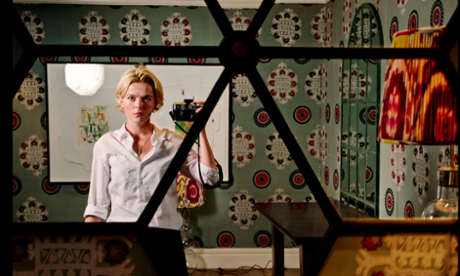
The Hawke/Arquette selfie shot found its way into the Guardian and was widely shared. Lee’s day-to-day job may be somewhat less glamorous, but it’s still exhilarating. One day she may be shooting a famous novelist, the next a woman who has been sex trafficked. “The diary and picture editors work out what jobs have come in. All the photographers have their specialities and you get a call at 5pm the day before. You never know where you might end up,” she says.
“If it’s really busy all that goes out the window. We’re expected to be versatile.” Lee’s day usually starts with a shoot around 10am, for example the head of Random House at the Strand, and then there’ll be another one around 2.30pm, perhaps an artist installing a new piece in Greenwich Peninsular.
“Things never run to schedule, the journalists usually go first, then the subject might want a break and to do the photos afterwards. On top of that, 50% of my time is often spent angling to get a better location.” Lee says quite often she’ll turn up at a shoot and be expected to take pictures in someone’s office, together with computer wires, pieces of paper and other bits of paraphernalia. “I often find myself trying to get access to fire escapes, rooftops or gardens,” she says.
Her golden rule for shooting portraits is to keep it simple. “A decent lens matters more than a decent camera,” she says. “And don’t worry about moving things around - be aware of everything in your frame.” She says it’s also vital to make people feel comfortable as most of us are naturally worried about having our photograph taken, and how we’ll look.
With so much lighting equipment, Lee drives to each shoot. “We have sophisticated lighting systems,” she says. “We’re expected to make an effort, to make the pictures look like they’re shot with two assistants and a lot of time. We can use our own discretion about what will work, but we’re still expected to come up with something original, something Guardian readers will find interesting.”
She says her job differs from that of an agency photographer, who may do five or six jobs a day, usually a wide and a tight shot, to get the story. “There is a competitiveness,” she says. “The Guardian is very loyal, but say I’m taking pictures of the novelist Kazio Ishiguro, I need to make sure among all the images available mine really stand out.”
Lee says she can often get a call in the middle of the day asking for her to “nip to Norwich, or Southampton or Milton Keynes” because the journalist forgot to ask for a photo, or the paper urgently needs a lead picture for a city news story by 4pm. “While no-one wants to get a call asking them to ‘nip to Norwich’, or indeed to nip anywhere in the middle of the day, that’s all part of the fun.”
Guardian photographers transfer their images to the picture desk by the end of the day, earlier if they’re needed urgently, editing around 100 frames to around 10. “We spend some time in Photoshop, tidying them up – it’s not image manipulation, just cropping and tidying up colour and tone, essentially what you used to do in a dark room.”
Then it begins again the next day, with another time, another place, another subject to shoot. Lee says the best bit of her job is building a rapport with her subjects. “I love the arts, and I’ll find myself at a novelist’s house, chatting to them about books. Often people feel uncomfortable, and a lot of the job is making people relax. It’s such a joy, one minute I find myself backstage at a film set, then I might be visiting a women’s prison the next.
“As a Guardian photographer you get a perspective on a lot of life you wouldn’t usually see – and that’s a huge privilege.”
Sarah Lee will be talking to Guardian Members at an exclusive private view of her exhibition on 14 October.