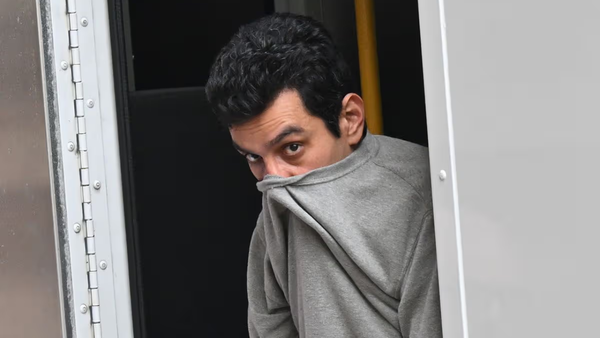
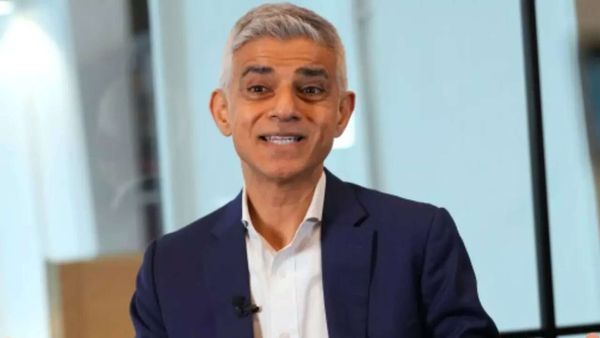
The identification last Wednesday of the two Russian agents thought responsible for the poisonings in Salisbury opened about as many questions as it closed. Six months of forensic police work, involving the study of thousands of hours of CCTV, had produced apparently incontrovertible evidence that the men identifiedas Alexander Petrov and Ruslan Boshirov had not taken their weekend break in the Wiltshire city simply to admire the Cathedral’s medieval spire. But gaps in the narrative persisted. What were their real names and identities? Why exactly had they disposed of their doctored Nina Ricci “Premier Jour” perfume bottle so casually? And why had they – the assassins who came in on the replacement bus service – trusted their strategy to the Sunday timetable of the Great Western Railway?
Though the photographs that revealed the movements of the un-extraditable duo represented a major step forward in unravelling the crime, in some ways they confirmed the sense at home, and certainly abroad, that 2018 is shaping to be one of the more surreal years in Britain’s island history. If you were to drop a Google pin on the place where events most obviously disappeared down a rabbit hole, you might zoom in to the few square yards of grass outside Greggs bakery and the chemist Superdrug in the Maltings shopping centre in Salisbury.
I was standing by that spot, no bigger than a modest patio, last weekend, before the latest revelations were announced. I was there in an effort to discover precisely what lasting effects the riddling events of the summer have had on the city. The patch of ground is currently roped off at shin height. In the middle of it is a coffin-shaped outline of darker, recently seeded grass where the world’s most notorious bench used to stand. On 4 March this year, this was the bench on which the Russian former double agent Sergei Skripal and his daughter Yulia sat after sharing a lunchtime pizza at the neighbouring branch of the Zizzi chain, and a drink at the adjacent Bishop’s Mill pub. Passersby noticed that the pair were in some serious difficulty. In a tableau now etched on the global mind’s eye, Sergei Skripal appeared to be unconscious and there were flecks of foam around his mouth. His daughter was slumped against him; her eyes were wide open but had rolled back into her head.
Six months on from the extraordinary web of events that began that afternoon, events that resulted in an ongoing diplomatic crisis involving 28 nations as well as the first death on British soil by a nerve agent since 1945, the place where it all began is marked with commendable understatement. A couple of notices from Wiltshire council are tied to the low rope around the site, where decontamination specialists had worked in fluorescent hazmat suits. The notices read: “Please keep off the grass to allow new turf to settle. We apologise for any inconvenience.”
Last Saturday morning, shoppers milled around the grass on their way to the weekly market in the city’s old square. Parents sat on the neighbouring benches while their children chased pigeons or played on the nearby swings and slides. A string of bright bunting had been stretched between two of the lampposts. Beneath it, the family greengrocer D&A Styles has a weekend stall selling fruit and veg, “pound a bowl, any bowl you like”. I bought a bag of English apples and asked Mr Styles how his summer had been.
“Bloody awful,” he said. “Thirteen weeks I was closed down. I couldn’t pay my rent, my council tax. They say they have [a million quid] to compensate local businesses, but I haven’t seen any of it yet, and you don’t get more local than me.” He gestures to the patch of ground behind him. “How was I supposed to make a living when they closed my path? I just want to get back to work now.”

That latter sentiment is shared by every shop owner I talk to. If from the outside Salisbury has sometimes looked like a city behind police tape and under siege over the summer, the reality has been frustratingly different for the majority of its residents. Perhaps because of its links with the armed forces – the largest garrison in western Europe is on its doorstep – Salisbury has not been “reeling” from events, I’m assured. In other places, the sight of military on the streets would have heightened the anxiety; here it has heightened the reassurance.
The consensus among all the people I speak to in the market is that things would have been OK if it had just been the Skripals. It would have been a gruesome spy story, and moreover, when the pair recovered after heroic care at Salisbury district hospital, along with DS Nick Bailey – who came to their assistance at the Maltings – it would have been a story with a happy ending.
The second poisoning, in June, of 44-year-old Dawn Sturgess and her boyfriend, Charlie Rowley, from nearby Amesbury, changed that. Rowley – identified as a “skip diver” in the world’s press – and his apparently random find of a Nina Ricci bottle containing the substance that left him in intensive care and tragically killed his partner, confirmed initial anxieties that more of the deadly nerve agent had been left lying around.
The local MP, John Glen, describes that latter event as a “hammer blow” to the city on top of what had gone before, but the response to it as further proof of Salisbury’s resilience. His own very long summer began with a text he received that night back in March suggesting that there had been reports of a drug incident involving two people. A couple of days later he was sitting next to the prime minister and the foreign secretary explaining to the world that the ancient cathedral city which he has represented for seven years had been the target of a military-grade nerve agent. The word novichok – the name for a group of such undetectable agents developed in the Soviet Union during the cold war – was suddenly on the lips of everyone in Salisbury. And everyone, of course, had a theory about what had happened. “It was difficult for people to contemplate that another state would somehow send someone here to do this outrageous act,” Glen suggested to me, “but there was always extremely compelling evidence accepted by governments across the world. Even if Russian propaganda became very active arguing the opposite.”

While the police and counter-terrorism units were doing their initial work in the Salisbury shopping centre, that story was spinning in overdrive. In his telling book-length account of the way that Russia has made “fake news” public policy, the journalist Peter Pomerantsev characterises Kremlin strategy as “nothing is true and everything is possible”. Salisbury appeared to provide a textbook case of it. This week’s revelations and the Kremlin’s “So what?” denials are the latest chapter of it.
While the British government expelled 23 Russian diplomats, and 27 other countries followed suit, more than 30 different explanations of the events on the bench outside Greggs were offered to the internet by Russian sources. Sergei Zheleznyak, deputy speaker of parliament, suggested that the British authorities had concocted the case to undo any positive effects on Russia’s image while the country was hosting the World Cup. Nikolai Kovalyov, a former director of the Russian security services, suggested it was clear that a rogue scientist from the Porton Down laboratory, near Salisbury, was conducting private experiments on the local population. The Russian envoy to the UN security council, meanwhile, referenced Midsomer Murders in suggesting the British might have come up with a more plausible crime story. The foreign minister, Sergei Lavrov, indicated that the event had been created as a smokescreen to deflect from the embarrassment of the Brexit negotiations.
This blizzard of competing theory itself seemed designed to probe and exaggerate the vulnerability of a Britain that was setting itself adrift from the European Union. And if you were location-scouting for a bastion of Englishness to test – to expose that insecurity – you might well pitch up in Salisbury’s Cathedral Close, the inward-facing square surrounding the Cathedral, originally designed to keep any riotous citizens outside – and perfect examples of every English vernacular architectural style within. The internecine politics of the Close were the principal inspiration for Anthony Trollope’s Barsetshire novels. In one corner is the grand residence of the current bishop, the Right Rev Nicholas Holtam, who came here seven years ago from a contrasting central London billet at St Martin-in-the-Fields.
Talking to him in his study about the last six months, I suggested that one symbolic conclusion of the Skripal affair was that however much parts of Britain might want to retreat from the world, wider global currents will always have a habit of encroaching.
He accepted that Salisbury is a very traditional place, with a large retired population who “have settled here because they like it, and therefore don’t want it to change”. That is not the whole story of Salisbury though – the rough sleepers and “street community” represented by the unfortunate Dawn Sturgess were also part of the city’s life. Moreover, despite appearances to the contrary, Holtam pointed out that Salisbury is intimately connected to wider global events because of the military and intelligence presence here. “One thing that has been revealed is that this community actually knows quite a lot about the sort of world that has only now been opened up to the rest of us.”
The poisonings have, for the bishop, opened up that very contemporary question: how do we build trust with one another when we don’t have a reliable narrative to depend on?
Part of that difficulty was establishing a consistent emotional tone. “Before Dawn Sturgess died,” he said, “it was possible to develop some jokes about it all. I would say ‘It is an act of faith that you have come to Salisbury today’, and people got it, they laughed.” After the murder, he says, “the challenge was how to develop a language that is both truthful about what we don’t know but which provides people with some confidence”. He had his first stab at that at one of the stranger ceremonies he has presided over: the blessing of the patch of ground outside Greggs once it had been decontaminated.
“At Eastertide, we want to look forward to new life and resurrection,” he declared, on that occasion. “A crisis is both a moment of judgment and an opportunity. We should not waste a crisis, we should use it to ensure that good comes from it...”
He reiterated that sentiment to me last week. One of the positive things is that people saw the value of congregating in public. For a royal wedding screening there were 3,000 people on the west lawn of the cathedral. A similar number came to the fireworks that opened the new arts festival over the bank holiday. Another was that Salisbury has used the moment to talk about itself, to galvanise purpose, which it has had less incentive to do in the past.
Holtam welcomes that conversation, and all the contributions to it, though he had to smile at one recent development report, which presented its findings in the shadow of the great spire of Salisbury Cathedral, the tallest in Britain, completed in 1320. What the city needs, the report said, is an iconic public work of art to put it on the map.

If the bishop is attending to the spiritual resurrection of the city, then a good deal of the rest of the recovery work has fallen to Alistair Cunningham of Wiltshire council. On 4 March, it happened that Cunningham was the “gold commander” for the council, in charge of crisis, a position which is rotated among senior officers. “We are all trained in the local resilience forum, but it was up to me to step in,” he says, with dry cheer.
The day before the Skripal poisoning, he thought the worst that this post could throw at him was probably over. South Wiltshire had been hit by a “big snow event”, and Cunningham had been trying to get help to a few hundred people whose boilers had failed. That night, however, he was in the police’s major incident room as the new situation unfolded. It felt to him likeone of those extreme exercises in role-play you do on training days. “War games. An aircraft has crash-landed on Porton Down, that kind of thing.”
Six months later, he can point to phase one of the process – reaction – hopefully being just about over and phase two – recovery – in full swing. The main part of his mission has been to support the individuals and local businesses most closely affected with direct aid to make sure no one goes under as a result of the events. After maybe a 15% drop in visitor numbers, people are returning to the city, he suggests. “American visitor numbers are actually up year-on-year.” It is the domestic over-50s market that has fallen away. Given even the slightest perception of risk, local people might choose to go to Bath or Winchester for their day out instead. “It is not fear, it is partly they just think things are closed,” says Cunningham, who is desperate to announce they are not. And mostly they never have been. “This is a very irrational event, so it is more important that the response is as rational as can be.”
Councillor Pauline Church, who grew up in the city and previously worked as a banker for JP Morgan, is the council cabinet member for economic development. She sees it as her role to cut through bureaucracy and delay. “When people had to be moved out of their homes, we did not want to drift into running it as a process,” she says. “We wanted to try to treat people decently – people have lost their clothes and furniture.”
To emphasise the sense that everything can seem very close to home here, she points to the fact that the firefighter in the hazmat suit who was on the front of the Telegraph almost every day was her next-door neighbour. “We all talk about the major global impacts, but the little things mean so much to people. The long-term closure of Queen Elizabeth Gardens was a major psychological barrier in people feeling safe,” she says. “It’s fantastic it is now open again, and the ice-cream van is back.”
The barriers and the tape came down at the city-centre park the day before the bank holiday. The councillors weren’t sure how the public would react – whether they would believe that the park was now safe. In the event, “it wouldn’t be an exaggeration to say people flooded in with their dogs and their kids,” Cunningham says.
Two enterprising boys ran past the barriers with fishing rods, believing the stream must have become stocked during the closure.
Perhaps with the very raw council failings around Grenfell in mind, the local leadership in Wiltshire has seemed at pains to keep the public informed. After the death of Dawn Sturgess, three large public meetings were held in Salisbury and Amesbury to allay fears. The first of them was addressed by Neil Basu, newly installed commander of the Metropolitan police’s counter-terrorism unit, who emphasised the scale of the operation. It was, literally, leaving no stone unturned in parts of the city, an operation involving 100 counter-terrorism detectives and 24 “specially trained search staff practised in fingertip techniques”.
Most people seemed immediately reassured by the directness of this performance. Inevitably, there was also a would-be Miss Marple or two who believed they could see flaws in the efforts of the Basu’s team. One resident was persistent in her demand that the city’s weir be drained, in the belief that a glove that the perpetrators inevitably wore might well be lodged there. Another had wanted to know what the police were doing about her friend’s sighting of a Mercedes car with Romanian number plates in the city in the week before the poisoning. Another was anxious to ascertain if it would be safe to purchase a bottle of perfume at the village fete.

The meetings also proved a golden rule of all British civic gatherings – that there is no forum that does not eventually get drawn back to the questions that really matter: the queues for prescriptions in the local chemist, and the scandal of fly-tipping and refuse collection.
The security slogan that counselled “If you didn’t drop it, don’t pick it up” needed, several argued, a second line if the city was not to be overwhelmed by litter: “If you do drop it, do pick it up”.
One local man with strong views on how long it should take to put on and take off a hazmat suit also offered a radical suggestion about the recovery efforts in tourism. He had been speaking to contacts in Beijing who had been following the story avidly in the news. “We can’t bury the association,” the man suggested. “As part of the new marketing plan, perhaps you might want to consider having a tour of the sites affected.”
John Glen MP knocked back the suggestion that they might profit from the murder of one of his constituents – and noted that the neighbours of the Skripals had already suffered enough disruption without tour buses turning up in their street.
People go on battlefield tours in Flanders, the questioner suggested – what’s the difference?
Over the course of my few days in Salisbury, I traced the route of that potential guided tour, which might be sold as a short quest for incongruity. Thomas Hardy once observed of Salisbury – in its fictional guise as Jude the Obscure’s Melchester – that it was “a quiet and soothing place, almost entirely ecclesiastical in its tone”. That element would be set against more troubling notes. A visit to the public lavatories in Queen Elizabeth Gardens, possibly used by the Moscow duo as their “Novichok lab”, could be a starting place for a walk to the floating water meadows from which John Constable captured his famous view of the cathedral – a vantage until last week itself behind a police cordon. Or a visitor could, on a quiet summer evening, as I did last weekend, search out the devotional poet George Herbert’s little church at Bemerton, and then cross the A36 to the corner shop, recognisable from a million YouTube hits, in which the Skripals bought their groceries.
At dusk, up at the Skripal’s cul-de-sac itself – a dead end of nondescript semis with armed police patrolling the fenced-off house – and then walking back to the city, following the red light on top of the cathedral spire that acts as a warning to low-flying fighter jets, it proved hard to hold a frame of reference together. The events of the summer seem so incongruous to the setting. You find yourself grasping at arcane language: what does it all portend?
Up until Wednesday’s statement from Neil Basu, there had been no official update on the poisonings for six weeks. As the town hall meetings showed, local people mostly had the utmost respect for the institutions seeking answers. They reserve any scepticism for the media, and what I repeatedly hear as “its insistence on creating a negative picture, which is not helpful to recovery”.
“We have had more unscrupulous parts of the press giving money to people with very serious problems, addictions, to get a story,”Cunningham tells me. “One result of it has been that heroin prices have gone up in the city because dealers know there is more money to pay for it.”

The one part of the fourth estate that has mostly been exempted from criticism is the Salisbury Journal, which has been reporting goings on in the city since 1729. Rebecca Hudson, who was the first journalist at the scene of the crime, became news editor of the paper in the summer. She has, aged 23, had six months of the most accelerated media training of any young reporter in the country.
Hudson talked me through it in a cafe opposite the cathedral. She arrived at the bench just after the Skripals had left for hospital and in effect has kept vigil ever since. “At first, it was just normal gear for the police there,” she said. “It was three hours before the fire brigade came and started to decontaminate. As soon as they put those white suits on, it started to look unlike anything I’ve ever seen in Salisbury or anywhere else.”
It had been a slow week because the office was snowbound. Stuck for a lead story, Hudson originally pursued the line that it was a fentanyl overdose, the first evidence of the opioid in the city. Then the hospital was suddenly cordoned off. Then someone waiting at the press conference, which kept being postponed, said the victim was a Russian spy. Hudson went back to the newsroom and then was up all night watching germ-warfare operatives rope off Zizzi. The next two weeks were a blur of no sleep.
She’s had maybe three days off since then. One of the problems was how much news the local paper could take. They did eight pages the first week, six the next week and by the third week people wanted local news, school fetes, rescued cats again. “I feel really weirdly connected to this story not just because of working here but because I have lived here all my life,” Hudson says. “It’s been awful in some ways. When the police helicopter goes up, people are still always thinking: is this number three?”
Hudson caused some local consternation at the end of last month by interviewing the Russian ambassador. Speaking at his official residence in Kensington Palace Gardens, Alexander Yakovenko made an unlikely pitch to her: “We are together with the people of Salisbury,” he insisted, “in order to find the truth and in order to protect the life of Russian citizens.” He went on with the line that has re-emerged in the past few days that the inference that this was directed by the Russian government was fake news, and “completely unacceptable to us”.
The reader comments that followed that interview revealed a few of the polarities that are now so familiar. The majority suggested that readers shouldn’t believe a word the ambassador said, and that the paper should not have given him a platform. But others seemed at pains to spin the narrative in a different way. “It’s not that Russia was not responsible for the novichok poisoning, but that this poisoning did not in fact take place,” one reader argued, “because a toxin of the potency of VX nerve gas or greater was never present in the Salisbury environment, leave alone on Skripals’ front door knob…” Others picked up that sentiment, and amplified it, leaving attentive readers with a singular question in their heads: do Russia’s trolls and bots really monitor and intervene in the comment sections of the Salisbury Journal? It says something about our wayward times that you can’t help feeling they might.
• This article was amended on 12 September 2018 to correctly name the council as Wiltshire council. Alastair Cunningham who served as “gold commander” is an officer of the council, not a councillor, and that role is rotated among senior officers not councillors.