Salesforce really wants to counter the narrative that an AI-related “saaspocalypse” has endangered its growth.
So, alongside its record first-quarter fiscal 2027 results on Wednesday, the cloud software giant commenced its largest-ever accelerated share repurchase at $25 billion. In doing so, the company juiced its earnings per share but cut its full-year cash flow growth outlook roughly in half to account for the debt issued to fund the block share repurchase.
The $25 billion accelerated share repurchase (ASR) is part of a $50 billion stock buyback authorization the Salesforce board approved in February 2026. In the first quarter of fiscal 2027, Salesforce returned $27.5 billion to shareholders, including $27.1 billion in the mega-share block purchase plus $365 million in dividends. The ASR included upfront delivery of 103 million shares and drove Salesforce’s diluted share count down 10% year over year.
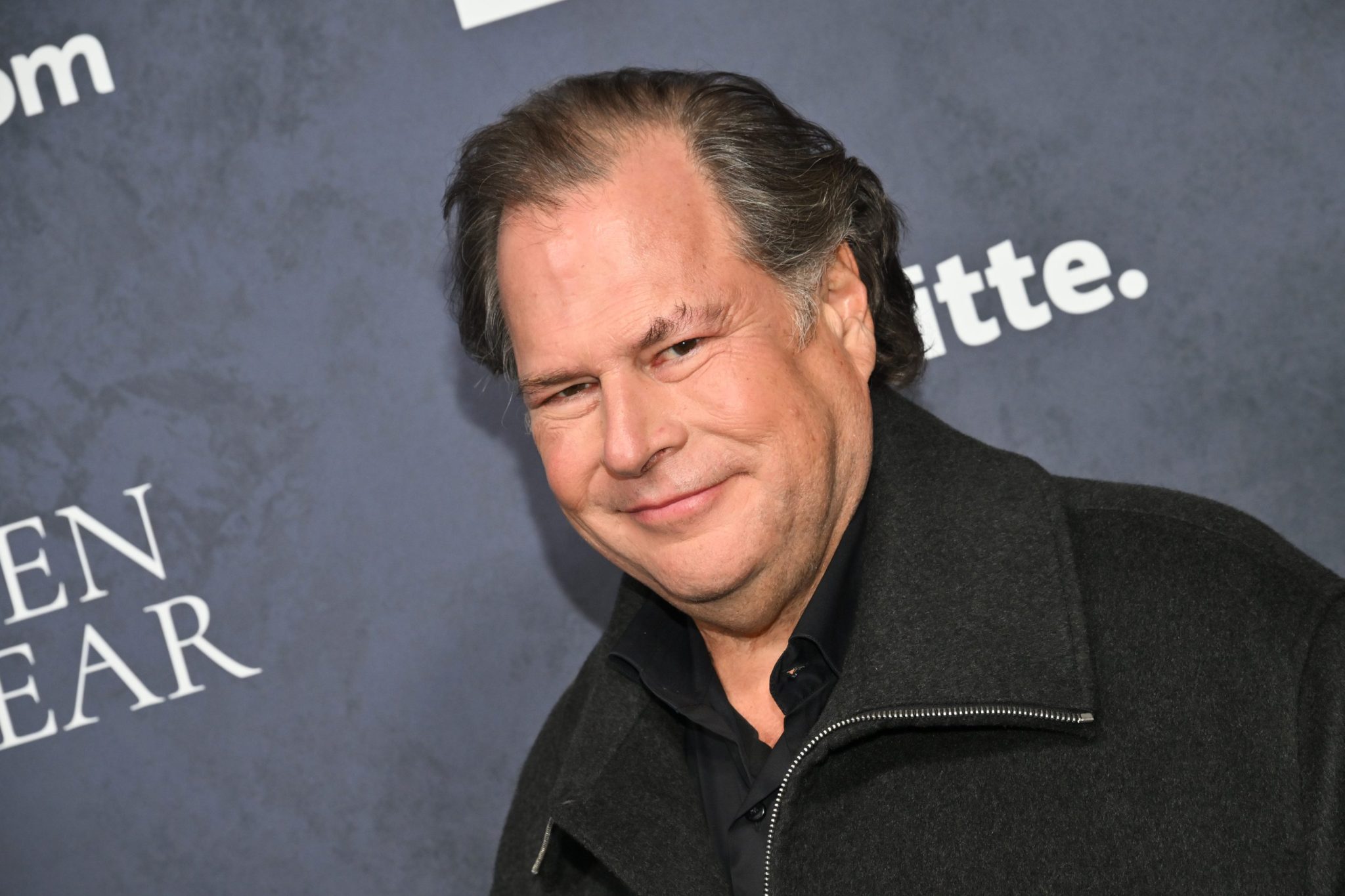
Salesforce CEO Marc Benioff said on Wednesday’s earnings video vodcast that the company has “returned record levels to our investors,” noting that it was especially important during “this unusual time.” Salesforce’s stock is down 16% year to date, and 36% below its 52-week high, as Wall Street frets that the advent of AI spells trouble for software-as-a-service vendors like Salesforce and ServiceNow.
According to Salesforce Finance Chief Robin Washington, the buying spree helped increase the first quarter earnings per share and GAAP earnings per share by 23 cents and 14 cents, respectively.
To fund the ASR, Salesforce issued $25 billion debt, which led to a five percentage-point headwind to operating cash flow and free cash flow growth for the full year. Benioff had signaled the company’s new appetite for debt in the previous earnings call in February when he told investors that the company was “very under leveraged,” and that “we want to use our capital correctly, and I think debt is a great way to do that.”
As a result of the debt issuance, Salesforce slashed its fiscal 2027 free cash flow growth guidance to 4% to 5% year-over-year, down from the 9% to 10% range it guided in February.
In addition to the guidance cut, Salesforce slightly raised its full-year revenue outlook to $45.9 billion to $46.2 billion from $45.9 billion to $46.2 billion. Washington said the company expects organic revenue acceleration during the second half of fiscal 2027, mostly fueled by sales and service growth, Slack, and its Agentforce.
For its other results, Salesforce posted quarterly revenue of $11.1 billion, up 13% year-over-year, and above the company’s guidance, which ranged from $11.03 billion to $11.08 billion. GAAP earnings per share rose to $2.42, and non-GAAP EPS rose to $3.88. Both were helped by the block ARS and boosted results by 50% or more. Current remaining performance obligations, a proxy for future revenues, hit $33.6 billion, up 14%, year over year.
Shares of Salesforce dipped less than 1% in after hours trading on Wednesday following the results.