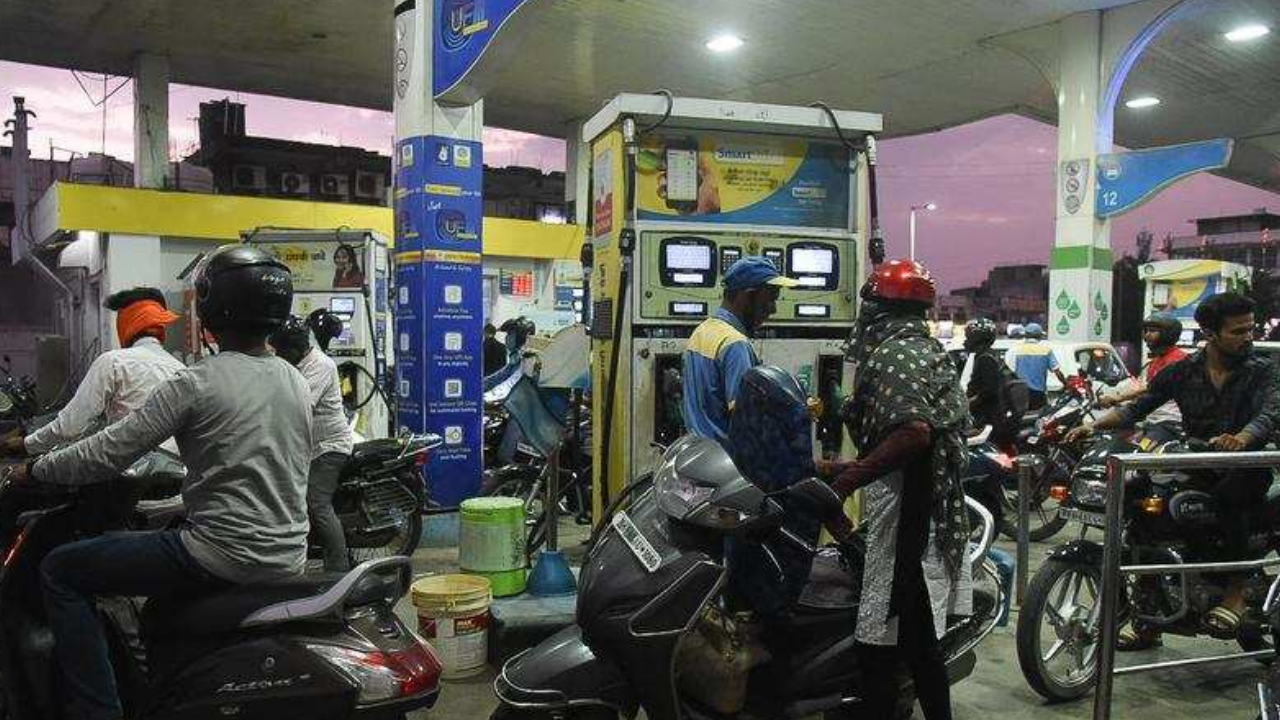
NAGPUR: Amid high fuel costs pinching consumers, petroleum dealers have complained of oil marketing companies resorting to unofficial rationing in supply of diesel. Some private companies had stopped supply of diesel at their outlets for around couple of months, only to restart it on Monday.
Sources in the petroleum sector say this is an unofficial approach by companies to cut losses. The current rates fixed for diesel are far less than what it should be. Considering international prices, diesel should be at least Rs125 a litre to leave a margin for oil companies. It is being sold around Rs95 a litre at present.
As the government has kept the rates low, sales curtailing is being looked as a means to reduce losses.
There is under-recovery of cost even in petrol but the supply has been maintained to normal levels, said sources.
This has even led to outlets in remote districts like Gadchiroli run out of diesel. Petroleum dealers told TOI that since a fortnight, the supplies have been reduced. In some cases, only half of the indented quantity was supplied. Even as there has been some improvement from Monday, the companies are insisting on cash payment as against earlier when payment terms were liberal.
Sources say the root of the problem lies in the recent decisions taken for price control. Normally, bulk rates of petroleum products are less than the retail prices. Since more than couple of months, at least, it has been the other way round. Bulk rates being higher than the retail has disturbed the calculations for oil marketing companies.
At present, diesel is at around Rs125 a litre for the bulk consumers and at retail outlets it is Rs95. Petrol is in the range of over Rs130 litre. Sources in the sector say actually the retail prices should be at this level and bulk can be lower. The bulk rates are the true reflection of the international rates on the basis of which retail prices are fixed.
There was no increase in the retail prices from November to March. At the same time, the bulk rates were revised as usual every fortnight. Ultimately, this made the bulk rates higher than the retail price, a source said.
This also led the consumers in government sector turn to retail outlets rather than buy at bulk rates from their dedicated outlets. The rationing is also a move to reduce the purchases by bulk consumers so that oil companies’ losses can be contained.
It has been learnt that instead of buying from its dedicated pumps, Maharashtra State Road Transport Corporation (MSRTC) buses are filling diesel from the regular retail outlets on their routes. MSRTC is one of the biggest bulk consumers in the state.
As negligible quantity of petrol is sold in the bulk segment, the losses are not much, leading to smooth supply, said sources.
The dealers had complained that the rationing was mainly from Bharat Petroleum Corporation Limited (BPCL) and Hindustan Petroleum Corporation Limited (HPCL). An e-mail to HPCL went unanswered. A BPCL spokesperson, who denied any rationing, sent a note which said the retail sales of diesel had grown by 18% in May as against April. In the first fortnight of May, a growth of 40% was registered. Such growth could not have been achieved if there were any restrictions, the note says.
Shahid Sharif, a consumer activist, says if there was reduction in supply by any means, the civic administration which has the civil supplies department under it should take action. The reduced supply has also hit the retail dealers’ margins.
(please take as box)
No-Purchase Day Today
Petroleum dealers across the state have declared a no-purchase day on Tuesday. On this day, there will be no fresh purchases of petrol or diesel by the outlets. However, sales will be continued in order to avoid inconvenience to the customers, says a press release.
The dealers are protesting for an increase in their margin. The note says the rates have doubled since 2017, also increasing the dealers’ cost but the margin remains the same. The recent cut in prices had also left them in losses as fuel purchased at a higher rate had to be sold cheaper.