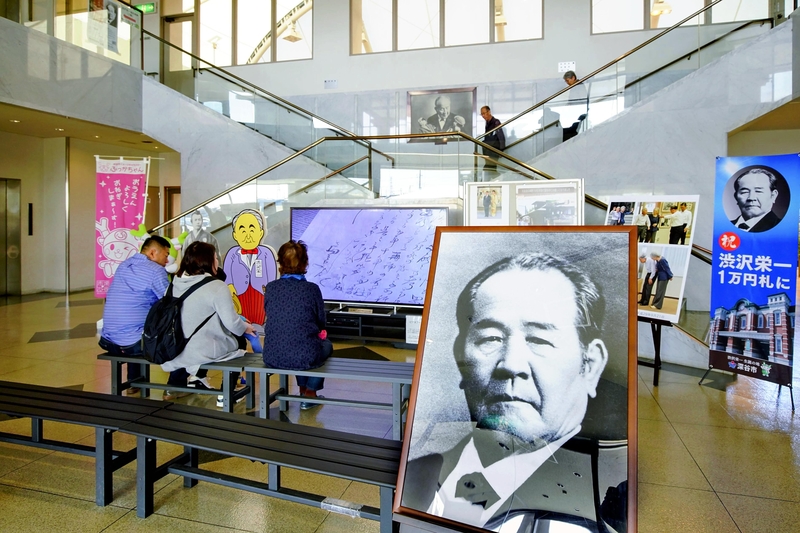
Eiichi Shibusawa, known as the father of Japanese capitalism, is once again in the spotlight.
In April 2019, it was decided that his portrait would be used on the new 10,000 yen note, and September brought the announcement that he would be a protagonist of NHK's annual period drama series in 2021.
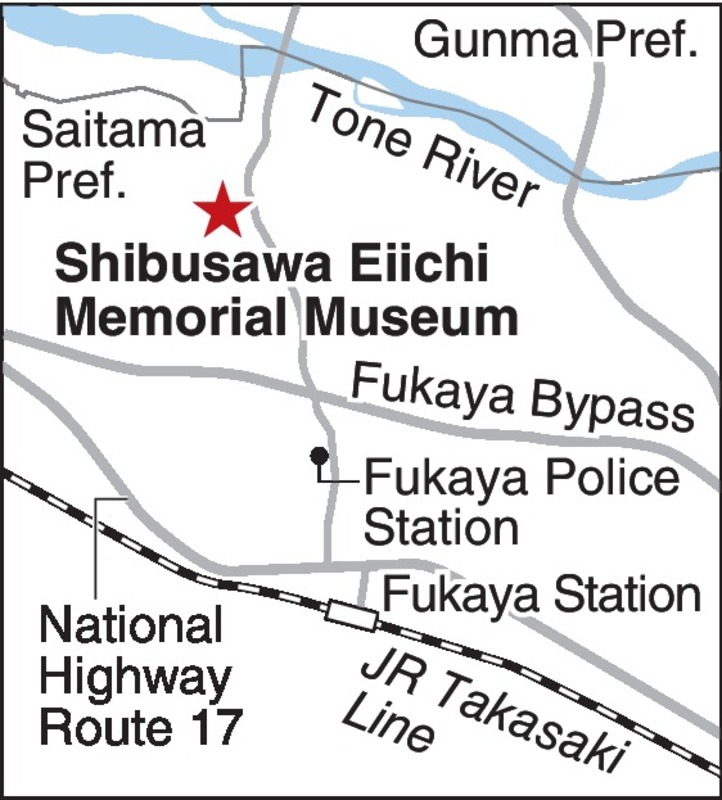
The Shibusawa Eiichi Memorial Museum in Fukaya, Saitama Prefecture, usually attracts about 16,000 visitors a year, but that figure was surpassed in just one month after the new bill's design was announced.
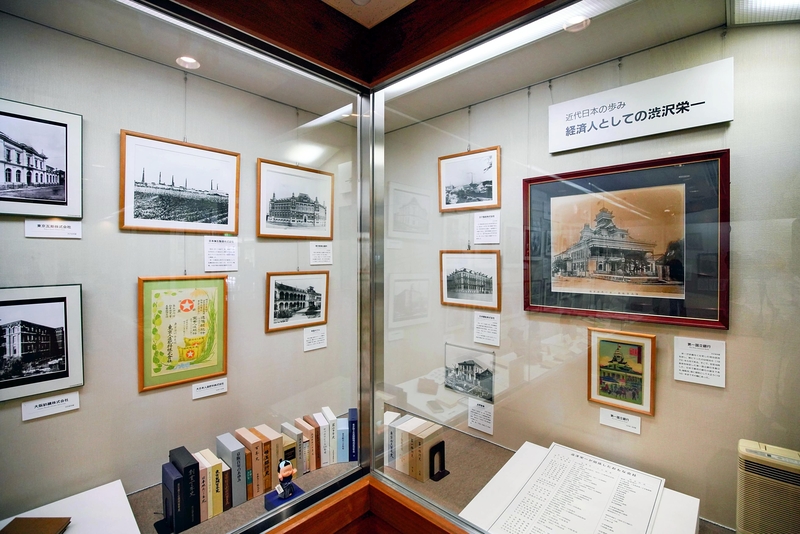
The reference room of the museum presents Shibusawa's life chronologically. Shibusawa was born to a rich farmer in what is now Chiaraijima in the city of Fukaya in 1840. Shibusawa resented being exploited by the local feudal lord and made up his mind to overthrow the shogunate, but was persuaded by the people around him to abandon that idea.
At the age of 24, Shibusawa went to Kyoto to learn about the world, before entering the service of Tokugawa Yoshinobu (who became the last shogun soon after) and going to Europe to broaden his horizons.
After the 1868 Meiji Restoration, Shibusawa worked at the Finance Ministry and became a businessman. He founded and managed about 500 companies, including Japan's first commercial bank, Dai-ich Kokuritsu Ginko, and was involved in about 600 social welfare projects, before he died at the age of 91.
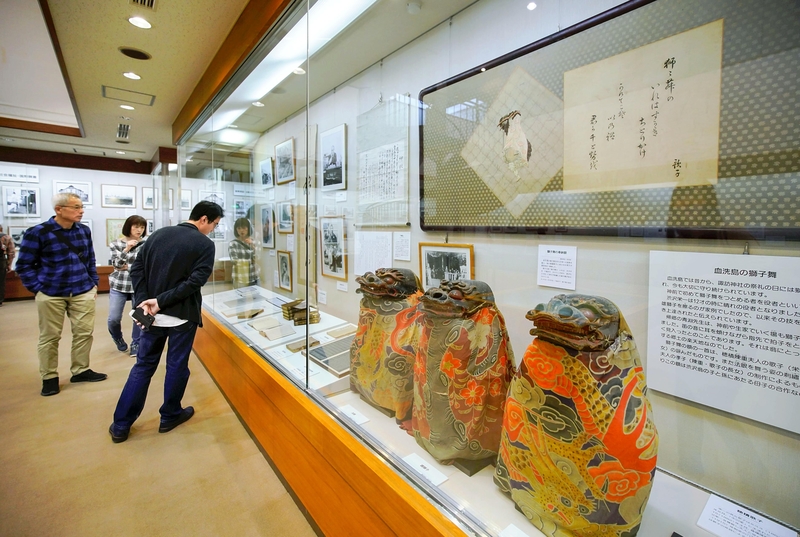
It was hard to believe all this took place in a single person's life, and I gazed intently at the chronology.
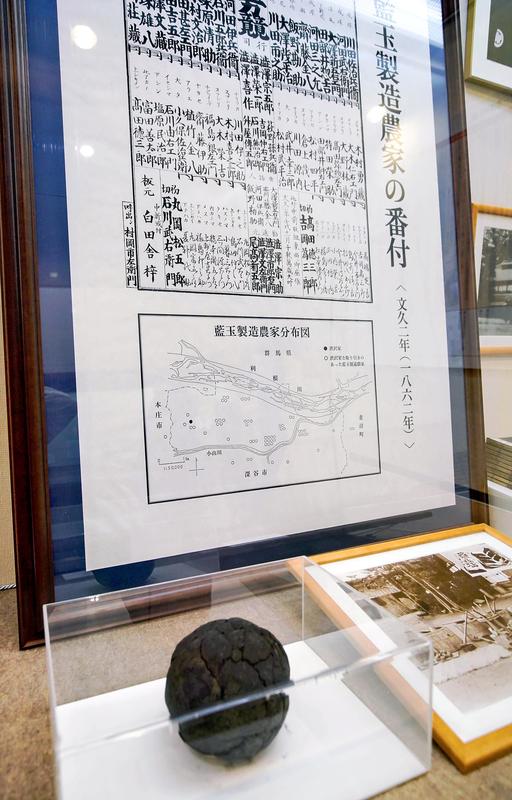
The museum is in Shibusawa's hometown and has plenty of materials from the time he spent here. I was particularly interested in an indigo ball, which is a solid mass of dye material made from fermented indigo leaves.
Shibusawa's family business was sericulture and the production of indigo balls. Shibusawa was involved in the purchase of indigo leaves from his childhood, and at the age of 14, he purchased high-quality leaves by himself at a reasonable price. He sometimes even complained to suppliers that the leaves were not dry enough.
Next to the indigo ball were three lion heads for the Shishimai lion dance that were once kept at a local shrine, with a picture of Shibusawa watching the dance.
"Shibusawa loved his hometown. Even amid his packed schedule, he squeezed in time to come home from Tokyo on the day the lion heads were offered to the shrine," said museum staff Yuko Baba.
Shibusawa also cherished his family. "He was so gentle to his grandchildren that they competed to sleep in his futon," Baba said.
On the second floor of the museum, you can hear a recording of Shibusawa's voice at 83. He says companies should not only pursue profits but also value morality and give back to society.
Shibusawa speaks the words slowly, one by one, and I felt his sincerity in conveying his message. Knowing his achievements and his real self, I am looking forward to the issue of the new bill.
-- Shibusawa Eiichi Memorial Museum
Opened in 1995, the museum stands close to a monument to Shibusawa and the birthplaces of Shibusawa and his cousin Junchu Odaka, a teacher of Rongo (The Analects of Confucius) for Shibusawa. The Fukaya city government has designated the area a "Rongo village" and is also overseeing the development of two robots depicting Shibusawa. One will be placed in the museum, and the other in his birthplace. The museum is about a 15-minute taxi ride from Fukaya Station.
Address: 1204 Shimotebaka, Fukaya, Saitama Prefecture
Open: 9 a.m. to 5 p.m. Closed around the year-end and New Year period.
Admission: Free
Information: (048) 587-1100
Read more from The Japan News at https://japannews.yomiuri.co.jp/