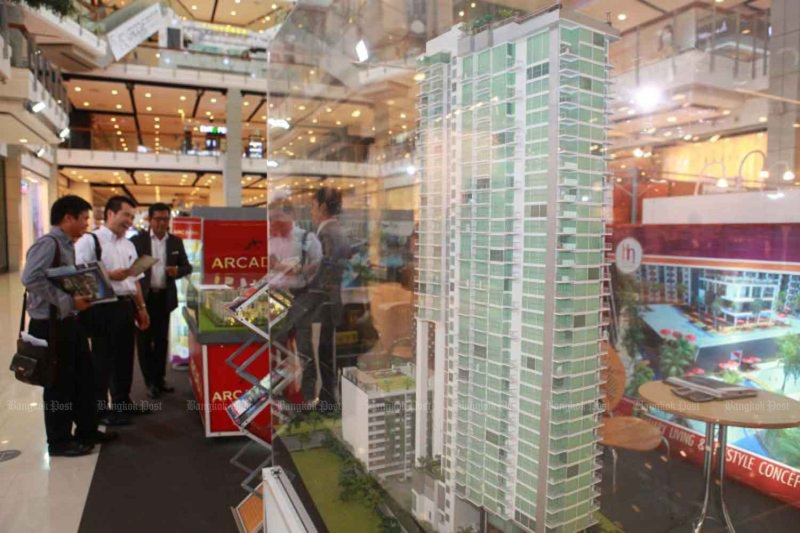
Russia was the only nationality among the top five foreign buyers by both unit transfers and transfer value to record growth in Thailand's condominium market during the first quarter of 2026, with Phuket posting the highest transaction value.
According to the Real Estate Information Center (REIC), condominium transfers to Russians rose 33% year-on-year to 383 units worth 1.66 billion baht, up 69% in value from the same period last year.
The increase made Russians the second-largest foreign buyer group by both transfer volume and value, overtaking Myanmar, which held that position in the first quarter of 2025.
Chinese buyers, though remaining the largest foreign group in both periods, posted the sharpest decline. Transfers dropped 39% to 906 units worth 3.5 billion baht, down 43% in value year-on-year.
Myanmar fell to third place in the first quarter of 2026, with condominium transfers declining 36% to 279 units and their value falling 39% to 968 million baht.
Taiwan, which ranked fourth in both periods, also recorded a significant contraction, with transfers falling 31% to 136 units worth 688 million baht, down 24% in value.
The US remained in fifth place, with 138 transferred units worth 685 million baht, representing declines of 6% in volume and 16.5% in value.
Phuket recorded the highest condominium transfer value for Russian buyers, totalling 1.06 billion baht from 156 units, accounting for 64% of their total transfer value nationwide and indicating strong demand for high-priced units.
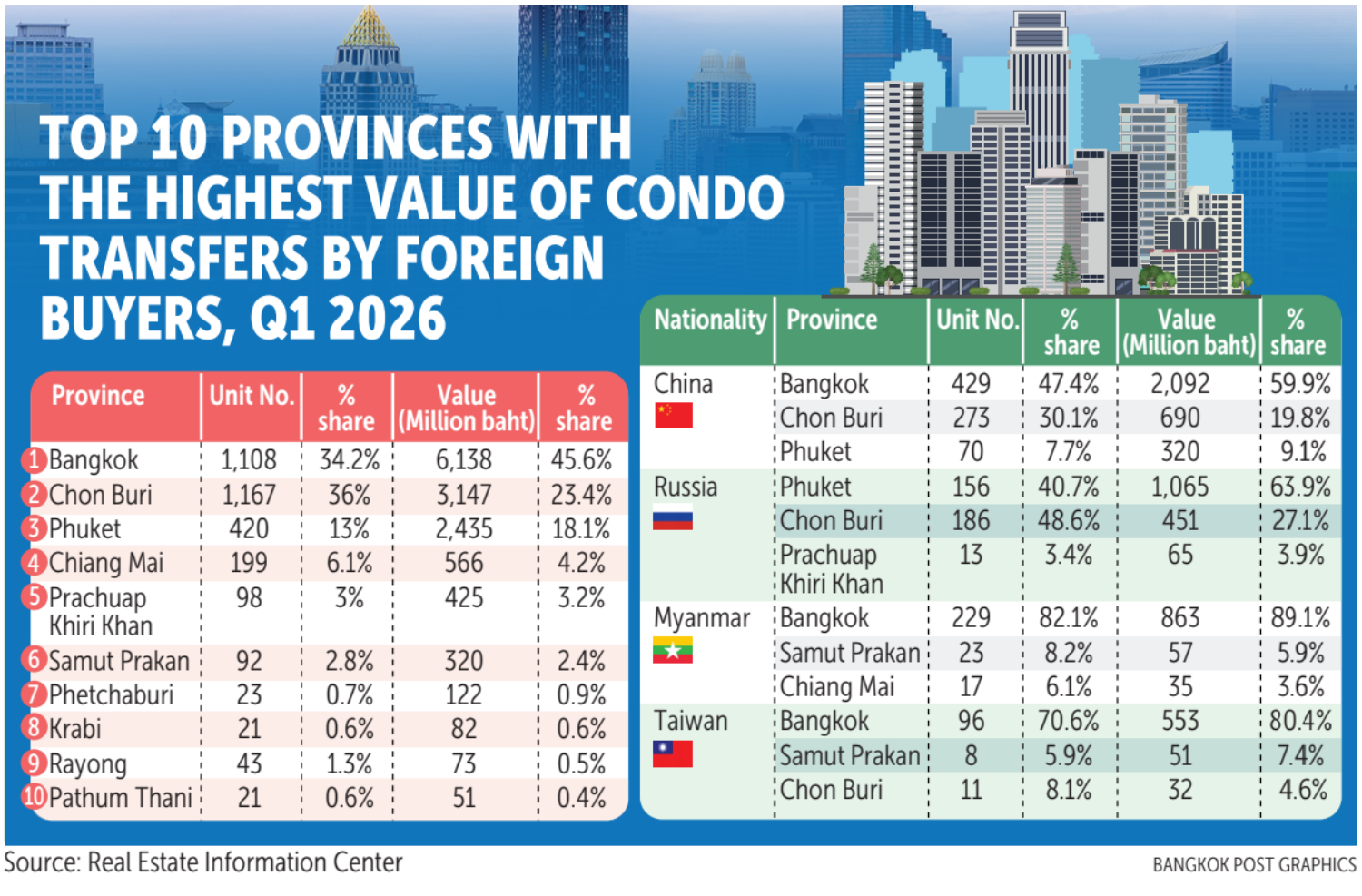
Russian buyers also represented 44% of the total foreign condominium transfer value in Phuket, which amounted to 2.43 billion baht from 420 units in the first quarter.
"Late in the year through the beginning of the following year is typically the peak season for Russian tourists visiting Thailand," said Surachet Kongcheep, head of research at property consultancy Cushman & Wakefield Thailand.
He said Russians also tend to buy condominiums by following existing communities. They previously concentrated in Jomtien, where large Russian communities and Russian-speaking agents actively marketed condominium projects to them.
"Phuket is now seeing a similar trend, with Russian agents becoming highly active in the market," he added. "When developers organise agent events in Phuket, Russian agents often outnumber those of other nationalities."
Mr Surachet said domestic issues in Russia had also encouraged overseas investment, while difficulties in transferring funds due to Russian banks being excluded from the SWIFT international payment system now appeared to have eased for both developers and buyers.