The Snake India Fears and the Snake India Dies From Are Not the Same
Ask most Indians which snake to fear and you will hear: cobra. The spectacled cobra (Naja naja) is woven into temple iconography, folklore, and every snake-charmer image ever put on a postcard. It is genuinely dangerous. It is not, however, the snake killing the most Indians.
That distinction belongs to the Russell's Viper (Daboia russelii). A 2020 study published in eLife, the largest analysis of snakebite mortality ever conducted in India, tracking 1.1 million deaths across four decades, found that snakebite kills roughly 58,000 Indians every year. Russell's Viper accounts for a disproportionate share of those fatalities, particularly in the agricultural states of Andhra Pradesh, Uttar Pradesh, Bihar, and Maharashtra. In some districts, it is responsible for the majority of all snakebite deaths recorded.
The cobra's fame is cultural. Russell's Viper's body count is statistical.
What Makes This Snake Biologically Exceptional
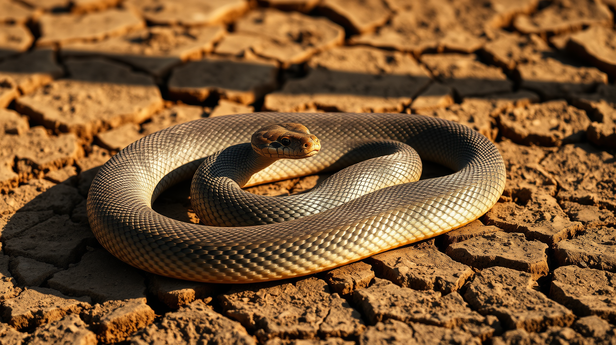
Daboia russelii is a heavy-bodied pit viper, typically 90 to 150 cm long, with a distinctive chain of dark oval blotches running down a brown or yellowish body. It is loud, it produces a long, hissing exhalation when threatened, louder than almost any other snake in Asia. Despite that warning, bites are common because the snake is terrestrial, slow to retreat, and found exactly where rural Indians work: in fields, around grain stores, and near the rodent populations that follow harvests.
Its venom is haemotoxic and cytotoxic, which means it attacks on multiple fronts simultaneously. It disrupts blood coagulation, causing a condition called venom-induced consumption coagulopathy (VICC), the blood loses its ability to clot, and internal bleeding begins. The venom also causes direct kidney damage; acute renal failure is a leading cause of death in Russell's Viper envenomation, often appearing 24 to 72 hours after the bite, after a patient has already been discharged from a local clinic. A third mechanism attacks the pituitary gland, causing Sheehan's-syndrome-like hormonal collapse in some survivors, a long-term consequence almost never discussed in public health messaging.
Where and When Bites Happen
Russell's Viper is not a jungle snake. It lives in open grassland, scrub, and cultivated land at low to moderate elevation, the exact terrain that covers the Indo-Gangetic Plain and the Deccan Plateau. Bites spike during and immediately after the monsoon, when snakes move to higher ground and farmers are in the fields harvesting. Most bites occur at night or at dusk, when the snake is actively hunting rodents and a bare or sandal-wearing foot crosses its path.
This is not a wildlife encounter. It is an occupational hazard. Farmers, agricultural labourers, and their children account for the overwhelming majority of victims. A study in the journal PLOS Neglected Tropical Diseases found that snakebite mortality in India tracks closely with rice paddy cultivation zones, and Russell's Viper is the dominant venomous species in most of those zones.
Why Surviving a Bite Is Harder Than It Should Be
India produces polyvalent antivenom that covers Russell's Viper, and it works, when given in time and in sufficient dose. The problem is the chain between bite and antivenom.
First, a large proportion of rural victims go to a traditional healer or apply a tourniquet before reaching a hospital, both of which delay effective treatment and, in the case of tourniquets, can cause additional tissue damage. Second, the dose of antivenom required for a Russell's Viper bite is high: clinical guidelines recommend starting with 10 vials and escalating based on coagulation response, but many district hospitals stock far fewer. Third, the delayed renal failure means patients discharged after initial treatment can deteriorate at home without access to dialysis.
The antivenom itself has a regional limitation. India's polyvalent antivenom is formulated using venom from snakes sourced primarily from Tamil Nadu. Research published in PLOS Neglected Tropical Diseases has shown that Russell's Vipers from northeastern India and some parts of the Deccan produce venom with different protein profiles, reducing the effectiveness of the standard antivenom against those populations. This is an active area of concern among Indian herpetologists and toxinologists.
The cobra, by contrast, tends to deliver dry bites more frequently, and neurotoxic cobra envenomation, while life-threatening, responds more predictably to the standard antivenom formulation and to atropine-neostigmine treatment for the neuromuscular effects. Russell's Viper offers no such predictability.
The snake that kills the most Indians does not have a warning system built around it. The one that does has better PR.