
Tech Specs

- Price (UK, US, Euro): £269, $299.24, €269.90
- Weight as measured (Metric and Imperial): 29g / 1.02oz
- Colours: Matte Green Sage (tested), Black Gloss, White Gloss
- Sizes: One Size
- Dimensions (Metric and Imperial): Height: 62mm / 2.4inch, Width: 144mm / 5.6inch, Length (arm): 125mm / 4.9inch
- Materials: Rilsan frame
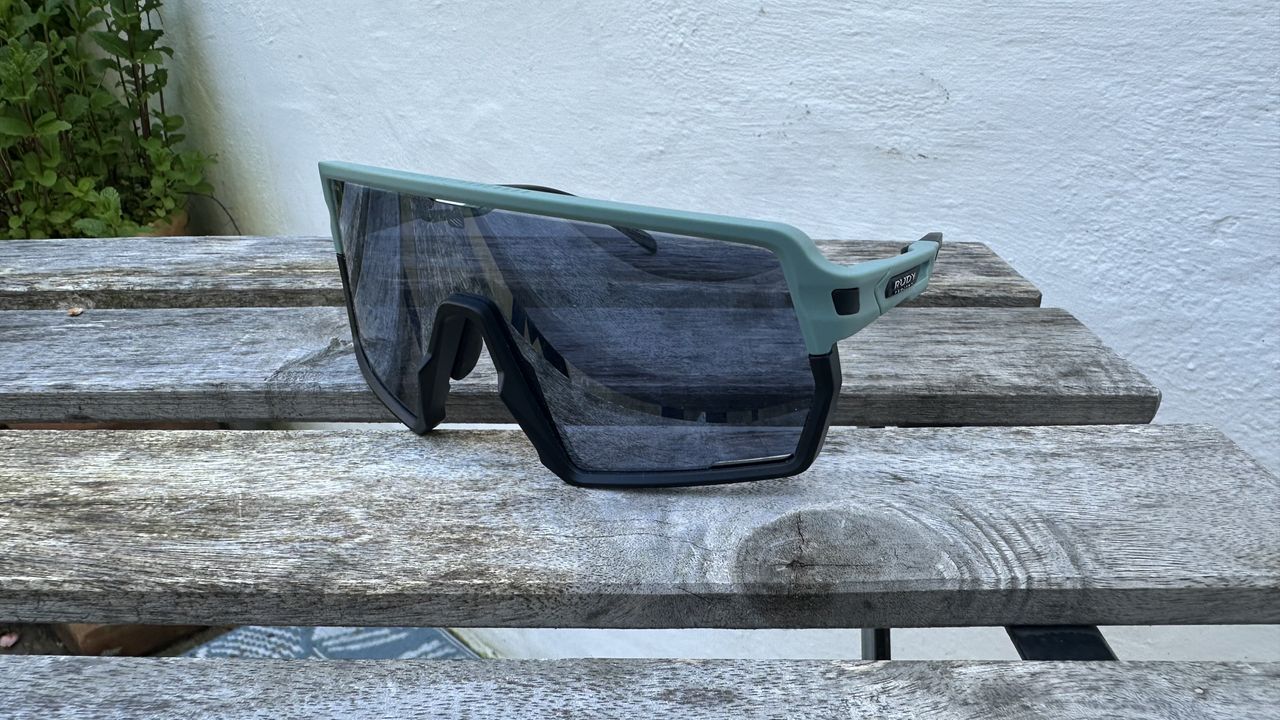
I’ve been testing the Rudy Project Kelion cycling sunglasses with an ImpactX photochromic lens. They’re up there with some of the best cycling glasses I’ve used, but they’re not without their flaws. The glasses are described by the brand as being “the pinnacle of innovation and excellence in the world of sports eyewear”, and sit at the top of Rudy Project’s eyewear range.
There’s no two ways about it; with a price tag of £269 / €269 / $299, these are an expensive pair of sunglasses. However, the versatility offered by the photochromic lens - which on this Matte Green Sage pair is in the 2 Laser Black tint - means that these will happily keep your vision sharp in everything from pretty much total darkness right through to all but the brightest of sunlight.
I’ve been riding with the Kelion’s over the last month or so in Bristol in the South West of the UK through late Winter into early Spring, so have worn the glasses in a broad variety of light and weather conditions. I’ve used the glasses primarily on the road, with one particularly boggy gravel ride thrown in for good measure.
Design and Aesthetics
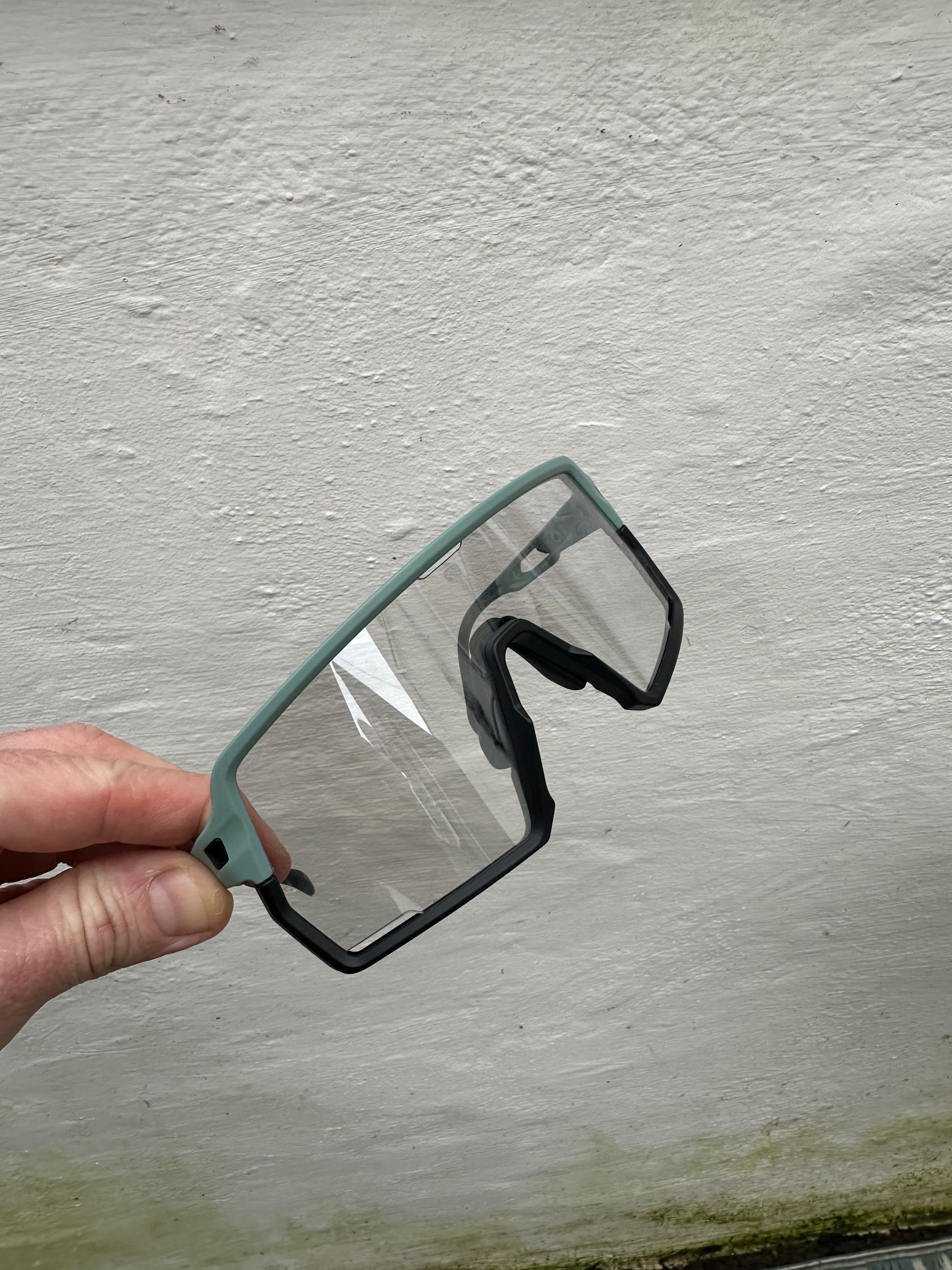
The Kelion’s have a pretty modern aesthetic, with a large lens that offers a lot of coverage. Used by the likes of WorldTeam Bahrain Victorious and ProTeam Flanders Baloise, these fit right in inside the peloton. Of all of the sunglasses in Rudy Project’s range, I’d say these are the most modern, with alternatives like the Propulse or Turbolence having a much more retro look about them.
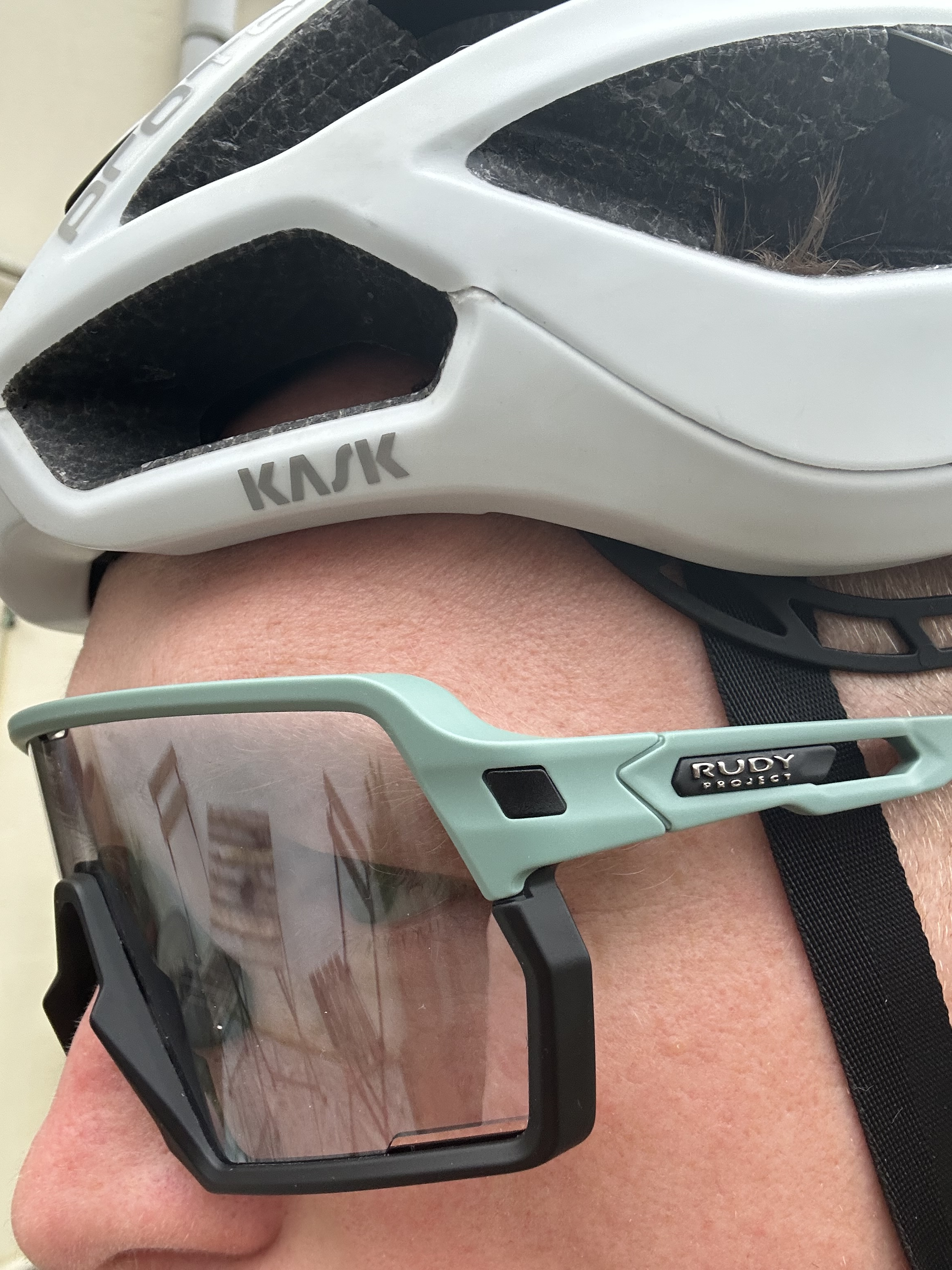
Rudy Project states that the Kelion’s ideal size range is ‘medium to large’ and the fit is ‘optimised for larger faces’. Fortunately, I’m a paid up member of the moon headed community, so I found the size to work well with my melon. If you had a smaller face, I can imagine these would be pretty cumbersome.
I tested the matte green sage colourway, but the photochromic options are also available in gloss black and gloss white. The standard version that uses the mirrored RPOptics multilaser mirrored lens has a broader variety of colours available, including a very Euro fluoro pink colourway, which I really like. The finish on the frames is great, and when the lenses darken to the ‘Laser Black’ tint, they look really sleek.
Whilst I appreciate how they look in my hand, I didn’t love the way they looked on my face. They’re quite tall, and don’t wrap around quite as wide as some other brands. Now, I am a lifelong Oakley user (from the original RadarLocks through to Jawbreakers, Sutros, Encoders, and more) so I’m very used to how they look on my face, and I also have a huge head so - whilst I didn’t adore how these looked on me - your experience may differ.
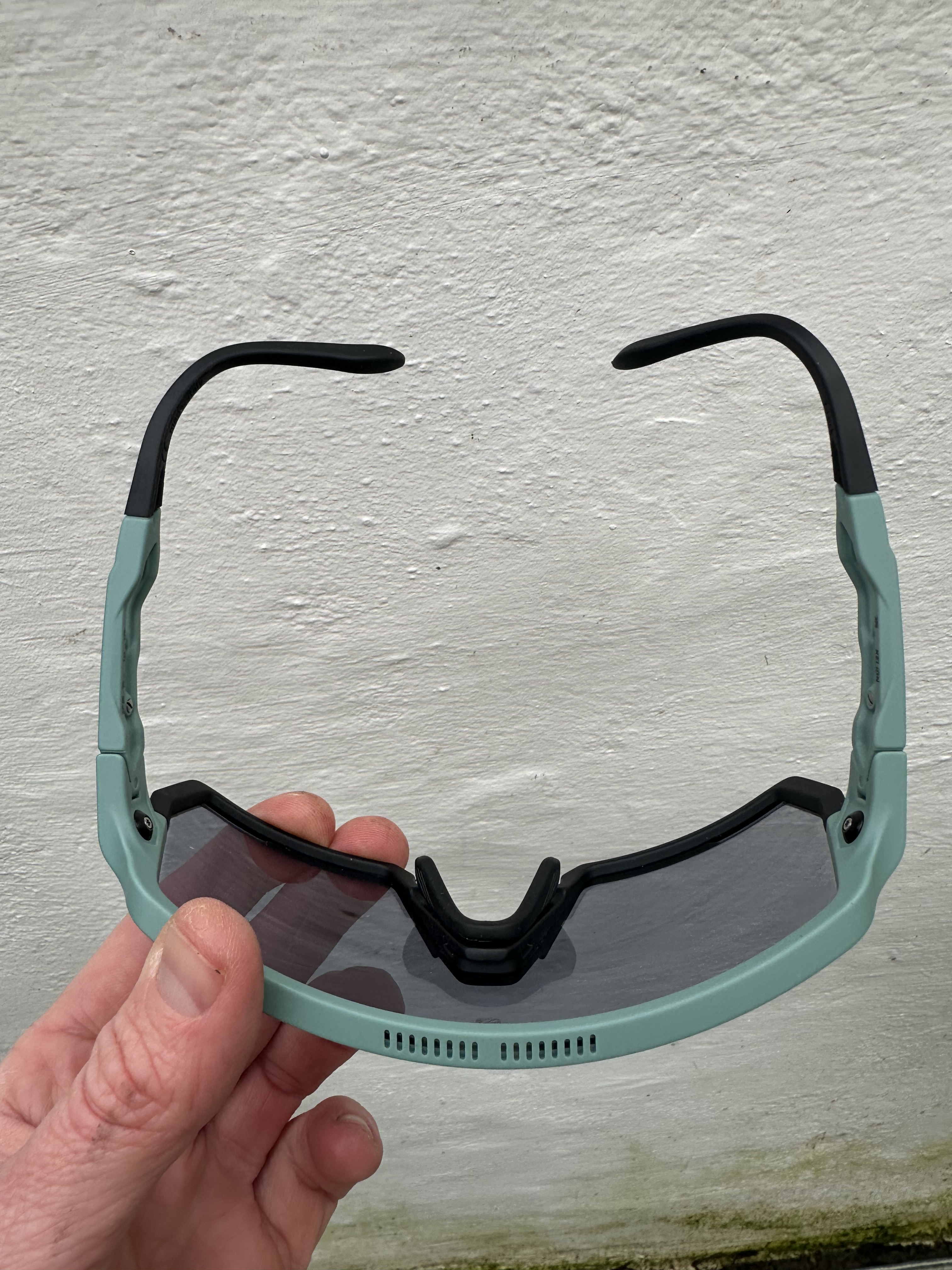
The photochromic lens Rudy Project uses is one of the best on the market. Rudy Project itself describes it as being “Unbreakable” – a claim I can’t vouch for. It also says it has “Exceptional Optical Clarity” and is “Lightweight and Durable” – not claims which I can say are true. The field of vision is massive, and the lens is crisp and clear from all angles. There are two small ventilation slits along the bottom of the lens and one just above the nose piece, which aid in breathability and help prevent the lenses steaming up during hard efforts.
The frame itself is made from Rilsan, which Rudy Project describes as “an exceptional eco-sustainable material known for its strength and flexibility”. I did some research, and it turns out Rilsan is a bio-based polyamide derived from castor bean oil, and is 100% renewable. A lot of modern sunglasses are manufactured from pretty standard nylon -- even Oakley’s proprietary “O-Matter” frames boil down to basic nylon - which is not a renewable material, so it’s good to see a more eco-conscious material being used by the Italian brand.
A small thing, but the glasses come in a hard case with foam padding and a soft bag. A lot of brands have started to do away with the hard case by way of shrinkflation, so it’s great to see Rudy Project still providing one that means the glasses can be stored and transported safely. For the price, I’d expect nothing less.
Performance
The design of these shades is very well thought out. For me, one of the standout features is the fully adjustable nose pad and arms. They’re made of a bendy, rubberised material that allows for basically infinite adjustment to really dial in the fit and ensure the frames won’t slip off your face. A nice side effect of the slightly rubberised arms is how they cling to your helmet vents when stowed there, which I really liked.
Straight out the box (the lovely solid box), the glasses were intuitive to adjust and fit to my face. The bendy arms and nose piece offer enough resistance that it’s easy to dial in the fit, but aren’t slack enough to bend out of place when you put them on. After a few rides in these glasses, going back to another pair without any adjustability felt quite jarring, and I wish adjustment like this was more commonplace on premium eyewear.
One slight niggle I had with my frames was a slightly loose hinge on one side. The left had a crisp snap to it, whereas the right was a bit floppier and wouldn’t stay snapped open. Of course, when wearing the glasses, this is a non-issue, but at this price point I’d expect perfection. Fortunately, the hinges are adjustable with a small flathead screwdriver, so I was able to tighten this up and remedy the fault. However, as it’s a very small, delicate screw, that isn’t something everyone would be comfortable doing, and you shouldn’t need to on a brand new pair of premium glasses straight out the box. I’ll give Rudy Project the benefit of the doubt on this one, but I’d be interested to see if this is a recurring issue over time that comes back.
Another key feature of the frames is the Quick Change Technology. A small button just next to the hinge on each side that, when depressed, releases the lower half of the frame to make switching lenses a breeze. I’ve always hated having to bend frames to snap out the lenses on other models of sunglasses, like an Oakley Sutro for example, it always feels dangerously close to snapping something. This feature makes that problem a thing of the past and, whilst you probably won’t need to swap the photochromic lens all that often, it’s a nice touch.
I am, among other things, a sweaty man. A common issue I have with sunglasses when I’m training is that they very quickly get covered in sweat or steamed up, and I end up taking them off and storing them in my helmet. Whilst this is a bit gross, and means I have to clean my glasses a lot, it does make it easy to test the ventilation on glasses. The thin vents on these lenses actually proved pretty effective, and I didn’t find them steaming up at any point, even on slower climbs when pushing hard (circumstances that can induce steam on a lot of less well ventilated sunnies).
The photochromic lens is the hallmark feature of these shades, and I’m pleased to report that it performed exceptionally. I remember a few years ago, someone from Rudy Project explained to me that its photochromic technology is actually baked into the lenses during construction, rather than a coating applied afterwards, meaning it lasts forever and doesn’t “wear off”. I found the adjustment to happen very quickly, and I was never left squinting in the light or taking them off when it got cloudy or dark underneath tree cover. My one criticism is that on one particularly bright and sunny day (yes, we do get those in Bristol sometimes), I found about the limit of the lens and would have opted for something mirrored or darker to really deal with the brightness. In Rudy Project’s defense, there was standing water on the road (because, despite the odd sunny day, it is always raining), which added to the glare, so I think it’s fair to say a pretty exceptional circumstance.
Size and aesthetic wise, I would compare these to something like an Oakley Sutro, which happens to be my sunglasses of choice when I’m not testing. Whilst I’ve not used Oakley’s photochromic lens, they measure up very similarly to the Rudy Projects, so I think make a fair comparison. I’d say the Rudy Project’s have slightly better ventilation (unless you opt for one of the Oakley lenses with ten pretty large holes drilled along the top), and offer heaps more adjustability. However, the RRP of the Oakley Sutro Lite with a photochromic lens is £188, almost £100 cheaper than the Rudy Projects, so I would expect the additional features offered by the Rudy Projects.
Value
Now, there’s no getting away from it, these are some of the most expensive sunglasses on the market (excluding anything with Meta AI slop integrated into it). £269 is a lot of money to drop on some cycling specific shades.
However, I actually think they’re not terrible from a value perspective. They are expensive, but they have heaps of features like the adjustable arms and nose piece that you just don’t see on other brands very often.
The photochromic lens is one of the highest quality on the market, and makes the sunglasses versatile enough to count as two pairs of sunglasses in one. If you consider buying two pairs of Oakleys with a standard and a lowlight lens, the price becomes a bit easier to swallow.
I still think they’re price is at the absolute far end of what you should pay for something like this, but Rudy Project says you can use they’re ideal for road cycling, triathlon, running, AND beach volleyball, so you can spread the cost out between all four of your hobbies.
Verdict
Overall, I think these are a really great pair of sunglasses. They are packed with features that make them easy to use and versatile, and represent the real top end of the eyewear market. They’re not flawless, and if you have a smaller face you may be better off with something a bit less huge, but for a lot of people I think these would be a great purchase that covers a lot of bases.
Attributes |
Notes |
Rating |
|---|---|---|
Design & Aesthetics |
Modern, oversized design that looks cool, but may be a bit big for people with smaller faces. |
8/10 |
Build |
Despite my slight niggle with one of the hinges, the glasses are a high quality build that uses sustainable materials. |
8/10 |
Performance |
Great ventilation, amazing photochromic lens, and lots of adjustability. |
9/10 |
Weight |
29g is about right for a set of sunglasses. |
9/10 |
Value |
Expensive, but partially justified by the premium features, infinite adjustability, and versatile photochromic lens. |
7/10 |
Overall |
85% |