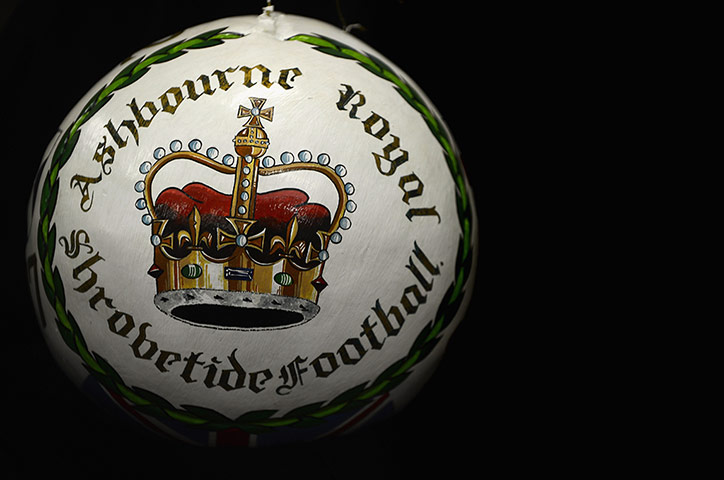
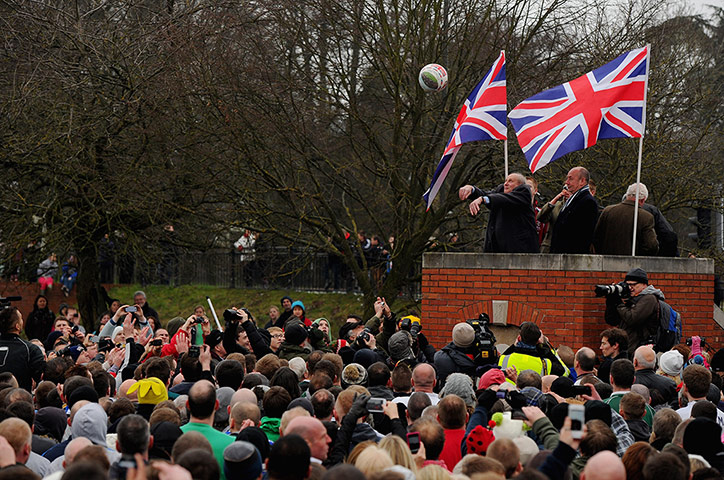
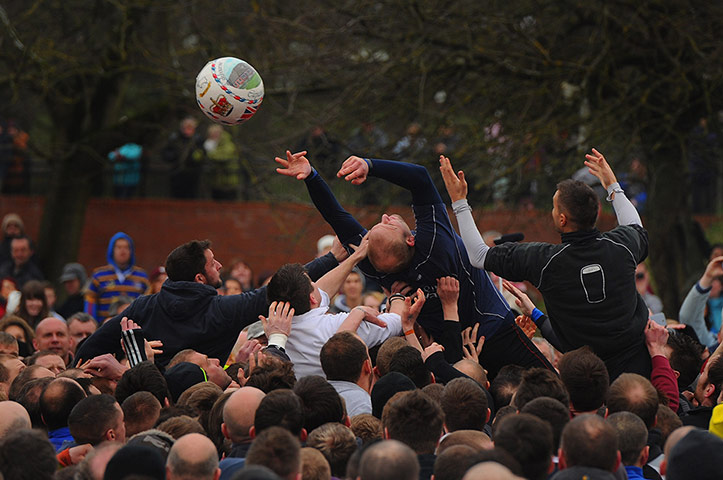
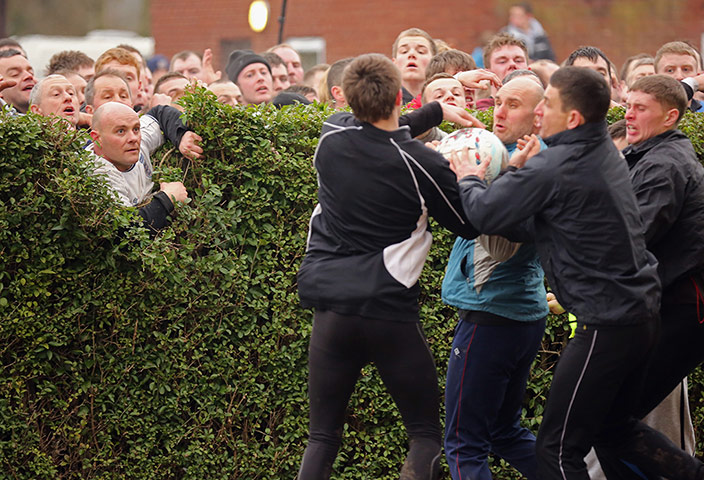
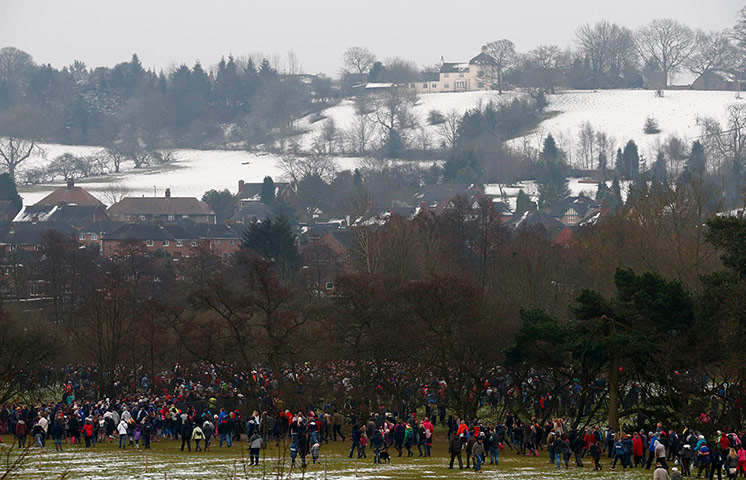
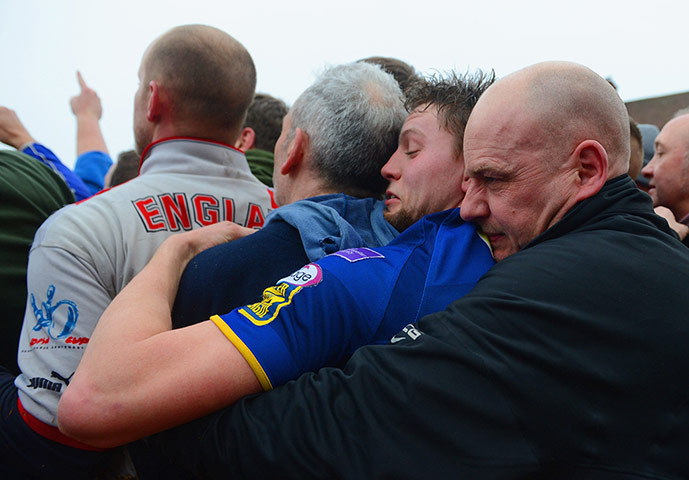
The Royal Shrovetide football, cork-filled and handpainted, is seen before the match. First played in the 17th century between two teams from opposite ends of the Derbyshire town, hundreds of participants aim to get a ball into one of two goals that are positioned at either end of Ashbourne.Photograph: Laurence Griffiths/Getty ImagesAnd they're off! The honour of starting the game, known as 'turning up', is given to local builder John Tomkinson, who hurls the ball from this specially built plinth into the crowd, known as a 'hug'.Photograph: Michael Regan/Getty ImagesOne man makes an early grab for the ball...Photograph: Darren Staples/Reuters
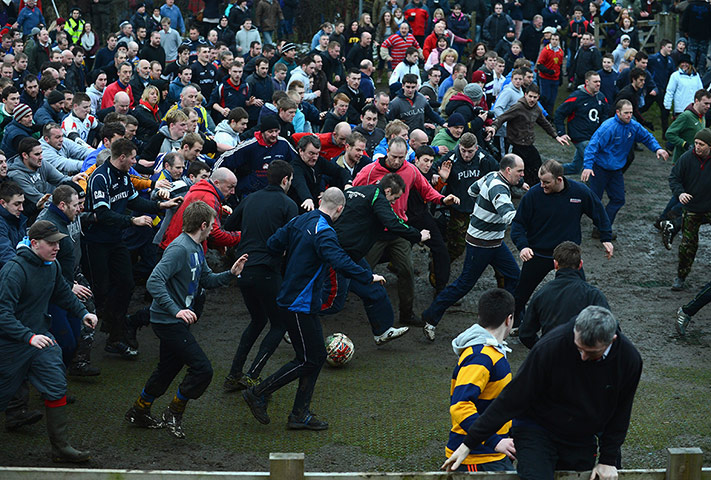
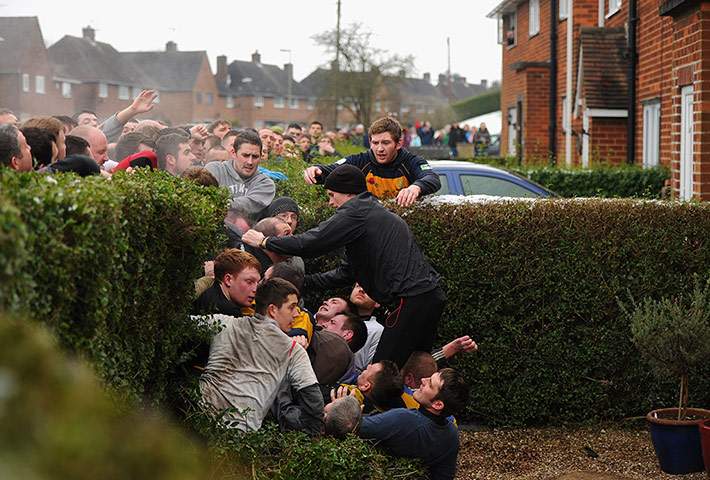
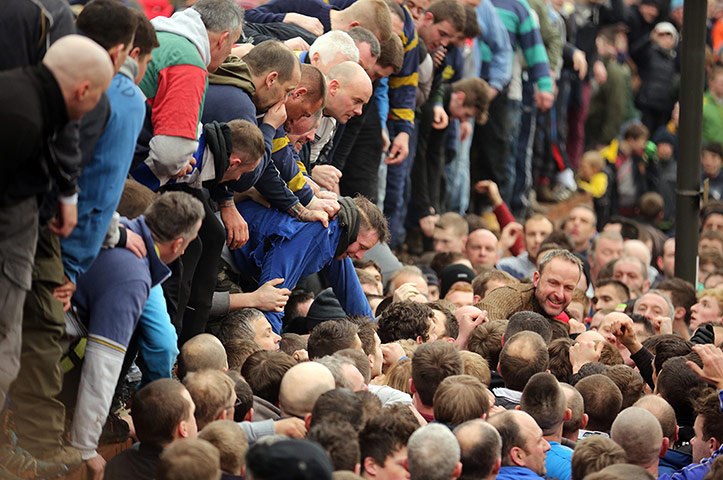
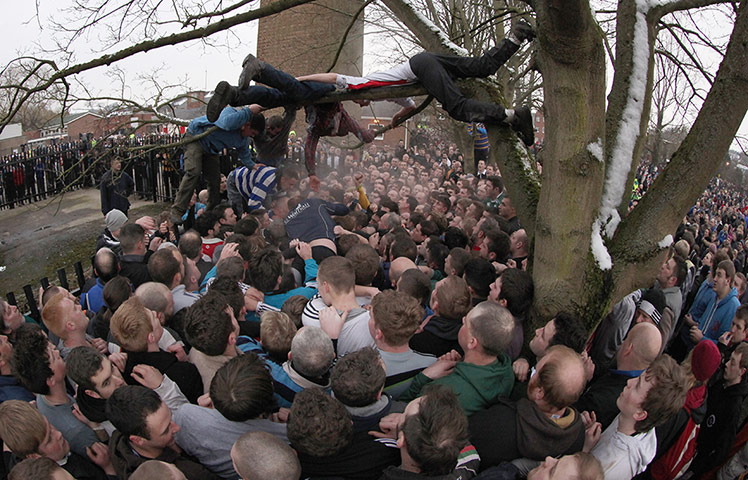
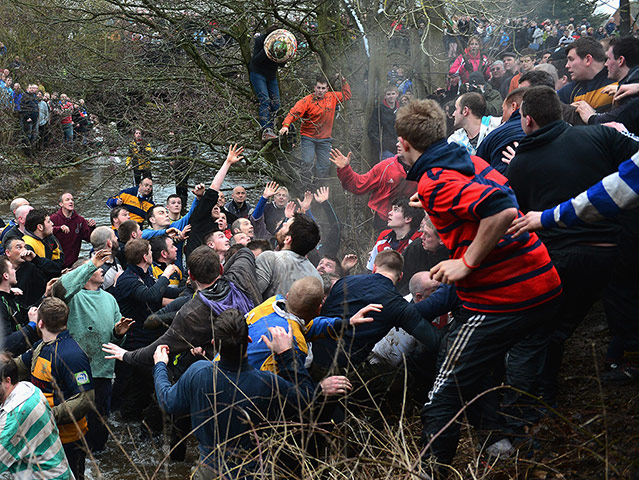
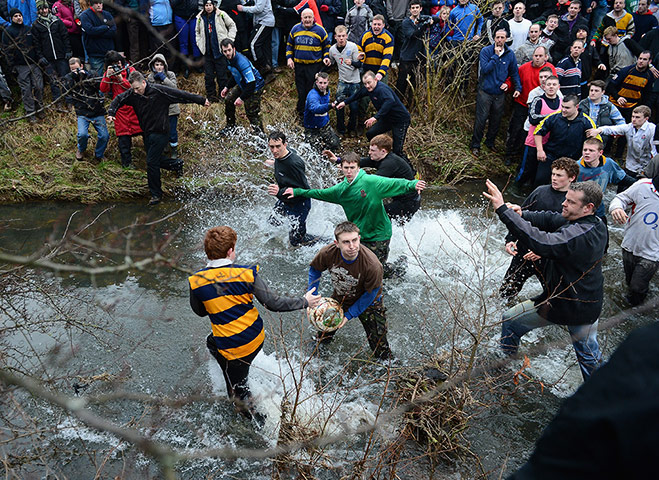
...and hurls it back to his team. The teams are divided by which side of Henmore Brook a player was born on; Up'ards from the north and Down'ards from the south side of the river, although a uniform appears not to be mandatory.Photograph: Michael Regan/Getty ImagesA break is made! A huge crowd of players follow the ball across a muddy field. There are very few rules, though ones in existence include no murdering and no playing in churchyards.Photograph: Laurence Griffiths/Getty ImagesWhile churchyards are out of bounds, front gardens are not. One player parts the hedge to get a better view of the action... Photograph: Christopher Furlong/Getty Images...inevitably, the hedge then gives way altogether.Photograph: Michael Regan/Getty Images'Down wi't!' Here we see a crucial tactic in play. When one team fears losing possession of the ball, they can surround it and push it down, preventing the opposing team from making that game-changing steal. Hiding the ball, however, is forbidden.Photograph: Christopher Furlong/Getty ImagesAttacking players employ an ingenious method to gain possession, scaling a nearby tree to penetrate the steaming scrum from above.Photograph: Christopher Furlong/Getty ImagesThe game always draws a crowd of spectators, although many admit they have no idea what is actually happening.Photograph: Darren Staples/ReutersApparently this is what Shrovetide Football is like for most of the players, most of the time. Each team has its own special stars though, including runners, whose job it is to wait on the outskirts for a loose ball then cover as much ground as they can.Photograph: Michael Regan/Getty ImagesA River Play! The ball reaches Henmore Brook, meaning we must be near one of the goals. The goals are three miles apart: Sturston Mill (for the Up'ards) and Clifton Mill (for the Down'ards). To score, a player must tap the ball three times against the mill's stone wall. This caption has been amended to correct the location of the goalsPhotograph: Laurence Griffiths/Getty ImagesOne player makes a gallant pass during a river play. Some players consider themselves river specialists, and wait for the ball to land in the brook before getting involved.Photograph: Laurence Griffiths/Getty ImagesThe game is traditionally played over two days, and must be stopped after 10pm. According to some reports, Dave Spencer has put the Up'ards in the lead, goaling the ball at nine o'clock. That's enough for one day.Photograph: Darren Staples/Reuters
Sign up to read this article
Read news from 100’s of titles, curated specifically for you.