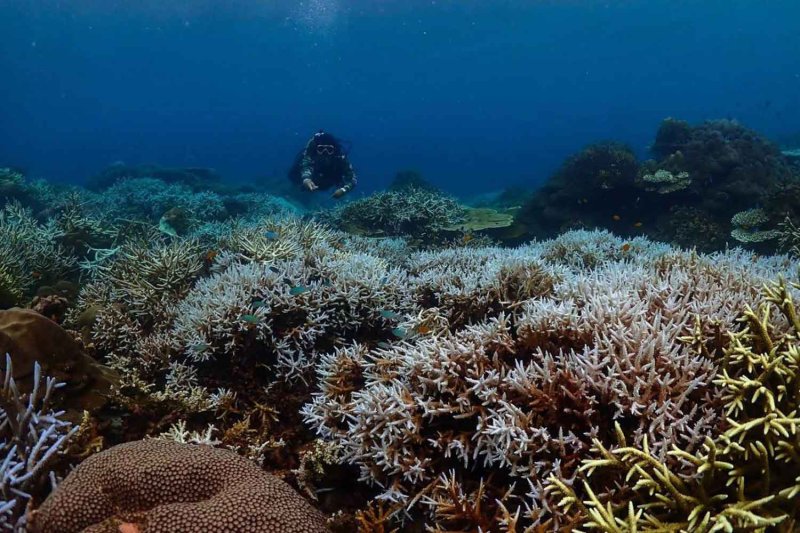
National park officials are closely monitoring coral reefs in Mu Koh Surin National Park after signs of coral bleaching were detected in several areas.
Atthapol Charoenchansa, director-general of the Department of National Parks, Wildlife and Plant Conservation, said rising sea temperatures have caused corals to bleach and pale, highlighting the growing impact of climate change on Thailand's marine ecosystems.
Among the affected species are staghorn corals, which are showing signs of stress across parts of the park.
Mr Atthapol said officials have been instructed to closely monitor the situation. The park is currently closed for the annual tourism off-season, allowing reefs and marine ecosystems to recover without disturbance.
However, he said the closure could be extended if the corals fail to recover before the park is due to reopen.
Mu Koh Surin National Park Chief Arthit Khayankij said a survey on June 26 found coral bleaching in several areas after seawater temperatures reached 30-31C, above the seasonal average.
About 50% of coral at Ao Suthep showed bleaching or paling, followed by 30% at Ao Phak Kat, and 10% each at Ao Tao, Ao Mae Yai and Laem Chong Khat.
The department has ordered surveys every 15 days, with the next assessment due in mid-July, to track coral recovery. Officials will also install seawater temperature loggers, monitor the National Oceanic and Atmospheric Administration Coral Reef Watch data and compile a bleaching database for each site.
Mr Arthit said Mu Koh Surin suffered a major bleaching event in 2010 that caused widespread damage, with reefs taking about 13 years to recover.
If bleaching exceeds 40% by the time the park is due to reopen on Oct 15, stricter conservation measures may be introduced, including a ban on anchoring boats on coral reefs and limits on visitor numbers.