Bangkok's retail market has entered a new phase of transformation in 2026 as developers increasingly focus on transit-oriented destinations, experiential offerings and asset repositioning to maintain competitiveness amid a fresh wave of supply.
According to property consultancy firms Colliers Thailand and CBRE Thailand, the sector remains resilient despite softer consumer spending and moderating retail growth nationwide.
Colliers reported that Bangkok's retail supply reached 9.27 million square metres in the first quarter of 2026, with only a marginal 0.12% quarter-on-quarter decline, highlighting the market's stability despite broader economic uncertainties.
The consultancy noted that retail development is becoming increasingly segmented between neighbourhood-serving community malls and large-scale shopping centres anchored by mass-transit connectivity.
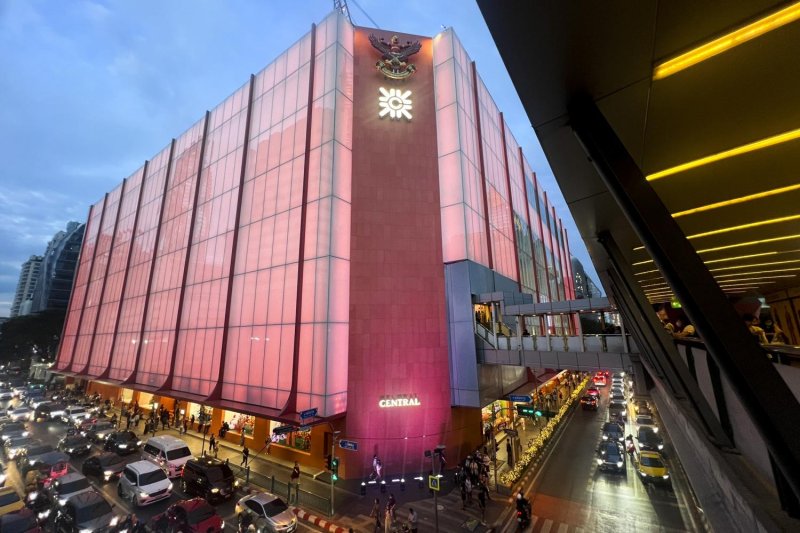
Large-scale retail projects are gravitating towards major transit corridors, where high passenger volumes provide a sustainable source of foot traffic and support long-term asset performance.
This trend is reshaping Bangkok's retail landscape, with developers prioritising locations linked to BTS and MRT networks rather than relying solely on traditional central business district (CBD) catchment areas.
Colliers found overall occupancy rose sharply over the past year, supported by strong performance from entertainment-driven destinations and continued expansion by luxury and premium international brands.
Occupancy reached 89% in the first quarter of 2026, up from 85% a year earlier and significantly higher than the 84% recorded throughout much of 2024.
The improvement was particularly notable among destinations where retail projects successfully integrated entertainment, lifestyle and experiential offerings alongside traditional shopping.
Colliers expects occupancy to moderate slightly to 87% by year-end as new supply enters the market, although performance should remain healthy by regional standards.
CBRE similarly described 2026 as a "year of repositioning" for Thailand's retail sector as landlords adapt to evolving consumer behaviour and increasing competition.
The property consultancy estimates Bangkok's retail stock stood at around 8.25 million sq m at the end of 2025, with another 300,000 sq m scheduled for completion this year.
As supply growth outpaces tenant demand, competition is becoming increasingly polarised between well-positioned assets and older properties struggling to maintain relevance.
According to CBRE, average occupancy may slip below 90% for the first time in recent years as consumers become more selective about where they spend their time and money.
Jariya Thumtrongkitkul, head of retail and group transaction management at CBRE Thailand, said the sector is undergoing a fundamental shift in what drives footfall.
"Customers are still spending, but the reasons for visiting have changed," she said.
Dining, leisure, wellness, services and community-focused experiences now play a much larger role in destination selection than traditional retail formats alone.
CBRE noted that the longstanding benchmark allocating 70% of space to retail and 30% to food and beverage operators is becoming less relevant.
Higher-performing projects are increasingly allocating more space to wellness facilities, lifestyle services, leisure activities and community uses.
"Not every zone needs to remain traditional retail," Ms Jariya said. Underutilised rooftops are being converted into dining venues, while low-traffic corridors are being transformed into wellness centres, education facilities and service-oriented spaces.
The shift reflects a broader evolution in retail property strategy, where landlords are focusing on creating destinations rather than simply leasing shop units.
RENTS EDGE HIGHER
Average shopping mall rents in CBD locations rose to 2,852 baht per sq m per month in the first quarter, significantly higher than 2,230 baht in the northern fringe and 2,300 baht in the eastern fringe.
Community malls commanded lower rents, averaging 1,755 baht per sq m in the CBD, compared with 1,200 baht in the northern fringe and 1,250 baht in the eastern fringe.
Despite rental growth remaining modest, Colliers expects average retail rents to increase by 3-5% this year, supported by healthy occupancy and sustained demand for prime space.
The strongest demand continues to come from luxury brands, food and beverage operators, wellness providers and experience-led tenants seeking locations capable of generating repeat visits.
Both consultancies agree that successful retail assets will increasingly be defined by operational agility rather than scale alone.
Landlords are investing in tenant curation, customer analytics, ESG initiatives and flexible space planning to improve performance and strengthen competitiveness.
As Bangkok's retail market matures, the next phase of growth is expected to favour projects that combine transit accessibility, experiential offerings and a clear identity.
While new supply will intensify competition, well-positioned retail destinations are likely to remain resilient, as consumer preferences continue shifting towards lifestyle-driven and experience-focused environments.