Some of the most important industrial transitions happen quietly.
Not because they lack significance, but because the underlying change initially appears too technical, too operational, or too far beneath the visible surface of the market for most people to notice in real time. Agriculture has historically worked that way. The public tends to focus on crops, fertilizer prices, and food inflation. Meanwhile, the infrastructure supporting modern agricultural production continues evolving underneath it.
And increasingly, that evolution is becoming far more technological than many investors realize.
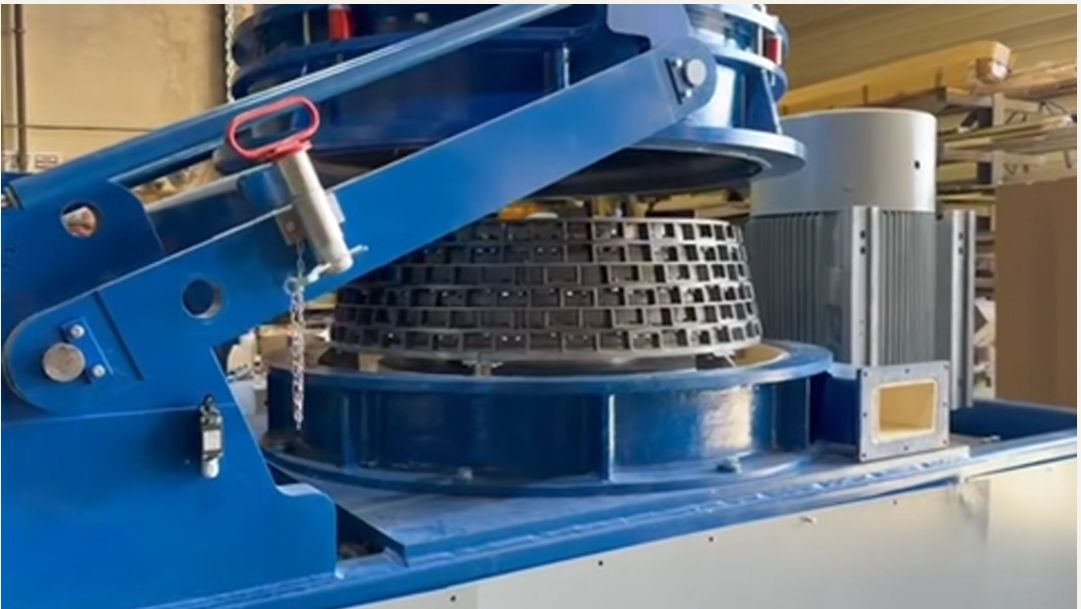
That shift is part of what makes RenX Enterprises Corp. (NASDAQ: RENX) increasingly interesting following Tuesday's announcement surrounding the commercialization progress of its Microtec platform. The company confirmed continued advancement toward customer-facing commercialization tied to the Microtec UTM 1200 Turbo Mill, including offtaker sample activity and broader engagement surrounding engineered substrate production capabilities.
On the surface, the release may appear operational. Underneath it, however, sits a much larger implication.
Because what RenX is building increasingly looks less like a traditional biomass recycling operation and more like a localized industrial processing platform designed around precision refinement, engineered agricultural inputs, and scalable throughput infrastructure. That distinction matters because modern agriculture is already moving beyond traditional assumptions.
Greenhouses, controlled-environment growing systems, nurseries, and industrial agricultural operations increasingly depend on engineered substrate products capable of delivering repeatable performance across highly controlled growing environments. Once agriculture begins prioritizing consistency at industrial scale, the technology controlling how organic material is processed becomes significantly more important.
And that is where the Microtec platform may become central to the broader RenX story.
The system, operating under an exclusive U.S. licensing structure, is designed to process woody biomass into highly refined engineered growing media with precise sizing and consistency characteristics. That capability moves beyond traditional composting or bulk biomass handling and further into industrial refinement systems capable of supporting controlled agricultural production environments.
That is a very different category.
Importantly, the timing of the commercialization push also arrives alongside operational momentum already becoming visible across the broader RenX platform. The company recently reported $3.96 million in first-quarter 2026 revenue, more than 40% sequential growth in material sales, and a return to profitability within its Logistics segment during the first full quarter operating on its upgraded Myakka City processing infrastructure.
Those developments stand out because they suggest the operational architecture supporting the technology is now functioning simultaneously across multiple layers. Intake infrastructure is expanding. Hauling relationships are strengthening. Throughput is increasing. Processing systems are becoming more sophisticated. And now, commercialization efforts tied to Microtec are moving the platform further toward customer validation.
That is no longer simply a deployment story.
It is becoming an operating system.
And increasingly, the technology layer inside that system may be the part investors are still underestimating.
For years, much of the agricultural input conversation has focused on sourcing. Peat. Coir. Imported substrates. Fertilizer. But as agricultural systems become more controlled, the economics increasingly shift toward consistency, refinement precision, and localized reliability. Operators managing industrial growing environments cannot afford large swings in substrate performance from cycle to cycle.
That pressure changes how value is assigned.
The infrastructure capable of producing repeatable engineered growing media at scale begins to carry greater strategic importance. And importantly, the companies controlling the refinement process itself may ultimately sit in a much stronger position than businesses operating purely as commodity distributors.
That dynamic becomes even more relevant as broader global supply chains continue facing pressure.
Roughly one-third of global fertilizer trade still passes through the Strait of Hormuz, highlighting how exposed agricultural systems remain to concentrated international shipping corridors and geopolitical disruption. While fertilizer and engineered growing media occupy different parts of the agricultural chain, the broader lesson remains similar: dependence on fragile global sourcing becomes far more visible once stress enters the system.
That environment increasingly favors localized processing platforms capable of operating with greater control and reduced dependency on imported materials.
RenX appears to be positioned directly within that transition.
Its Myakka City platform now combines organics intake, hauling infrastructure, industrial grinding and screening capability, engineered blending systems, and advanced processing technology into a vertically integrated operating model increasingly aligned with modern agricultural infrastructure demands.
And importantly, the Microtec commercialization process now suggests the platform is moving beyond operational preparation and further into customer validation.
That is a meaningful shift.
Because once industrial processing systems begin moving from internal capability development toward commercial adoption, the conversation surrounding the business itself often changes as well. The focus moves away from what the technology could eventually do and toward how scalable the operating model surrounding it may ultimately become.
That may be where the RenX story is now evolving.
Agriculture may still appear traditional from the outside. Underneath it, however, the systems supporting production are becoming more engineered, more localized, and increasingly dependent on processing precision capable of delivering industrial-scale consistency.
That is the layer RenX is now moving deeper into.