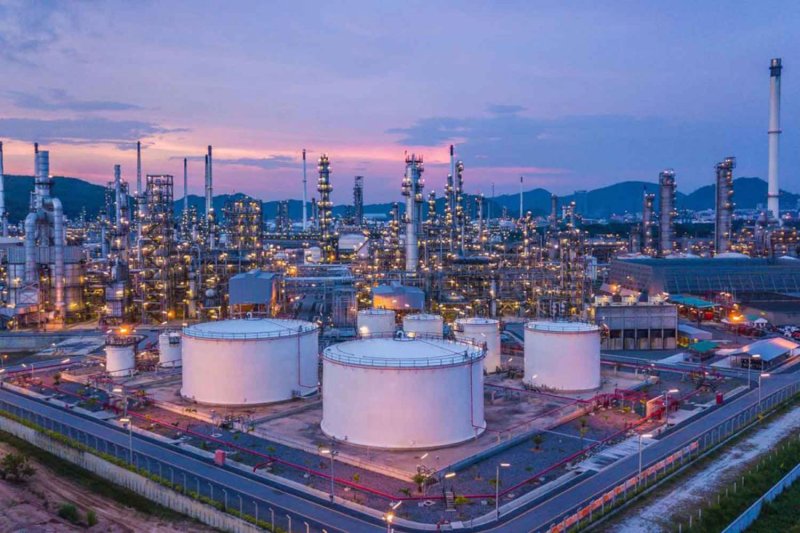
Thailand's major oil refineries continue to operate smoothly and supply the nation with refined oil despite escalating conflict in the Middle East, according to the Federation of Thai Industries' Petroleum Refining Industry Club.
The assurance comes as global energy markets brace for prolonged instability following the closure of the Strait of Hormuz, a critical shipping route for oil and gas.
The club noted that imported crude oil accounts for 90% of Thailand's total oil consumption. Traditionally, nearly 70% of this crude has originated from the Middle East.
However, the ongoing war in Iran has disrupted shipments through the Strait of Hormuz, forcing oil companies to diversify their sources.
Rungnapa Janchookiat, chairwoman of the club, said Thailand's refineries remain resilient in the face of global supply challenges.
Recent procurement strategies have shifted towards West Africa and the US, reducing reliance on Middle Eastern supplies.
The proportion of crude sourced from the Middle East has dropped from nearly 70% under normal circumstances to just 30%, with shipments rerouted through ports outside the Strait of Hormuz, she said.
In addition, refineries have adopted precautionary measures such as accelerating crude procurement, expanding floating storage capacity and temporarily increasing refined oil reserves. These steps have raised oil stock levels above normal, providing a buffer against potential disruptions, Mrs Rungnapa said.
Meanwhile, PTT Plc, Thailand's national oil and gas conglomerate, is intensifying efforts to secure more liquefied natural gas (LNG) as domestic supplies dwindle.
LNG is a critical fuel for electricity generation, and the company is shifting its procurement strategy to safeguard energy stability.
Before the Middle East conflict, PTT relied heavily on shipments through the Strait of Hormuz. That reliance has now been cut to less than half of total LNG imports, reflecting disruptions to global supply routes.
Gas from the Gulf of Thailand, once the backbone of supply at 70%, has fallen to 54%. Myanmar's contribution has also declined, from 30% to just 11%.
Imported LNG now accounts for 35% of the country's total supply, underscoring the growing dependence on overseas sources.