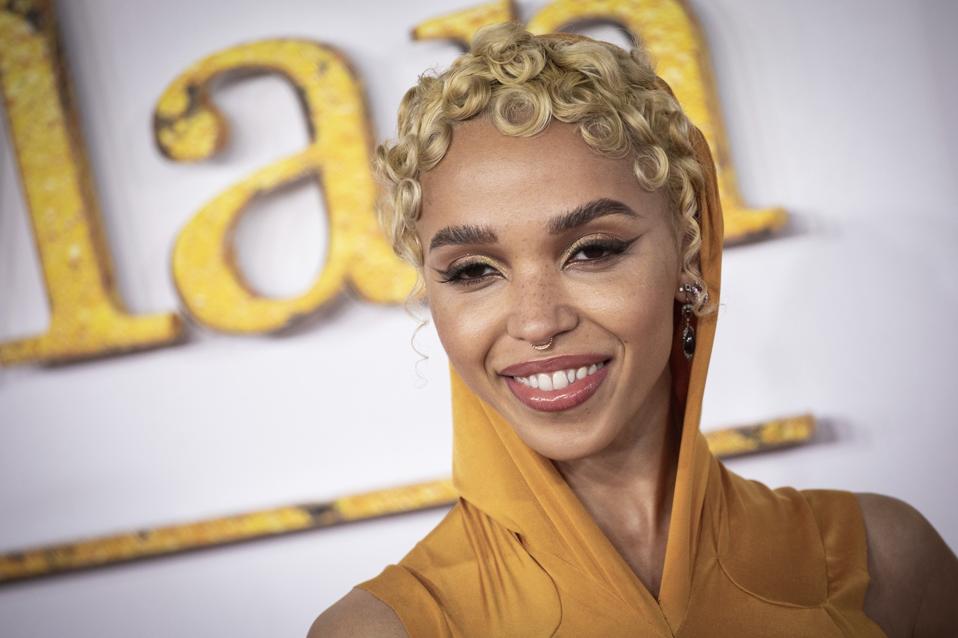
FKA twigs, the English pop performer, shared her story and the wisdom that was birthed of its pain as a survivor in a conversation sponsored by The NO MORE foundation, a public charity working to end domestic violence and sexual assault.
“I wish I would've known some of the language that I know now that would help me recognize the signs of abuse: lovebombing, gaslighting, mystification,” FKA shared. “Learning the language, I feel not only can I reflect back on my own experience and understand it more and feel more grounded in myself, but I feel like it's also helped me speak to other survivors and help them understand as well.”
Love bombing – when over-ample affection is weaponized by an abuser, often in step with total withdrawals of affection and a prolonged bombardment on boundaries
Gaslighting – when an abuser creates or takes advantage of an imbalance of power by maintaining, even against evidence or sense, a lie, usually a narrative
Mystification – how abusers sew a cloud of doubt around their victims’ senses, feelings, and intuitions in survival
As those that live in the shadows struggle to imagine light and fish live in bliss and ignorance of water, it can be difficult for man to understand that language, a near constant torrent in our heads and teeth, builds the world around us as concretely as the cement in our sidewalks.
Labels legitimize what Mildred Muhammad, a fellow NO MORE speaker, pointed to as “spider senses,” the feeling you get like a wrench is dropping through the rollercoaster-well of your gut when dangers is out back or front.
The survivors at NO MORE speak about spider senses with the same reverence sexual health experts talk about condoms. They are preventative.
Language though, at least in this one story in a human history full of abuse, wasn’t preventative. Two elements were – the friends who supported her through the hefty handful of times it takes an average survivor to find solid ground away from their abuser permanently and a stranger working an odd hour behind a phone.
A hotline operator’s objectivity broke twigs’s spell. “The lady on the phone said to me, okay, well, based on what you've said, you've ticked every single box of abuse.”
It took until then, the artist and her compatriots in tale explained, because the “cycle of abuse” is intoxicating. It can involve a “charm offensive,” “dragging you off to the bottom,” and “putting you back on top only to drag you off.”
FKA’s most recent mixtape Caprisongs – a mixtape in both spirit and craft as terms like ‘mixtape’ or ‘album’ in the music industry these days are generally vestigial, entrepreneurial, or experiments in play and lesson – hints at hyperpop and classic Christmas theatre for its genre. It dances between other categories too, holding its own as all its own.
In a letter, FKA called Caprisongs, “bronzer in the sink, alco pop on the side, a cherry lolly, apple juice when ur thirsty, friends in the park, your favourite person, that one sentence somebody said to you that changed everything, a club pre-game, your bestie who is always late but brings the most to the party, meeting a friend at the airport, just togetherness.”
If the tape is informed by her experiences in abuse, it explains some of the more cheerless lyrical choices in songs like “tears in the club.” While The Weeknd, featured on the song, soliloquies longing, twigs begs for the lover-she-writes-to’s essence to be stricken by holy remorse from her in whole, among other poetic turn.
“Me leaving – in many ways – was the start of the journey, because then it's also that staying away, having the strength to stay away despite being reached out to, or despite, you know, the attempts of being lured back in. The sort of six months after, the way that my brain was – I just wasn't prepared for me to feel that way.”
The first verse of “tears in the club” goes like a bell:
I wanna get you out of
My hips, my thighs, my hair, my eyes,
My late-night cries
I wanna take my clothes off, wanna touch
My hips, my thighs, my hair, not yours, all mine, yeah
Wanna dance you out of my, gotta dance you out of
My hips, my thighs, my wrongs, my rights, yeah
Listen to the rhythm and make no compromise
'Cause you hurt me
Chemistry’s the ventriloquist in our mind, the unspoken playwright for whom we dance. Thus, to learn is to grow in comfort of our design, and it may give survivors some say in their own stage direction.
“My cortisol was all over the place. When I left I would get these spikes of fear and anxiety and panic attacks and not sleeping for months,” twigs admitted. “And I don't think anybody really talks about that: just the stress, even when you're not in the relationship anymore. The shadow effect lingered on in my life for many months and was just as painful. To look at my life and how it was in tatters after I left was shocking.”
Human creativity has inarguable, fragile, feminine value for our community. Though anything in expense of lived experience is not worth the page, the print, the film, or even the dustiest sedan speakers.
“In my industry, when you're doing a movie or an album or a show, it's as if that's the most important thing. And there's that thing that the show must go on and there's so much money involved in it. And you're so lucky to have a seat at the table;” where misogyny and material met twigs lamented. “So, everyone just like shut up and put up and just get the job done. And I felt that pressure. I sit here now a year or two later and I think how I was made to feel – as if a film was more important than my safety and more important than just stopping everything and throwing it all in and just sorting out what was happening at the time. I feel that things are changing, and things have changed. And I hope me coming forward has been a small part of that.”
For anonymous, confidential help, 24/7, call the National Domestic Violence Hotline at 1-800-799-7233 (SAFE) or 1-800-787-3224 (TTY).