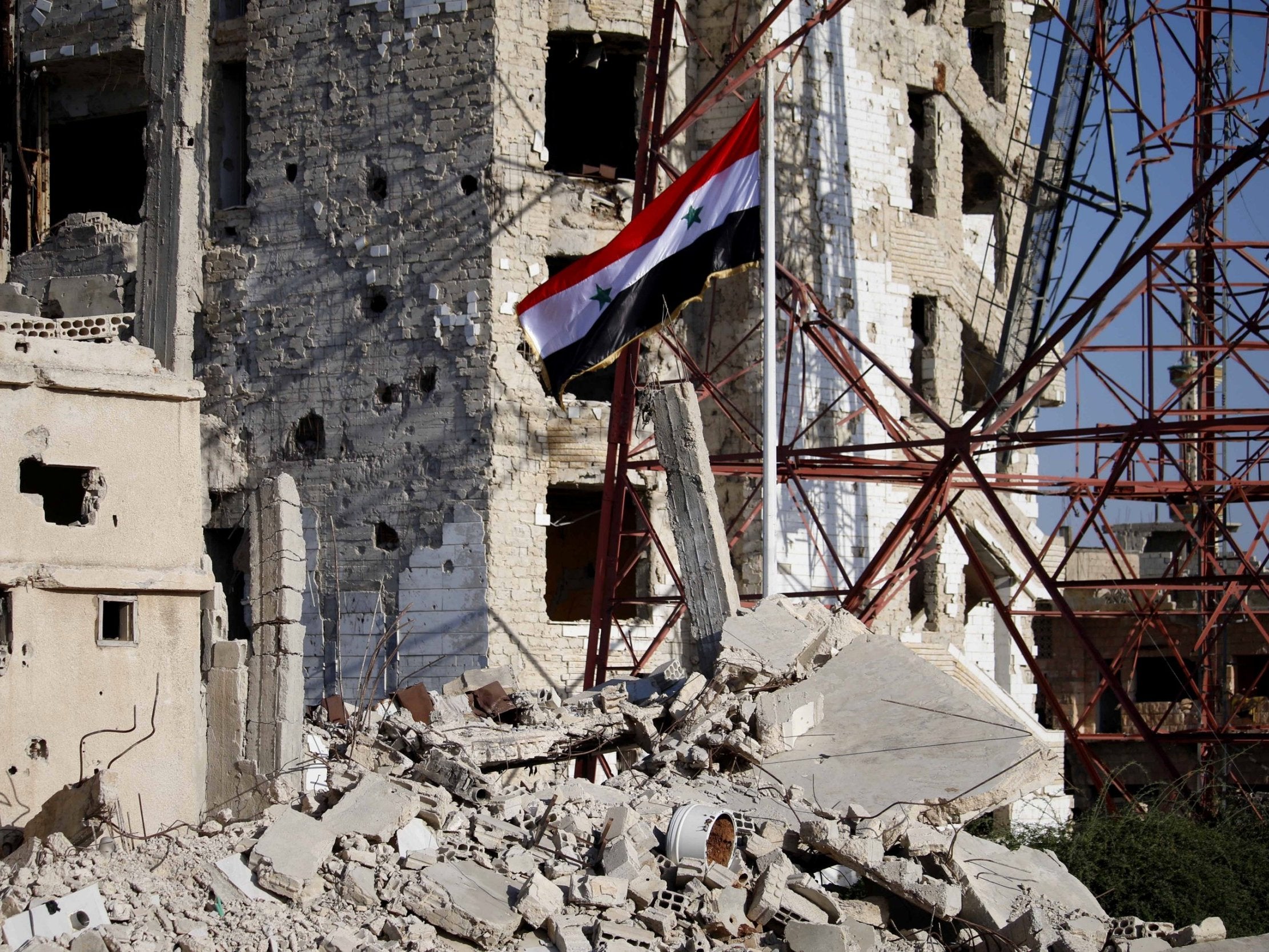
Syrian regime forces have entered Deraa city, the birthplace of the Arab Spring revolt, and raised the flag, signalling a major victory for President Bashar al Assad in the seven-year conflict.
State television broadcast footage of officials hoisting the government’s two-star flag over the rubble of the city, after the rebels agreed to give it up on Thursday.
The Assad regime, backed by its staunch ally Russia, is poised to take the rest of the strategic Deraa province after a bloody offensive launched last month.
Sources within the city said a Russian military police delegation entered the rebel-held areas and began negotiations for its handover to state rule.
"Syrian army units enter Deraa al-Balad and raise the national flag in the main square," SANA, Syria's official news agency, said.
The Syrian Observatory for Human Rights, a Britain-based war monitor, called the entry of the regime forces “symbolic for now”.
Rami Abdelrahman, the head of the group, told The Independent that the majority of the regime troops still remain on the outskirts.
Rebels are within the city centre, and have not yet handed over their weapons, he added. A final deal for rebel-held parts of the city has yet to be implemented but will likely see the rebels face two options.
Mr Abdelrahman said: “The rebels will either settle their status with the regime, hand over their heavy weapons, keep their light arms and remain in the city. Or those who refuse the deal and head out towards the north of Syria.”
Backed by Russian forces, the Syrian army launched a bloody battle against the rebels last month for control of Deraa.
The intense fighting saw over 320,000 people flee their homes, in the largest wave of displacement of the war. Many of them fled towards Jordan, which has closed its border on refugees, citing economic and security pressures.
Tens of thousands have also piled up on the border with Israel, hoping that international demilitarisation treaties between Syria and Israel would protect them from the barrage of air strikes.
On Thursday, the World Health Organisation demanded access to 210,000 of displaced people in the southern areas of Syria that it said are in urgent need of health services. The UN agency said at least 15 Syrians, including 12 children, had died in the past week due to dehydration and diseases linked to contaminated water.
The so-called reconciliation deal for Deraa city is the latest in a string of similar agreements that have seen the regime recapture swathes of the country.
Rebels have in the past been forced to surrender after blistering military campaigns, stifling sieges and sometimes chemical attacks.
Deraa city, which hosted some of the earliest anti-government protests in 2011, has suffered catastrophic damage during the seven-year war, during which at least 400,000 people have been killed and 11 million people displaced.