The number of houses being built across the country may still be at the lowest level since the 1920s, but completed schemes contain, surprisingly, some of the best buildings erected this year, judging by the results of the Royal Institute of British Architects’ annual awards.
Of the 37 projects given a national prize – and which will go on to compete for a place on the coveted Stirling prize shortlist later this year – almost a quarter are housing projects, ranging from large-scale housing association schemes in Glasgow to luxury towers on London’s South Bank. Schools and university buildings make up another sizeable chunk, while there is an absence of the flashy cultural projects that usually dominate the gongs – the list instead acknowledging careful renovation and re-use.
“The UK is blighted by poor-quality new housing and dilapidated school buildings,” said RIBA president Stephen Hodder, “so I am particularly pleased to award an unprecedented number of housing developments and inspiring education projects.”
Among the housing schemes, there is a notable trend for using brick, along with a restrained approach to creating good, ordinary background buildings with generous internal space – which has become extraordinary in itself, against the usual polarised backdrop of uninspiring, meanly scaled tat built by volume housebuilders, or the glitzy silos of overseas investment. After a decade of regeneration schemes dressed in jaunty costumes of slatted timber and colourful plastic panels, each looking like a jazzy mood board from the sample library, it’s refreshing to see housing that doesn’t scream its presence.
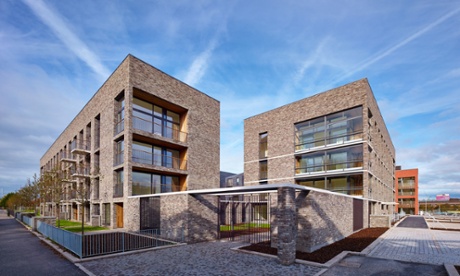
In Glasgow’s Gorbals, Elder and Cannon Architects and Page Park have reinvented the city’s traditional four-storey tenement block, creating more than 200 social-rented homes arranged around a series of courtyards. With generously proportioned balconies and bay windows, the buildings revive a type of housing that’s long been maligned, after vast swathes of tenements have been demolished in a gradual process of managed decline. Here, the architects have shown what a successful, sociable type of housing it can be.
At the other end of the scale, in Whitechapel, east London, Niall McLaughlin has built a block of 13 flats on an infill bomb-site for the Peabody Trust, creating a building that draws inspiration from the handsome Victorian blocks on the estate by Henry Darbishire, Peabody’s first architect. As in Glasgow, it learns from the context and transforms it with a stripped-back modern hand – but you might not even give it a second glance. It does its job with quiet, assured confidence.
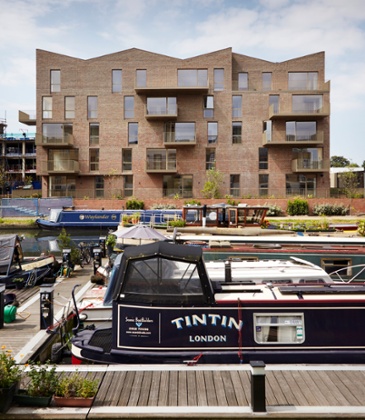
There is more of the same reticent, accomplished skill in Duggan Morris’s canal-side apartment blocks in Brentford, and in the Parkside flats by Evans Vettori in Matlock, Derbyshire, a sturdy thing dressed in the local pinkish millstone grit.
But underlying these schemes’ successes lurks a sorry indictment of our disastrous housing situation: many of the architect-designed blocks contain no “affordable” housing. In many cases, it’s been provided off-site, by other hands.
Neo Bankside, a £400m cluster of luxury towers that teeter above Tate Modern in Southwark, south London, designed by the once-socialist Richard Rogers, was lauded by the judges as “a well-mannered example of a structurally expressive architecture”. Approach it from the west and you’d be hard-pressed to agree. The glassy megaliths loom aggressively over nearby 18th-century almshouses, bulging out of their steel bracing like a herd of overweight bankers, crashing through the neighbourhood with a portly swagger. Topped with £20m penthouses, the development does not provide a single affordable unit on site, instead funding a few homes in a less desirable part of the borough.
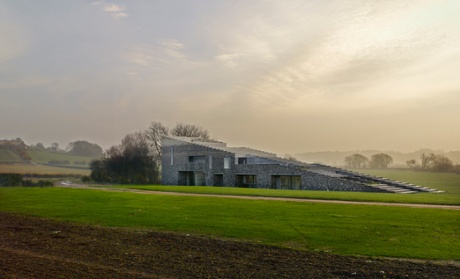
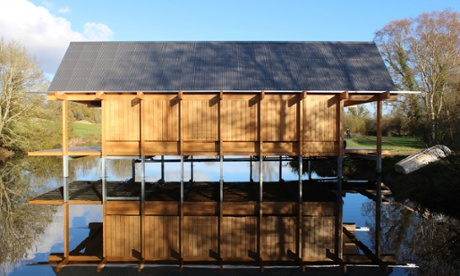
Rogers shouldn’t have made it on to the list, but there are gems well worthy of recognition. There is the beguiling Flint House in Waddesdon, Buckinghamshire, by Skene Catling de la Peña, that rises out of the rural landscape in a flinty wedge, like the result of some tectonic shift, along with a beautiful fishing hut by Niall McLaughlin. Then there’s the Burntwood School in Wandsworth, south London, by Allford Hall Monaghan Morris, whose chamfered concrete facades recall the sculptural elegance of Marcel Breuer’s Madison Park school in Boston, Massachusetts, along with Haworth Tompkins’s brilliant refurbishment and extension of the National Theatre in London.
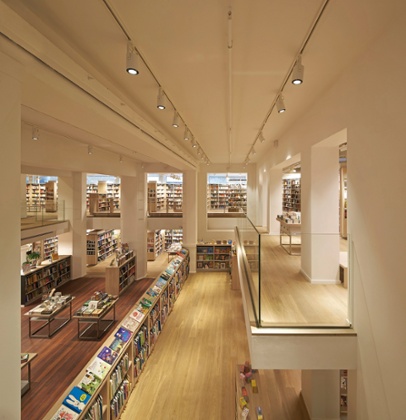
In another anachronistic addition, there’s even the biggest bookstore built in the UK this century, in the form of Foyles’ flagship home in the former Central Saint Martins building on Charing Cross Road, London, by Lifschutz Davidson Sandilands. This year’s awards might have a retro tinge – but if that’s a return to generously proportioned, robust buildings, then that’s no bad thing.