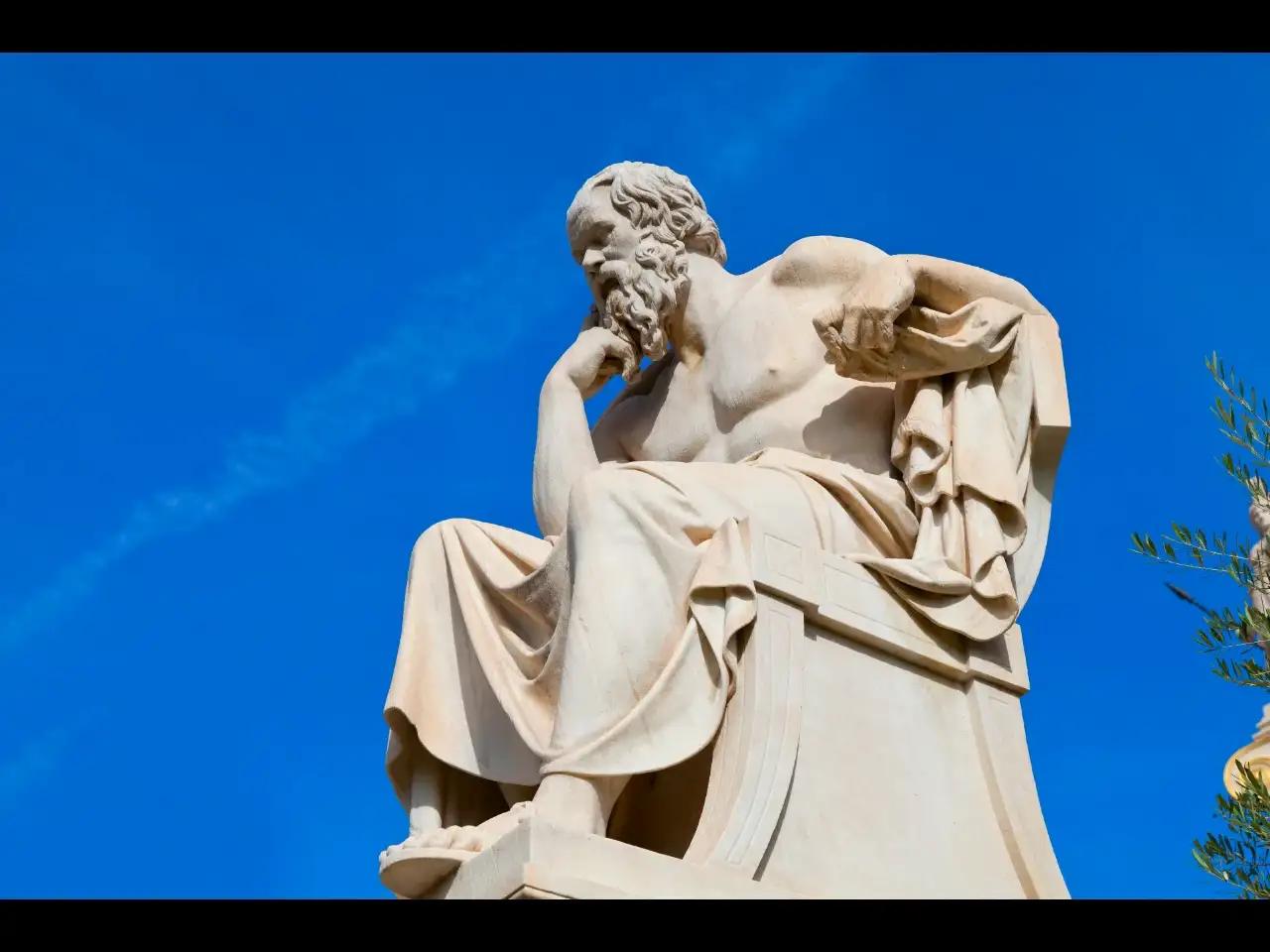
The Socrates quote of the day is not merely about learning. It is about longing. A deep and restless longing that lives inside every thoughtful human being. Socrates understood that wisdom does not arrive to those who casually seek it. It comes to the person whose soul has grown tired of illusions and shallow answers. The quote speaks to that inner fire which refuses to settle for appearances.
There are moments in life when a person suddenly realizes that information is not enough. Knowledge collected from books, conversations, or endless noise cannot satisfy the deeper thirst within. The mind may become full, yet the heart still feels empty. Socrates points toward a different kind of understanding — one that transforms the way a person sees reality, truth, and themselves.
The image of breathing carries extraordinary meaning. Breath is not optional. It is essential. In the same way, Socrates believed wisdom must become essential to the human spirit. Not a decoration for intelligence. Not a performance for society. But something as necessary as air itself. Only then does insight begin to open naturally.
Quote of the day today
“When you want wisdom and insight as badly as you want to breathe, it is then you shall have it”—
SocratesSocrates Quote of the day on critical thinking
It is a powerful reminder that real wisdom does not come from casual curiosity. Socrates believed that truth reveals itself only to those who seek it with complete intensity and honesty. In today’s fast-moving world filled with distractions, this quote challenges people to pursue understanding with deeper focus and purpose.
What makes this quote timeless is its emotional and philosophical depth. Breathing is essential for survival, and Socrates compares that same urgency to the human search for wisdom. He suggests that knowledge is not gained through shortcuts or surface-level learning. True insight comes from persistence, self-reflection, questioning, and the courage to confront uncomfortable truths. That message still resonates strongly in modern life, where many people are surrounded by information but still searching for clarity and meaning.
The Socrates quote of the day also speaks to personal growth and transformation. It reminds readers that wisdom changes the way people see themselves and the world around them. The quote encourages discipline, patience, and intellectual hunger in an age where instant answers often replace deep thinking. Its enduring power lies in one simple idea: when the desire for truth becomes genuine and unstoppable, wisdom eventually follows.
Meaning of the Quote of the Day
The meaning behind the Socrates quote of the day —
“When you want wisdom and insight as badly as you want to breathe, it is then you shall have it”— is rooted in the idea of deep commitment. Socrates believed that wisdom is not something people gain casually or overnight. True understanding comes only when a person seeks knowledge with complete focus, passion, and determination. Just as breathing is essential for life, the quote suggests that the search for truth and insight should become equally important to the human mind and soul.
This quote also highlights the difference between simply gathering information and genuinely understanding life. Many people read books, hear advice, or follow trends, but few truly question themselves or challenge their beliefs. Socrates teaches that wisdom requires sacrifice, patience, and self-reflection. It means being willing to ask difficult questions, admit ignorance, and continuously learn from experience. The quote encourages people to move beyond surface-level thinking and search for deeper meaning in their actions, decisions, and relationships.
The Socrates quote of the day remains powerful because it connects directly to modern struggles. In today’s world, distractions are everywhere, and people often chase success, fame, or wealth without seeking inner clarity. The quote reminds readers that real wisdom is not found in shortcuts or instant answers. It is earned through curiosity, discipline, and an intense desire to grow mentally and emotionally. Its timeless message is simple yet profound: when the hunger for truth becomes genuine, wisdom naturally begins to appear.
All about Socrates
Socrates was one of the most influential philosophers in human history and is often called the father of Western philosophy. He was born in ancient Athens around 470 BCE and became famous for his unique way of teaching through questioning and conversation rather than writing books or giving formal lectures. Unlike many thinkers of his time, Socrates focused less on science or nature and more on human life, morality, truth, justice, and self-awareness. His ideas transformed the way people thought about knowledge and wisdom.
Socrates spent much of his life walking through the streets and marketplaces of Athens, asking ordinary citizens, politicians, poets, and scholars difficult questions about life and virtue. He believed that many people claimed to know things they did not truly understand. Through his method of dialogue, now known as the “Socratic Method,” he encouraged people to think deeply and examine their beliefs. His famous idea, “The unexamined life is not worth living,” became one of the foundations of philosophical thought and intellectual honesty.
Although Socrates became highly respected by some followers, including Plato, he was also controversial in Athens because his questioning challenged authority and social norms. In 399 BCE, he was put on trial and sentenced to death on charges of corrupting the youth and disrespecting the gods of the city. Rather than escaping punishment, Socrates accepted his fate and died by drinking poisonous hemlock. His life, teachings, and sacrifice later inspired generations of philosophers, leaders, writers, and thinkers across the world.
His father, Sophroniscus, was believed to be a stone mason, while his mother, Phaenarete, worked as a midwife. Socrates came from a modest background, yet his curiosity and sharp intellect set him apart from an early age. Unlike wealthy scholars of his time, he lived simply and spent much of his life among ordinary citizens, observing human behavior and questioning the meaning of truth, justice, and morality.
As a young man, Socrates served as a soldier in the Athenian army and reportedly showed courage during several military campaigns. These experiences shaped his understanding of discipline, sacrifice, and human nature. Athens during his lifetime was filled with political tension, war, artistic brilliance, and intellectual debate, and Socrates became deeply interested in understanding how people think and why societies often fail to live by their own ideals. Instead of pursuing wealth or political power, he devoted his life to philosophy and conversation.
He believed that wisdom begins when a person admits they do not know everything. This method encouraged critical thinking, self-awareness, and intellectual honesty, ideas that remain influential in education and philosophy today.
He argued that people should care more about developing a good soul than gaining wealth or social status. According to Socrates, true happiness came from wisdom and moral character rather than material success. His teachings deeply influenced his student Plato, who later recorded many of his ideas in philosophical dialogues. Through Plato’s writings, Socrates’ thoughts became the foundation of Western philosophy and influenced later thinkers for centuries.
One of the greatest achievements of Socrates was redefining the purpose of philosophy itself. Before Socrates, many philosophers mainly focused on understanding the physical universe. Socrates shifted attention toward human behavior, ethics, and the search for wisdom. His famous statements, including “Know thyself” and “The unexamined life is not worth living,” became timeless philosophical principles that continue guiding discussions about morality and personal growth.
Other famous quotes by Socrates
- “The unexamined life is not worth living.”
- “True wisdom comes to each of us when we realize how little we understand about life, ourselves, and the world around us.”
- “Be kind, for everyone you meet is fighting a hard battle.”
- “Wonder is the beginning of wisdom.”
- “To find yourself, think for yourself.”
- “Education is the kindling of a flame, not the filling of a vessel.”
- “He who is not contented with what he has would not be contented with what he would like to have.”
- “Strong minds discuss ideas, average minds discuss events, weak minds discuss people.”
- “The secret of happiness is not found in seeking more, but in developing the capacity to enjoy less.”
- “Prefer knowledge to wealth, for the one is transitory, the other perpetual.”
- “An honest man is always a child.”
- “Beware the barrenness of a busy life.”
- “From the deepest desires often come the deadliest hate.”
- “Contentment is natural wealth, luxury is artificial poverty.”
- “There is only one good, knowledge, and one evil, ignorance.”