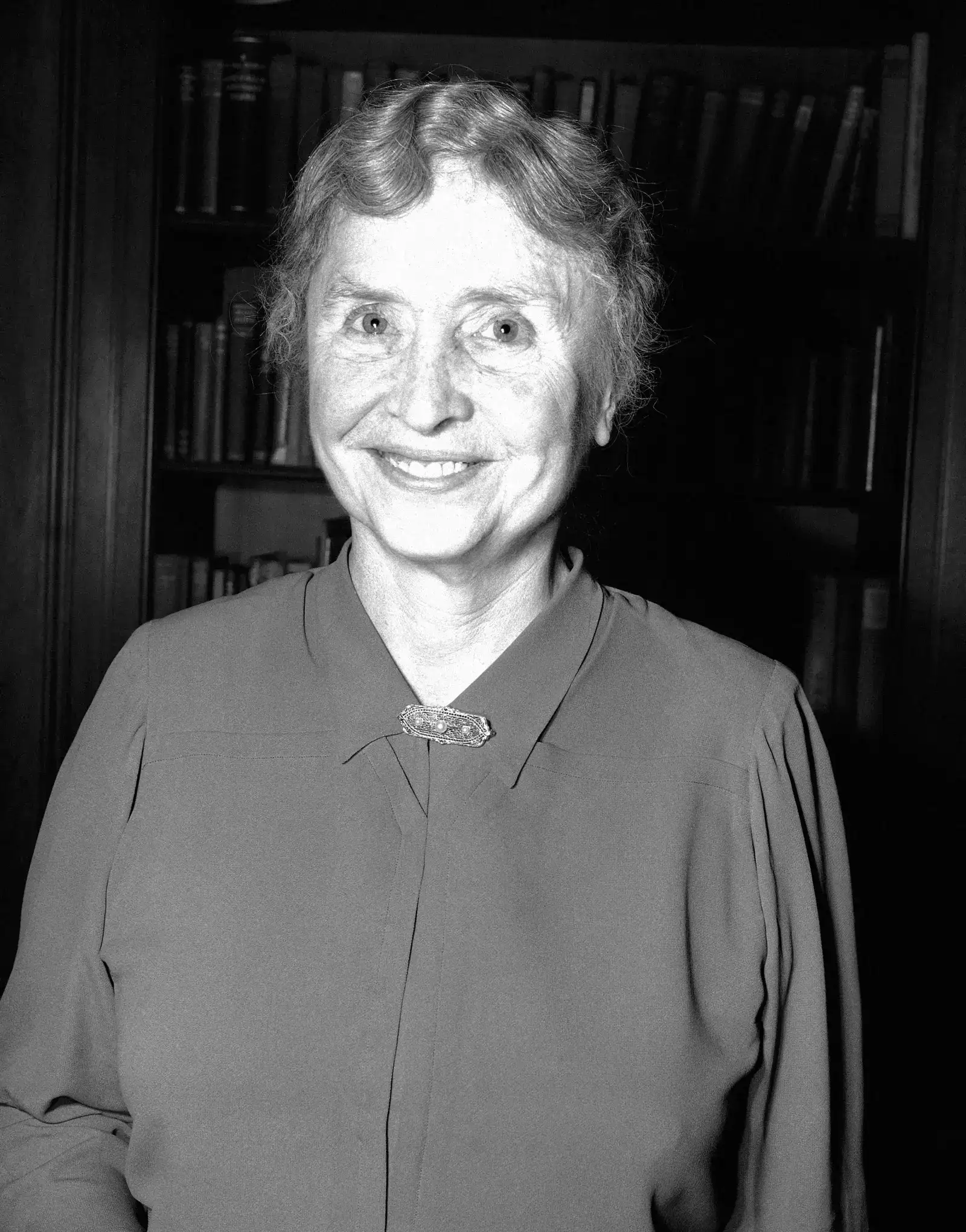
Quote of the day by Helen Keller: There is a profound difference between merely seeing the world and truly envisioning a meaningful place within it. Modern psychology often emphasizes the importance of purpose, long-term goals, and personal vision as foundations for fulfillment. People who possess direction tend to navigate adversity with greater resilience, while those without a larger sense of purpose can feel adrift despite every external advantage.
In today's fast-paced world, it is easy to confuse information with wisdom and visibility with insight. We can witness countless events, consume endless content, and still lack a clear understanding of who we want to become. Helen Keller's timeless words challenge us to look beyond physical perception and develop the inner vision that gives life meaning.
Quote of the day by Helen Keller: Psychological context
Today's quote of the day by American author and educator Helen Keller, " The most pathetic person in the world is someone who has sight but no vision ," speaks to one of humanity's deepest needs, the desire for purpose.
The statement is particularly powerful because it comes from a woman who lived without sight or hearing for most of her life. Keller understood better than anyone that physical limitations do not determine the boundaries of human potential. What truly limits people, she suggests, is the absence of dreams, direction, and imagination.
Psychologists frequently discuss the importance of future orientation. Individuals who can imagine meaningful possibilities for their lives are more likely to persevere through setbacks and maintain emotional well-being. Vision provides motivation. It transforms obstacles into temporary challenges rather than permanent defeats.
Keller's observation reminds us that possessing abilities means little without knowing how to use them. One may have every advantage in the world and still remain stagnant if there is no larger purpose guiding one's actions.
Her words encourage people to cultivate inner sight, the ability to envision a better self, a better community, and a better future.
Helen Keller quote of the day: Deeper meaning and modern relevance
The deeper meaning of this quote extends far beyond ambition or professional success. Keller is speaking about imagination itself.
Vision, in this sense, means having values, ideals, and aspirations that elevate ordinary existence. It means refusing to live solely according to circumstance and instead choosing a destination worth pursuing.
Modern society often places enormous emphasis on external achievement, yet many individuals experience feelings of emptiness despite material comfort. The problem is rarely a lack of resources. More often, it is a lack of meaningful direction.
Helen Keller understood that true blindness is not the inability to see with one's eyes. It is the inability to imagine possibilities beyond present limitations.
Her message feels especially relevant today. Technology allows people to observe more of the world than any previous generation, but observation alone does not create wisdom. Endless information cannot substitute for a personal mission or a sense of calling.
The quote also encourages courage. Having vision requires stepping into uncertainty. It demands the willingness to pursue goals that others may not understand and to embrace risks in service of growth. Life gains its richness not through safety alone but through purposeful exploration.
Keller's words invite readers to ask a difficult but necessary question: What future am I actively working toward?
Life lessons we can learn from Helen Keller's wisdom
One important lesson is that limitations do not define human potential. Helen Keller accomplished extraordinary things despite challenges that many considered insurmountable. Her life demonstrates that inner determination often matters more than external circumstances.
Another lesson is that purpose creates resilience. People with meaningful goals can endure hardships because they understand what they are striving for. Vision acts as an anchor during uncertain times.
The quote also teaches the importance of imagination. Progress in every field begins with someone seeing possibilities that do not yet exist. Personal growth follows the same principle. Before becoming something new, we must first envision it.
Finally, Keller reminds us that a meaningful life requires active participation. Merely observing the world is not enough. We must engage with it, shape it, and contribute to it through our actions and convictions.
More about Helen Keller
Born as Helen Adams Keller on June 27, 1880, in Tuscumbia, Alabama, Helen Keller became one of history's most remarkable authors, educators, and advocates for people with disabilities, as per Britannica.
At just 19 months old, an illness believed to have been scarlet fever or meningitis left her both blind and deaf. Many assumed that such circumstances would severely limit her future. Instead, they became the starting point for one of the most inspiring stories of human perseverance ever recorded.
A turning point arrived when inventor and educator Alexander Graham Bell introduced Keller to the Perkins School for the Blind. Soon afterward, Anne Sullivan entered her life.
Anne Sullivan's extraordinary teaching methods transformed Keller's world. By spelling words into her hand and helping her associate language with experience, Sullivan unlocked Keller's ability to communicate. Their lifelong partnership became a symbol of dedication, patience, and educational innovation, as per Britannica.
Keller later mastered Braille, learned to speak, attended preparatory schools, and achieved what many believed impossible. In 1904, she graduated cum laude from Radcliffe College, becoming the first deafblind person to earn a Bachelor of Arts degree.
Her literary contributions included works such as The Story of My Life, Optimism, and The World I Live In. Through writing and public speaking, she challenged societal attitudes toward disability and human capability.
Keller traveled extensively as an advocate for the American Foundation for the Blind and helped improve conditions for blind and deaf individuals across America. She also co-founded the American Civil Liberties Union in 1920, demonstrating her commitment to broader questions of justice and human dignity.
Her childhood story with Anne Sullivan inspired The Miracle Worker, later adapted into an Academy Award-winning film that introduced new generations to her extraordinary journey.
Helen Keller's life remains the ultimate embodiment of her own words. Though deprived of physical sight, she possessed one of the clearest visions of human possibility ever recorded. Her legacy reminds us that true vision is not measured by what our eyes can perceive but by what our hearts and minds dare to imagine.