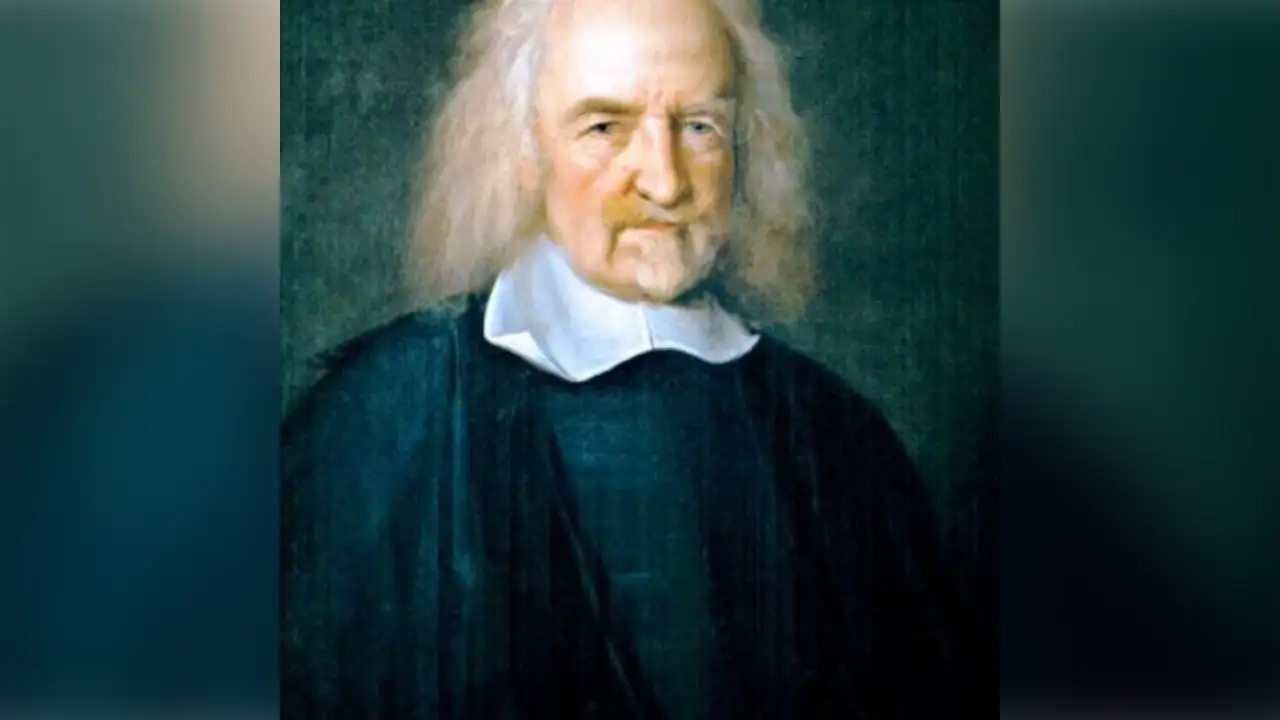
Quote of the day by Thomas Hobbes : There are times when life feels calm. But even then, our minds rarely stop moving. We may start thinking about what we want next, worrying about something that could go wrong or wondering how our lives might change.
Quote of the Day Today: Thomas Hobbes On Why Life Is Never Completely Still
English philosopher Thomas Hobbes said, “ There is no such thing as perpetual tranquillity of mind while we live here; because life itself is but motion, and can never be without desire, nor without fear, no more than without sense, ” as per BrainyQuote.
What Thomas Hobbes' Quote Means
Hobbes' words suggest that permanent peace of mind may not be possible because life is always changing.
Even when one problem is over, a new desire or concern can take its place. We may achieve something we wanted, only to begin thinking about the next goal. Or we may enjoy a peaceful moment while still carrying worries about the future.
Why Life Is Always Changing
Our circumstances, priorities and feelings do not remain the same forever. Desires can change, and so can the things we fear.
This constant movement is a natural part of life. It can sometimes feel exhausting, but it also means that difficult moments do not last forever.
Life Lesson From Today's Quote by Thomas Hobbes
Thomas Hobbes' quote offers a realistic reminder that life will not always feel perfectly calm.
Instead of expecting permanent tranquillity, we can accept that change, desire and uncertainty are part of being human. Peace may not mean stopping life from moving. Sometimes, it may simply mean finding moments of calm while everything else continues to change.
Who Was Thomas Hobbes
Thomas Hobbes was an English philosopher, scientist and historian best known for his political philosophy and his 1651 book Leviathan.
Born in England in 1588, Hobbes studied at the University of Oxford and later worked for the wealthy Cavendish family for much of his adult life, as per a Britannica report.
Thomas Hobbes' Political Philosophy
Hobbes believed people were naturally driven by self-interest, fear and competition. Without political order, he believed society could descend into conflict and violence.
He argued that people could give up some freedom in exchange for safety and security under a sovereign authority. This idea became central to his social contract theory.
Thomas Hobbes And Science
Hobbes also studied science, geometry and optics. His work explored how matter and motion could explain observed phenomena, and he was influenced by thinkers including Galileo and Kepler, as per the Britannica report.
Thomas Hobbes' Legacy
Hobbes wrote about politics, human nature, science, morality and government. His ideas about the social contract and the balance between freedom and security continue to influence political philosophy.
Thomas Hobbes died in 1679 at the age of 91.