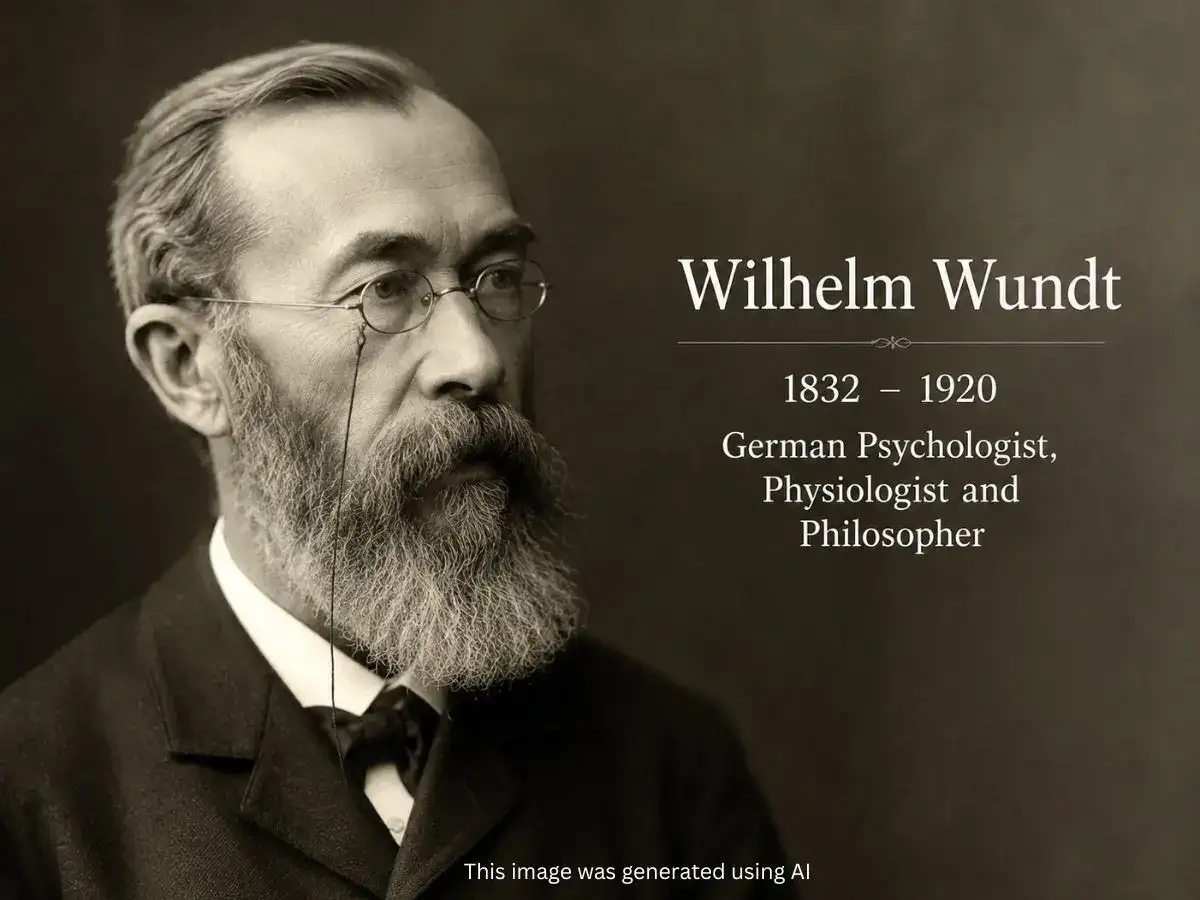
Human beings think, decide and act every day. We solve problems, make choices, remember events and form opinions. Yet despite using our minds constantly, most of us have little understanding of how many of these mental processes actually work. This idea is captured in a thought-provoking quote by Wilhelm Wundt, often known as the father of experimental psychology: “Our mind is so fortunately equipped that it brings us the most important bases of our thoughts without the least knowledge of how this elaboration is carried out.”
Read more: Best Spanish saying of the day
Although the quote was written many years ago, its message remains relevant today. Wundt reminds us that much of what happens in our minds occurs beyond our awareness. We often see the final result of our thinking, but not the process that created it.
Read more: Brazilian Portuguese saying of the day
The quote offers valuable lessons about human behaviour, decision-making, learning and personal growth.
Wilhelm Wundt Quote Meaning
At its core, the quote highlights a simple truth: the human mind performs countless complex tasks without requiring conscious effort.
People rarely think about how they recognise a familiar face, understand language or recall a memory. These processes happen automatically.
When someone hears a question, their brain rapidly searches for information and produces an answer. When a person walks down a busy street, their mind processes sounds, movement and surroundings without conscious calculation.
Wundt's quote reminds us that many of our mental abilities work quietly in the background.
What This Quote Teaches About Human Thinking
Most people assume that thinking is something they fully control. However, psychology has shown that much of our thinking happens automatically.
We often reach conclusions before we can explain how we arrived at them. For example, someone may immediately sense that a situation feels wrong. Later, they may identify the reasons. Their mind noticed details and patterns before their conscious awareness caught up.
This does not mean our thinking is mysterious. Rather, it demonstrates how efficiently the brain handles information.
The quote encourages us to appreciate the hidden work taking place inside our minds every day.
Life Lessons From Wilhelm Wundt's Quote
One important lesson from this quote is humility. No matter how intelligent we are, there is still much we do not understand about ourselves. The human brain remains one of the most studied and least understood parts of the human body.
The quote reminds us that not every answer is immediately visible. Sometimes growth requires patience and self-reflection. It also encourages curiosity. Understanding how people think can help us become better learners, communicators and decision-makers.
Understanding the Power of the Subconscious Mind
Many modern discussions about psychology focus on the subconscious mind. The subconscious includes mental processes that influence our behaviour without entering conscious awareness. Memories, habits, emotions and learned patterns often operate at this level.
For example, experienced drivers do not consciously think about every movement required to operate a vehicle. Years of practice allow many actions to occur automatically.
Similarly, people often solve problems after stepping away from them. The mind continues processing information in the background. Wundt's quote reflects this hidden mental activity.
How the Mind Shapes Daily Decisions
Every day, people make hundreds of decisions. Some are simple, such as choosing what to eat or what route to take to work. Others involve relationships, careers and personal goals. Many decisions are influenced by experiences, memories and mental shortcuts developed over time.
Often, people cannot fully explain why they feel drawn towards a particular choice. Their minds have already analysed information and produced a response before conscious reasoning begins.
This does not mean logic is unimportant. Instead, it shows that conscious thought works alongside deeper mental processes.
Psychology Lessons About Self-Awareness
The quote also teaches an important lesson about self-awareness.
People often assume they know exactly why they think or behave in certain ways. In reality, many influences remain hidden.
Past experiences, upbringing, habits and emotions can affect our reactions without our knowledge.
Developing self-awareness means learning to examine our thoughts rather than simply accepting them.
Questions such as "Why do I feel this way?" or "Why did I react like that?" can help uncover patterns that might otherwise remain unnoticed.
Greater self-awareness often leads to better decision-making and stronger relationships.
Personal Growth Through Understanding the Mind
Personal growth begins with understanding ourselves. Many people focus on changing their behaviour without understanding the thoughts behind it. However, lasting change often requires deeper reflection.
The quote reminds us that our minds are constantly processing information, learning from experiences and adapting to new situations.
This means growth is often taking place even when progress is not immediately visible.
Someone learning a new skill may feel stuck for weeks before suddenly improving. Behind the scenes, the brain has been building connections and organising information.
Recognising this process can encourage patience and persistence.
Why Wilhelm Wundt's Ideas Still Matter Today
Although psychology has advanced significantly since Wundt's time, many of his ideas continue to influence the field.
Modern neuroscience has confirmed that much mental activity occurs outside conscious awareness. Researchers continue exploring how memory, attention and decision-making work.
Technology has changed many aspects of life, but human thinking remains fundamentally similar.
People still rely on instincts, habits and mental processes they cannot fully observe.
This is why Wundt's quote remains relevant. It speaks to a reality that every person experiences, even if they do not notice it.
Applying This Quote to Everyday Life
The practical message of the quote is simple. Trust the learning process. Not every problem is solved immediately. Not every answer appears the moment we need it. Sometimes the mind requires time to process information and form connections.
The quote also encourages patience with ourselves and others. People are often influenced by factors they do not fully understand.
By recognising the complexity of human thought, we can approach challenges with greater understanding and curiosity.
What We Can Learn From Wilhelm Wundt's Quote
“Our mind is so fortunately equipped that it brings us the most important bases of our thoughts without the least knowledge of how this elaboration is carried out” remains one of Wilhelm Wundt's most thought-provoking observations.
The quote reminds us that much of our thinking happens beyond conscious awareness. It highlights the power of the human mind, the importance of self-awareness and the value of curiosity.
Most importantly, it teaches us that we do not always need to understand every step of a process to benefit from it. The mind is constantly working, learning and adapting, even when we cannot see it happening.
In a world that often demands immediate answers, Wundt's words offer a useful reminder: some of our most important mental work takes place quietly, beneath the surface, shaping who we are and how we experience the world.