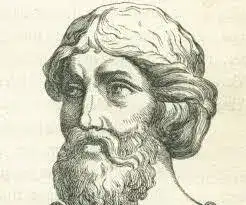
Quote of the Day: Long before modern self-help books, motivational speakers or viral social media advice, Pythagoras was shaping ideas that would influence philosophy, mathematics and human behavior for centuries. Best known for the famous theorem associated with right triangles, the Greek thinker was far more than a mathematician. He founded a philosophical brotherhood that blended spirituality, discipline and intellectual inquiry into a way of life. Though much of his teaching survives through followers rather than his own writings, Pythagoras became associated with wisdom rooted in restraint, reflection and self-control. One of the most enduring sayings linked to him continues to resonate today because of its striking simplicity and emotional truth.
Quote of the day today
The quote may be brief, but its message carries remarkable depth. In an age dominated by endless commentary, online arguments and constant noise, the statement feels more relevant than ever.
Quote of the day meaning
At its heart, the quote is about the difference between speaking impulsively and understanding the value of restraint. Pythagoras suggests that foolishness often reveals itself through excessive or careless words, while wisdom is frequently expressed through silence, patience and observation.
The statement does not mean wise people never speak. Instead, it implies that intelligent individuals know when speaking is necessary and when silence is more powerful. Wisdom involves listening, reflecting and understanding rather than reacting immediately.
The quote also challenges modern assumptions about confidence and intelligence. Today, loud opinions are often rewarded with attention. Social media platforms encourage instant responses, debates and emotional reactions. But Pythagoras’ words remind readers that constant talking does not always equal insight.
Sometimes silence reflects emotional control, maturity and deeper understanding.
Who was Pythagoras?
Born around 570 BCE on the Greek island of Samos, Pythagoras remains one of history’s most influential thinkers. Although he is widely associated with mathematics, his influence extended into philosophy, religion, ethics and music.
Historical details about his life remain uncertain because few contemporary records survived. Many stories about him were written generations after his death, making it difficult to separate fact from legend. Historians believe he likely traveled through Egypt and Babylon during his youth, studying religion, science and philosophy before eventually settling in southern Italy.
Around 532 BCE, Pythagoras founded a philosophical and religious community in Croton, now part of modern Italy. His followers, known as Pythagoreans, lived according to strict moral and intellectual principles. They valued discipline, harmony, learning and self-control.
Unlike many philosophers remembered solely for abstract theories, Pythagoras created a lifestyle centered around personal growth and ethical behavior. Silence itself reportedly played an important role in the Pythagorean school, where students were often expected to spend long periods listening rather than speaking.
That historical context makes the quote even more meaningful.
Why silence mattered in Pythagorean philosophy
For Pythagoras, silence was not emptiness. It was a tool for wisdom.
His teachings emphasized introspection and mastery over impulsive behavior. Speaking less encouraged students to think carefully, observe more deeply and avoid emotional recklessness. Silence created space for reflection.
In many ways, the philosophy stood in direct contrast to modern culture, where people are often pressured to respond instantly and constantly share opinions.
Pythagoras believed knowledge required discipline. According to various historical accounts, some members of his brotherhood reportedly observed years of silence as part of their training. Whether literal or symbolic, the practice reflected the belief that wisdom begins with listening.
The quote captures that philosophy perfectly. A foolish person may reveal insecurity, arrogance or ignorance through uncontrolled speech, while a wise person understands that not every thought requires expression.
Why the quote feels so relevant today
The modern world is louder than ever. News cycles move rapidly, social media rewards outrage and public arguments unfold in real time every day. In that environment, silence can sometimes feel uncomfortable or even misunderstood.
Yet Pythagoras’ words highlight something increasingly rare: thoughtful restraint.
The quote resonates because many people have experienced moments when speaking impulsively led to regret. Angry messages, emotional reactions or careless comments can damage relationships, careers and reputations within seconds.
Silence, by contrast, often creates room for perspective.
The saying also connects to emotional intelligence. Wise people do not always need to dominate conversations or prove themselves constantly. Confidence can exist quietly. Listening carefully, understanding others and choosing words deliberately often demonstrate greater wisdom than speaking endlessly.
A lesson in humility and self-awareness
Another reason the quote remains powerful is because it encourages humility. Foolishness is not simply a lack of knowledge; it can also involve overconfidence and the inability to listen.
Pythagoras suggests that speech reveals character. The way people communicate, especially during conflict, criticism or disagreement, often exposes emotional maturity more clearly than achievements or status.
Silence, meanwhile, can reflect patience and self-control.
That does not mean staying silent in the face of injustice or avoiding meaningful conversations. Instead, the quote encourages thoughtful communication rather than reactive speech.
In professional settings, relationships and personal growth, the ability to pause before responding can often prevent misunderstandings and unnecessary conflict.
The enduring legacy of Pythagoras
Although centuries have passed since his death, Pythagoras continues to influence modern education and philosophy. Students around the world still learn the Pythagorean theorem in mathematics classrooms, even if many know little about the philosopher himself.
Beyond numbers and geometry, however, his legacy also includes ideas about discipline, harmony and wisdom. His teachings helped shape later thinkers, including Plato and Aristotle, whose philosophies would go on to influence Western thought for generations.
The quote about speech and silence survives because it speaks to something timeless about human nature. People still struggle with ego, impulsiveness and the desire to be heard. At the same time, many continue searching for calm, wisdom and emotional balance.