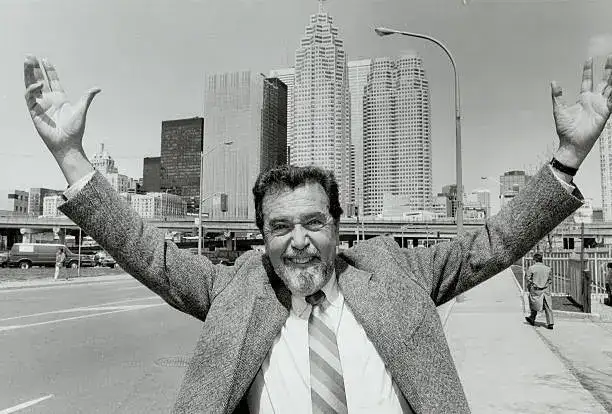
Quote of the Day: For millions of readers around the world, Leo Buscaglia became more than a bestselling author or inspirational lecturer, he became a symbol of emotional honesty in a world often afraid of vulnerability. Nicknamed “Dr. Hug” for his warm personality and deeply human approach to life, Buscaglia spent decades encouraging people to embrace love, compassion and courage. Whether he was teaching university classes, writing bestselling books or speaking to packed audiences, his message remained consistent: life becomes meaningful only when people are willing to open themselves to connection, uncertainty and growth. One of his most memorable quotes continues to resonate because it challenges one of humanity’s biggest fears — the fear of taking risks.
Quote of the day today
The quote has endured for years because it captures a truth many people instinctively understand but struggle to live by. Fear may feel safe in the moment, but avoiding risks altogether can quietly prevent growth, opportunity and happiness.
Quote of the day meaning
At its core, Buscaglia’s quote argues that refusing to take chances is often more dangerous than failure itself. Risk is part of every meaningful experience: whether in love, career, creativity or personal growth.
The statement does not encourage reckless behavior. Instead, it suggests that staying emotionally guarded or refusing to step outside comfort zones can lead to a stagnant and unfulfilled life. People who avoid all risks may protect themselves from disappointment, but they can also miss out on joy, transformation and purpose.
Buscaglia believed deeply in human connection and emotional openness. To love someone, pursue a dream or speak honestly always involves uncertainty. There is no guarantee of success. Yet according to Buscaglia’s philosophy, the alternative, living cautiously and never fully engaging with life, is the greater tragedy.
Who was Leo Buscaglia?
Born Felice Leonardo Buscaglia in Los Angeles to Italian immigrant parents, Buscaglia grew up in a large, energetic household filled with conversation, discipline and affection. He often described his upbringing as deeply loving despite financial limitations and the chaos of sharing a home with many siblings.
Family dinners played an especially important role in shaping his worldview. His father insisted every child learn something new each day and discuss it at the dinner table. Buscaglia later credited those experiences for teaching him curiosity, empathy and emotional expression.
After earning degrees in education, he began teaching special education in Pasadena schools. But his interests extended beyond traditional academics. Curious about spirituality and philosophy, he traveled through Asia studying religions such as Buddhism and Hinduism while reflecting on themes of compassion and human connection.
Those experiences became central to his life’s message.
The man who taught “Love 101”
Buscaglia eventually gained national attention through a university course unlike anything most students had encountered before: a class about love.
While teaching at the University of Southern California, he introduced courses exploring emotional connection, human relationships and self-worth. Some academics initially viewed the idea skeptically, but students responded enthusiastically.
At a time when many educational environments focused strictly on achievement and competition, Buscaglia spoke openly about kindness, vulnerability and emotional healing. His warmth and sincerity turned him into a cultural phenomenon.
His 1972 book Love became a bestseller and launched a career that would include numerous influential titles, including Living, Loving and Learning , Loving Each Other and The Fall of Freddie the Leaf .
For Buscaglia, love was not simply romance. It was a way of engaging with the world, courageously, compassionately and authentically.
Why the quote still feels so relevant today
Buscaglia’s words resonate strongly in a modern culture shaped by fear of failure and constant comparison. Many people hesitate to pursue opportunities because they fear embarrassment, rejection or uncertainty.
Some avoid changing careers because the outcome feels unpredictable. Others hesitate to express feelings, leave unhealthy situations or chase creative ambitions because the risks seem overwhelming.
Social media has amplified that fear in some ways. People are often exposed to carefully curated versions of success, making failure appear more humiliating or permanent than it really is. Buscaglia’s quote challenges that mindset directly.
It suggests that growth requires discomfort. Every important life decision involves uncertainty. Relationships can end painfully. Career changes can fail. Dreams can collapse. But refusing to try can create an even deeper regret over time.
The quote reframes risk not as something dangerous, but as something necessary for a meaningful life.
Buscaglia’s philosophy of emotional courage
One reason Buscaglia’s message connected with so many readers was because it combined optimism with honesty. He understood that love and vulnerability could lead to pain. Yet he believed emotional openness was still worth pursuing.
He often emphasized that human beings complicate kindness and connection through fear, insecurity and emotional barriers. His teachings encouraged people to approach others with compassion rather than defensiveness.
Even his critics acknowledged the emotional power of his work. Some psychologists argued that his ideas leaned too heavily toward inspiration rather than practical solutions. But audiences continued embracing his message because it spoke to something deeply human: the desire to feel connected and understood.
Buscaglia did not present life as easy. He simply believed fear should not become the force that defines it.
A quote rooted in action, not comfort
What makes the quote especially powerful is its sense of urgency. It reminds readers that avoiding risk is itself a decision, one that can quietly shape entire lives.
Many people imagine danger only in dramatic failures or public setbacks. Buscaglia suggested there is another kind of danger: emotional paralysis. Waiting endlessly for certainty can prevent people from discovering what they are capable of becoming.
The quote also carries hope. It implies that growth remains possible at any stage of life. Risks do not always have to be enormous. Sometimes they involve simple acts of honesty, vulnerability or change.
Applying for a new opportunity, speaking openly about emotions, leaving toxic environments or beginning again after failure all require courage.
According to Buscaglia, those moments of uncertainty are where life truly begins.
Why Buscaglia’s words continue to inspire
Even decades after his death, Buscaglia’s ideas continue to influence readers searching for meaning, connection and emotional resilience. His books remain popular because they focus on timeless human struggles: fear, loneliness, love and purpose.
The quote about risk stands out because it captures a universal tension: the desire for safety versus the desire for growth.
Buscaglia believed people were capable of extraordinary compassion and transformation when they stopped allowing fear to control their choices. His message was ultimately simple but powerful: life becomes richer when people are willing to risk disappointment in pursuit of something meaningful.
For many readers, that reminder remains as relevant today as ever.